Loading Text-to-Speech…
BRUSSELS – RESPONSE. Despite the significant successes of the European prosecution authorities in the last two years, the organized crime in Europe it is not only not receding, but is evolving into an increasingly flexible, internationalized and business ecosystem, which exploits the gaps in the legal economy, technology and geopolitical developments. The new Europol report presented today in Brussels captures and analyzes the picture of the most dangerous criminal organizations in the European Union, two years after they were first mapped.
The picture is contradictory as of the 821 criminal networks identified in 2024, 76% are no longer on the list of most dangerous organizationswhich, according to Europol, reflects the effectiveness of the authorities’ targeted operations, but also the dismantling or reorganization of many networks. However, new schemes have emerged in their place, confirming that organized crime is constantly regenerating and adapting. Today Europol records 731 criminal networks, with around 400,000 members from 118 countrieswhich operate across the spectrum of serious international crime: from drug trafficking and cybercrime to human trafficking, migrant smuggling, fraud and money laundering.

A “hard core” of 198 organizations remains active and highly resilient. These are, above all, hierarchically organized networks, with an international presence, a large financial surface and a significant possibility to immediately replace their executives when they are arrested. They systematically use corruption, intimidation and specialized money laundering services, and operate more like multinational enterprises than traditional criminal gangs.
They hide in a “common goddess”
Home Affairs Commissioner Magnus Brunner called the criminal organizations “multinationals of crime”. “We are not talking about street gangs,” he said characteristically. “These are organizations that operate like large multinational corporations, constantly moving to the most profitable markets – whether it’s drug trafficking, or online fraud, or migrant trafficking.” At the same time he warned that criminals have now learned to “hiding in plain sight”, leveraging the legal economy to cover their illegal activities.
Money laundering
In fact, 85% of criminal organizations use legitimate businesses to transfer fundsmoney laundering and penetration of the legal economy, a rate almost unchanged from two years ago. At the same time, Europol finds that digitalisation, artificial intelligence, cryptocurrency transactions, global trade and the increasing interconnection of the legal and illegal economy are creating an unprecedented environment of opportunity for organized crime. Criminal organizations are increasingly using specialized “service providers” to launder money, digital infrastructure and conceal their activities, making them harder to detect.
Europol’s acting executive director Jürgen Ebner pointed out that the reduction in the number of organizations should not be taken as a reduction in the threat. As he explained, when a criminal network is dismantled, the demand for illegal services and the financial incentives remain.
The “Lernaean Hydra”
“As long as the business model of crime survives, someone else will take the place of those that are being dismantled,” he noted, describing a “fluid criminal ecosystem” in which networks are constantly reshaping, merging and adapting to the pressures of the authorities.
The situation in Greece and Cyprus
Greece is inevitably in this equation. Answering a question from “K” about the challenges faced by the states on the external borders of the EU, Ebner acknowledged that countries like Greece exist greater pressures due to their geographic location on drug trafficking, human trafficking and illegal immigration routes. For this reason, he said, Europol develops operational teams adapted to regional threats and not single operations for all member states.
After all, a joint operational team is already operating Greece, Bulgaria, Romania, Serbia and of Moldova against migrant trafficking rings by Turkey towards the Western Europewhich led to 16 arrests at the end of 2025. At the same time, the head of the Cyprus Police, Themistos Arnaoutis, he referred to the close cooperation between Greece and Cyprus to deal with the new trends in human trafficking, then the related initiative of Europol which was launched this year in Nicosia.
The role of ports
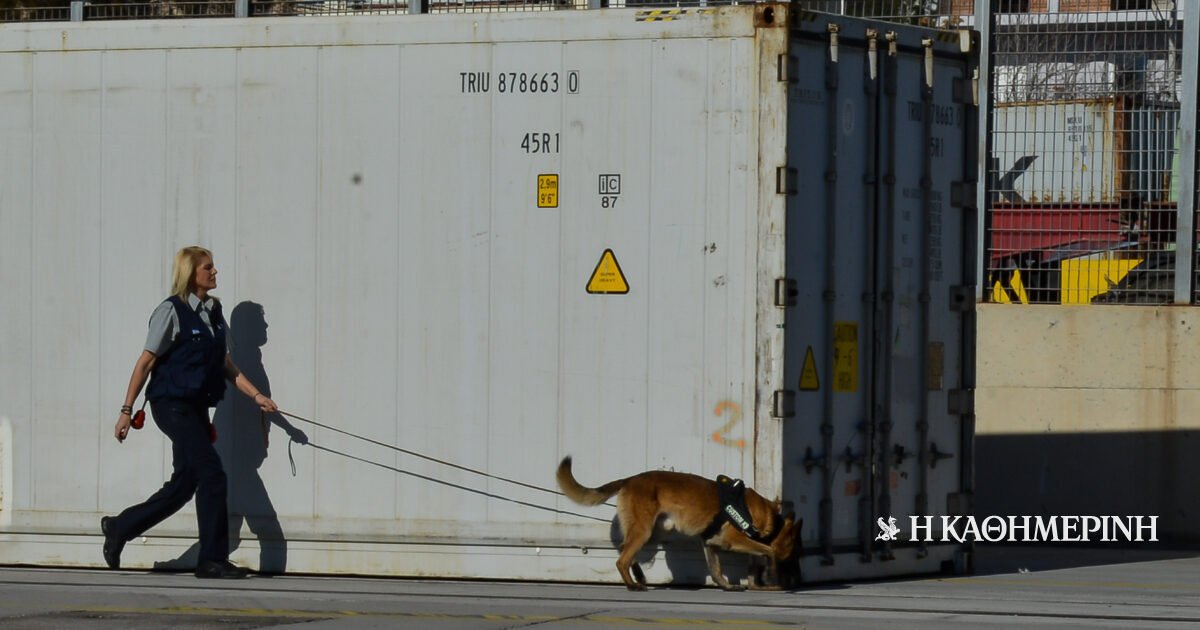
Ports now occupy a special place in the new European strategy. Magnus Brunner announced that the “Alliance of European Ports” which today brings together ports from Germany, the Belgiumthe Francethe United Kingdomthe Denmarkthe Netherlands and her Polandwill be extended to more ports and more member states. As he explained, the intensive controls in the largest European ports have already pushed criminal networks to look for smaller ports to traffic illegal cargo. Greece, with the strategic position of its ports in the Mediterranean and its role as a trade and transport hub, is expected to be at the center of this enlargement. The commissioner also revealed that the European cooperation model is already being exported outside the EU, with Colombia participating in the first relevant initiatives and Latin America considering the creation of a similar port alliance.
Europol’s report also functions as a political “argument” for strengthening the organization itself. The European Commission presented this week a new package of measures to tackle cross-border crime and terrorism, proposing to revise Europol and Eurojust regulations.
The plan foresees the doubling of Europol’s budget to €3 billion in the new Multiannual Financial Framework 2028-2034, a significant increase in its staff, new digital capabilities, as well as the creation of a common European cloud infrastructure and a single space for exchanging police data so that national authorities can work together in real time.
As Magnus Bruner concluded, competences may remain national, but in the face of criminal networks that operate without borders, “the solutions can only be European”.