Loading Text-to-Speech…
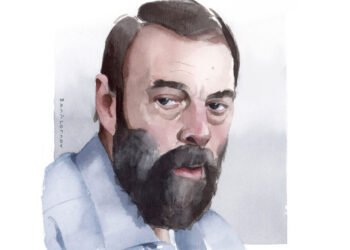
He is at a point in his career that many directors take decades to reach. At the age of 26, Mr Carrie Barker sees the “Obsession”, a horror film made for less than a million dollars, to take him from independent cinema to the center of the film debate.
The moment that changed the course of the film came with its theatrical release. “Obsession” opened around $32 million in its first four days in the United Statesincluding Memorial Day – the American holiday that traditionally marks the start of the summer movie season. An impressive start for a production that cost approx 750,000 dollars. “It was just a moment where I said, ‘Oh my God, I didn’t think this was even possible,'” Barker has said, describing his film’s unexpected run.
When it arrived in Greek theaters a few days ago, “Obsession” found an audience that responded strongly: in its first four days of screening, cut 48,362 tickets nationwide. An audience that is largely Gen Z — viewers who have grown up with social media and often know the creators before they get to the theater.
But what is “Obsession”? It is a romantic thriller with elements of horror, which starts from a familiar cinematic concept: desire that gradually turns into a threat. The story follows a young man who, searching for love and acceptance, finds himself trapped in a relationship in which attraction and fear begin to become dangerously intertwined.

Beyond the tension and twists of the genre, Barker uses the story to talk about loneliness, the human need to belong, and the limits to which it can go when that need becomes uncontrollable.
The story of “Obsession” doesn’t start in movie theaters. Barker grew up in Mobile, Alabama, a Southern town on the Gulf of Mexico, before moving to Los Angeles to pursue his dream of becoming a filmmaker.
In Los Angeles he met the actor and comedian Cooper Tomlinson. The two soon began making stories together, first for YouTube and later for the big screen. They created it That’s a bad ideaa channel where they posted comedy sketches, short horror stories, and videos that veered between the humorous and the weird. Over time, the channel gained a large audience, garnering hundreds of millions of views – an early indication that Barker’s stories could find viewers far beyond his inner circle of friends.
This experience did not remain only at the level of online videos. Barker and Tomlinson’s next step was an independent horror film, “Milk & Serial”, which became the first major proof that their improvised film education could be transferred to the cinema.
The film was shot in 2024 on a budget of just $800, with Barker directing, writing and editing, and he and Tomlinson starred in the story of two friends whose innocent play with a hidden camera leads to something much darker. When the film failed to find distribution, Barker turned back to the medium from which he had started: uploading it directly to YouTube, letting the public decide its fate.
This decision proved decisive. “Milk & Serial” began circulating by word of mouth, gaining the attention of horror fans long before Barker found himself in the industry spotlight. The film surpassed 2.5 million views on YouTube, while the name of its creator began to reach people outside the original Internet circle.
From YouTube to the big screen
For him, the relationship with the online audience has been more than a way of spreading his work. “YouTube taught me that horror movie viewers understand more than we often think,” Barker said.

Before “Obsession,” Barker was already experimenting with stories where humor could suddenly give way to angst. The short horror story “The Chair”, which he uploaded to YouTube, was one of the works that stood out at that time. Its appeal showed that his look could work beyond the video world.

“Obsession” wasn’t born out of the need to tell just another horror story. “I already had this idea for a long time, to do something about obsession,” he has said. What he was interested in was exploring what can happen when a person’s need to be loved becomes so intense that they lose control.
The success of “Obsession” goes beyond Barker’s own case. He joins a new era of creators who started on YouTube, learned to work with limited media and money, and are now bringing their stories to theaters. From Kane Parsons’ Backrooms to Marciplier’s Iron Lung, this new generation shows that the road to cinema can now start outside the traditional studios.