Change font size:
How a criminal political economy built on concrete, dirty money and construction may put the Albanian state at risk.
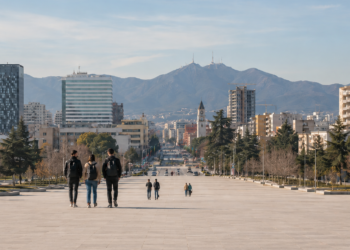
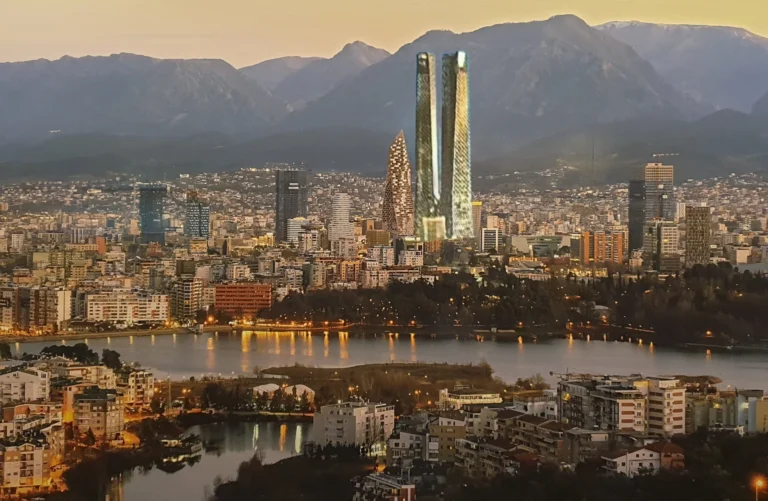
Tirana Times, June 22, 2026 – Tirana’s skyline has become the most visible expression of Albania’s new political economy. Over the past six or seven years, dozens of high-rise towers have transformed the capital into a city of concrete, speculation and opaque wealth. Dozens more are rising or waiting to rise. Yet behind this aggressive vertical expansion lies a question Albania can no longer avoid: is this construction boom driven by real demand, or by money that needs to be hidden, cleaned and legitimized?
The answer is increasingly difficult to deny. Albania’s economy has become dangerously dependent on a construction sector fed by informal money, corruption and proceeds from international drug trafficking. The towers of Tirana are not simply buildings. They are vaults, political symbols and financial instruments. They are the architecture of a criminal economy.
Recent actions by SPAK, Albania’s Special Structure against Corruption and Organized Crime, have exposed part of this system. Investigations into networks linked to international cocaine trafficking have led to arrests and asset seizures involving villas, hotels, apartments and other real estate assets. Albanian media have reported that around 150 million euros in suspected criminal assets have been identified or seized in recent weeks. This may be only a small visible part of a much larger mechanism.
The paradox has been obvious for years. Apartments remain empty, ordinary salaries cannot explain the level of prices, and yet construction permits multiply while prices continue to rise. In a normal market, oversupply and weak purchasing power would push prices down. In Tirana, they have risen sharply. That suggests that many apartments are not being bought to live in, rent or resell. They are being bought to park capital.
In this model, real estate becomes a laundering machine. Construction permits become political currency. Towers become banks. The capital itself becomes a monument to the fusion of crime, money and power.
This is why the comparison with 1997 is so important.
In 1997, the Albanian state collapsed because of pyramid schemes, classic Ponzi schemes that had absorbed the savings, hopes and desperation of hundreds of thousands of citizens. Albanians did not lose only spare money. Many had deposited their life savings. Others had sold houses, land, livestock and family property in the belief that the schemes would multiply their money. When the pyramids collapsed, the consequences were catastrophic. The country descended into anarchy. The state lost control over territory, weapons depots were looted, institutions disintegrated and Albania came close to total national breakdown.
The circumstances today are different, but the warning is disturbingly familiar. In 1997, citizens had entrusted their lives to fraudulent financial pyramids. Today, the state itself has built much of the economy around new pyramids made of concrete: towers, luxury apartments, resorts and real estate projects financed too often by corruption, informality and criminal money.
This is the most dangerous difference. In 1997, the state failed because it tolerated and failed to regulate the pyramid schemes. Today, the state risks something even more serious: it has become dependent on the very criminal economy that may drag the country into the abyss.
The construction boom has become one of the main pillars of the Albanian economy and one of the main mechanisms through which power reproduces itself. Developers, politicians, intermediaries and criminal investors have created a shared ecosystem of profit. The state gives permits, land and legal cover. Dirty money enters the economy. Buildings rise. Prices increase. The illusion of growth is preserved.
But this is not development. It is dependence.
If SPAK seriously follows the money and disrupts the flow of criminal capital into construction, the economic shock could be severe. Investors with unclear sources may disappear. Banks may become more cautious. Sales may slow. Prices may fall. Projects may stop. A sector that has become too large, too political and too dirty could begin to contract.
But the alternative is worse. A country cannot preserve criminal money simply because its economy has become dependent on it. A state that survives by tolerating money laundering is not stable. It is hostage.
Tirana’s towers have also produced a deep social crisis. For ordinary families, the city has become increasingly unaffordable. For young people, buying a home is almost impossible. For the middle class, the capital no longer feels like a city of opportunity, but like a market designed for invisible buyers. Albania is losing people while building apartments. It is exporting its youth while importing dirty capital.
This contradiction is morally and politically explosive.
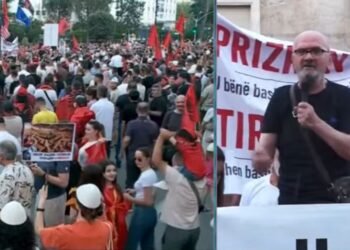
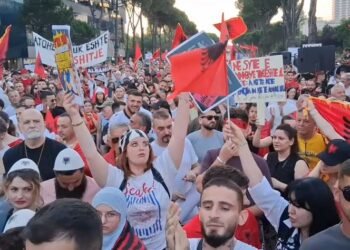
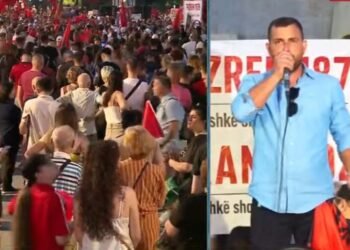
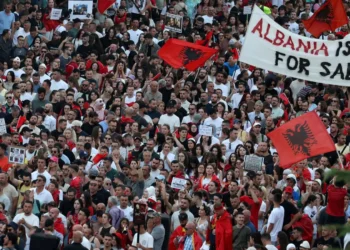
The protests that have filled Tirana’s boulevard in recent weeks are therefore not only about environmental destruction or luxury resorts on the coast. They are also a revolt against an economic model that has excluded the majority and enriched a small circle linked to political power. The towers of Tirana and the luxury projects in the south are part of the same story: public resources converted into private wealth through opaque decisions and questionable money.
SPAK’s investigations are necessary, but they are not enough. Albania needs full transparency over construction permits, beneficial ownership, financing sources, land transfers and strategic investment decisions. Banks, notaries, municipalities and public institutions must be held accountable when they enable suspicious transactions. The country needs a serious anti money laundering regime, not selective operations.
Above all, Albania needs a new development model. No country can build its future on empty apartments, dirty money and political favors. No capital can become European by acquiring a mafia skyline. And no state can remain democratic when its economy depends on the uninterrupted flow of criminal capital.The lesson of 1997 is clear: when an informal economy becomes stronger than the institutions of the state, the state eventually fails.
Today, the warning signs are not found in pyramid offices promising impossible returns. They are visible in Tirana’s towers, in luxury resorts, in empty apartments, in rising prices, in seized assets, in cocaine routes and in the anger of citizens who know they have been excluded from the promised prosperity. The fall of the towers may not mean their physical collapse. It may mean the collapse of the economic and political system built around them. And if that happens, Albania may discover that the most dangerous construction of the past six or seven years was not a tower, but a state dependent on the money that built it.