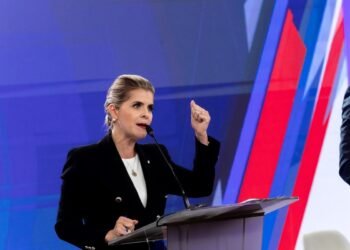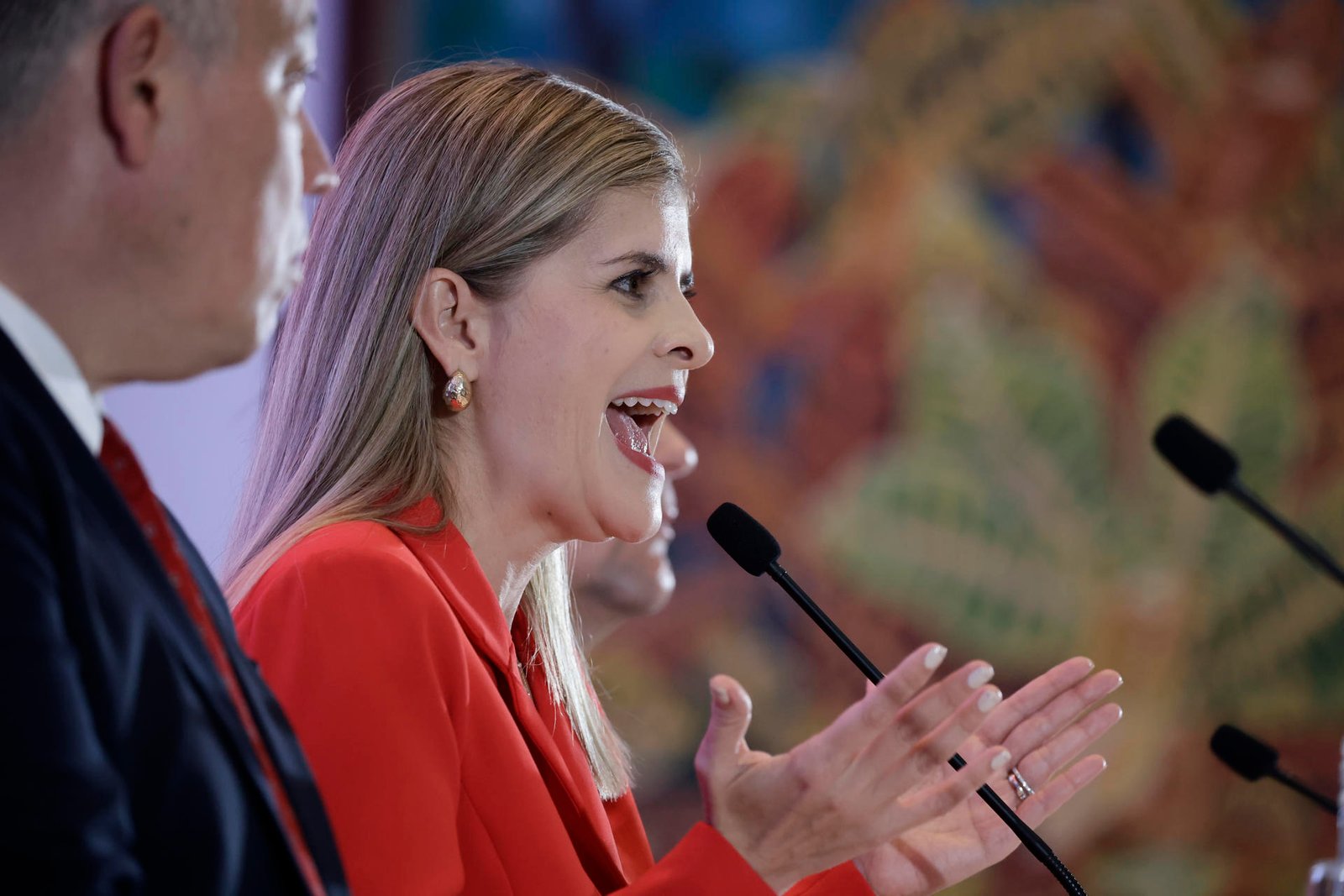
With the same amazement that the Nicaraguan community in Costa Rica probably heard, I heard the president Laura Fernández tells the journalist Claudia Gurisatti that “they with their internal problems and with their form of government that they have chosen to have,” when he responded about his government’s relations with Nicaragua and the government of Daniel Ortega.
As a Central American woman, I am ashamed that a woman in the highest position in Costa Rica demonstrates, in public, such poor knowledge of the electoral processes of her neighbor Nicaragua.
If he was trying to maintain a tone of diplomatic courtesy for the sake of the peace of the neighborhood, that’s fine, the unfortunate thing is the lack of knowledge he demonstrates about the documented political history of the quarter that inhabits his country, the lightness and ignorance about widely disseminated international documents on Nicaragua’s electoral processes in the 21st century.
From the exile community in Costa Rica we need to tell the President that: The IACHR extensively documented the practices of the Supreme Electoral Council of Nicaragua against the opposition and all the complaints of “fraud” since the 2008 municipal elections. The organization Freedom House, founded in 1941 by politicians such as Eleanor Roosevelt, described that municipal election, the first since Daniel Ortega returned to government, as a “blatant” fraud and reported fraudulent actions in no less than 40 municipalities, as well as the loss of impartiality of the Supreme Electoral Council. And the Carter Center, which called the next electoral process, in 2011, “deeply flawed” and a “weakening blow” to democracy.
In 2021, the OAS publicly said that Nicaragua’s elections “were not free, fair or transparent” and the IACHR documented a kidnapping of the State, where “all powers are aligned” to the Executive.
President Fernández must be invited to read so that she knows which are the governments that we Nicaraguans did elect and which are the dictatorships that we did not elect and that imposed themselves on the popular will with bullets, prison and repression, as the government of Daniel Ortega does.
I take the liberty of sharing, in the hope that some advisor on Central American affairs will tell the president that what follows is not the opinion of exiles and refugees in her country but rather easily accessible public reports prepared and published by international observers and that — I hope — the President will be encouraged to read:
1. OAS. General Assembly of the Organization of American States.
Document: Proceedings. Volume I — AG/RES. 2978 (LI-O/21), The Situation in Nicaragua. Page 188. Resolutive Paragraph 2: “The elections on November 7 in Nicaragua were not free, fair or transparent and have no democratic legitimacy”
2. General Secretariat of the OAS. Document: Nicaragua Elections 2021 Report. Page 1, Introduction: “Nicaragua held elections within the framework of a process that did not fulfill any of the essential elements of democracy.”
3. General Secretariat of the OAS. Document: Nicaragua Elections 2021 Report. Page 4, Section 4, Subtitle: The debacle of Nicaraguan democracy, says: “transform the 2021 electoral process into a painful simulation.”
4. IACHR. Inter-American Commission on Human Rights. Document: Nicaragua. Concentration of power and weakening of the rule of law. Page 8: “facilitate the co-option of the highest positions in the public administration.” Page 11: “All powers are aligned with the Executive.” Page 55: (…) “it would eliminate the candidacy of the only opposition candidate.”
5. The Carter Center. Document: The November 2011 Elections in Nicaragua: A Study Mission Report of the Carter Center. Page 2, Subtitle Overview: “provided the context for a deeply flawed election process.” (they provided the context for a deeply flawed electoral process)
6. Freedom House. Document: Countries at the Crossroads 2012: Nicaragua. Page. 3 Section “Accountability and Public Voice”: “The fraud was blatant.” (It was a blatant fraud)