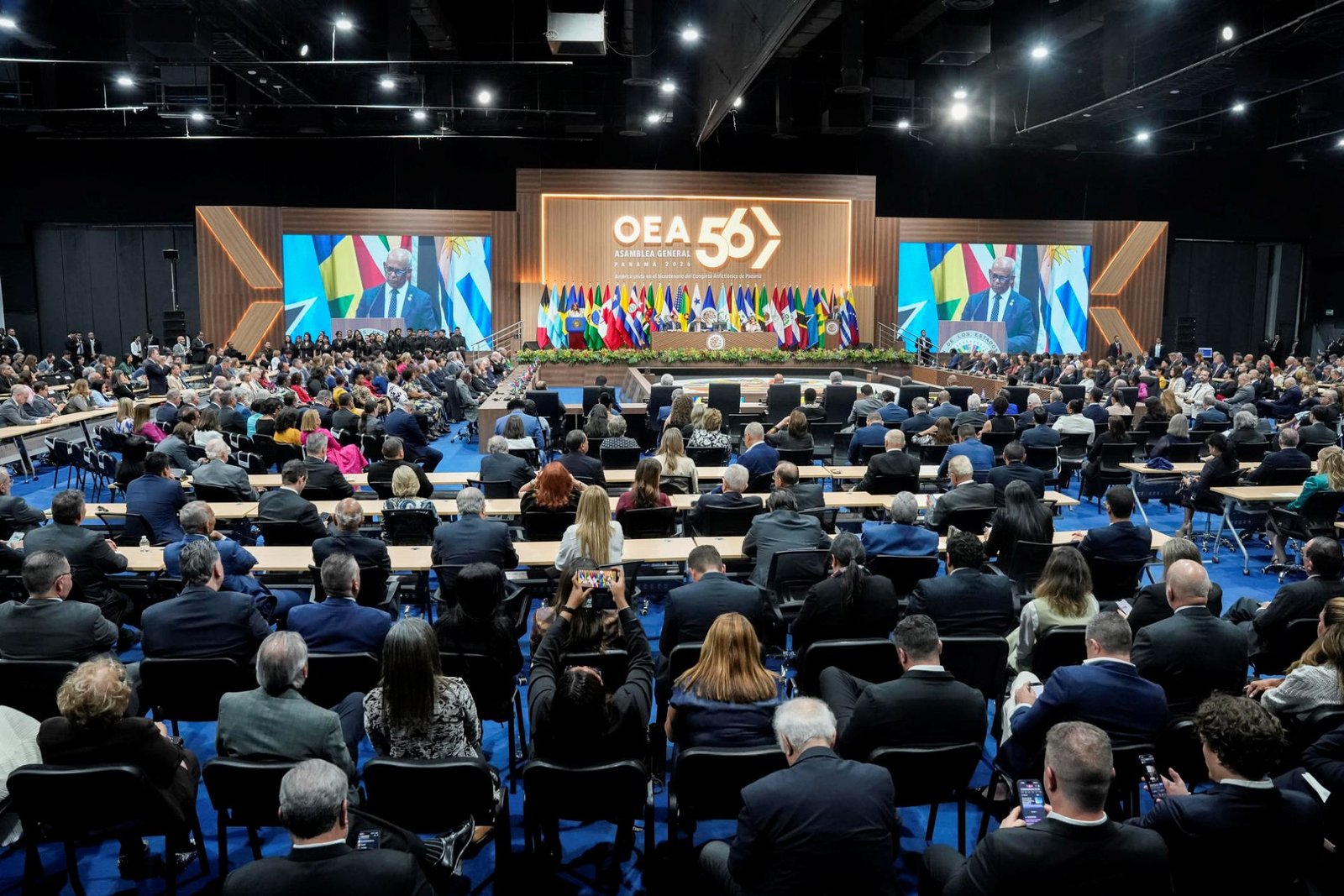
The General Assembly of the Organization of American States (OAS) condemned the human rights violations in Nicaragua, with cases that could be considered crimes against humanity, and expressed its “deep concern” over the death of the indigenous leader Brooklyn Riveraunder the custody of the regime of Daniel Ortega and Rosario Murillo.
Through the declaration Nicaragua Situation —approved by consensus on June 23, 2026—, the OAS foreign ministers regretted that the Nicaraguan regime has ignored the precautionary measures of the Inter-American Commission on Human Rights (IACHR) and the provisional measures of the Inter-American Court of Human Rights (IACt) through which they required “information on the conditions of confinement” and “protection of the life” of Brooklyn Rivera.
Also, they expressed concern “about the reports of retaliation” against Rivera’s relatives and “members of the indigenous community.” According to national human rights organizations, six relatives of the indigenous leader They traveled from Bilwi to Managua, on May 31, 2026, to claim the body. The dictatorship rejected their request and imprisoned them.
The OAS “condemns the use of arbitrary detention, forced disappearance and torture, and urges the State of Nicaragua to immediately and unconditionally release all persons arbitrarily or unjustly detained, including all persons subjected to forced disappearance or whose fate or whereabouts are unknown,” the statement reads.
They go on to point out their condemnation of “the widespread and systematic violations and abuses of human rights,” documented by the United Nations Human Rights Council and the Inter-American Commission on Human Rights, some of which could constitute crimes against humanity.
Cessation of statelessness and return of confiscated property
The OAS declaration included, for the first time, concrete demands and actions on the end of statelessness, the restitution of dispossessed nationalities, the safe return of exiles, and the return of confiscated assets.
In the document, the foreign ministers urged “the State of Nicaragua to cease measures to strip or deny citizenship to its nationals, and to guarantee the safe return of Nicaraguans outside the country and in exile who wish to return to Nicaragua.”
As well as “ensure full respect for their human rights and fundamental freedoms, including the rights to nationality, freedom of movement and return to their own country without fear of reprisals, persecution or arbitrary restrictions.”
The foreign ministers also urged the regime in Nicaragua to “recognize and restore the nationality and legal identity of all persons arbitrarily deprived of them, to provide the necessary documentation for the effective exercise of their rights without impediments, and to return or provide an effective remedy for the assets confiscated from persons stripped of their nationality; thus putting an end to situations of statelessness.”
The murder of Samcam in Costa Rica
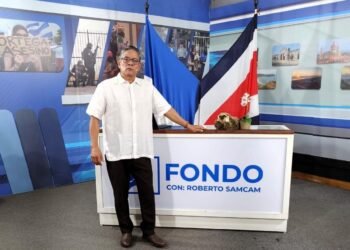
The OAS foreign ministers also recognized “the efforts made by Costa Rican authorities to investigate the murder of a Nicaraguan citizen (Roberto Samcam), including the arrest and prosecution of several suspects, and reaffirms the importance of ensuring that all those responsible for the planning and execution of this crime are held accountable before justice,” the statement says.
The Foreign Minister of Costa Rica, Manuel Tovar, condemned the murder of retired Major Roberto Samcam, a Nicaraguan refugee in Costa Rica, which occurred on June 19, 2025.
“We highlight the actions of the Costa Rican national authorities who have carried out the arrest and prosecution of several suspects. Costa Rica will continue to act firmly to guarantee that all those responsible are brought to justice and that no form of violence or intimidation finds its place in impunity.” said the Costa Rican foreign minister.
The Costa Rican Prosecutor’s Office accused five Costa Rican suspects of being the material authors of the murder of Samcam. Four of the accused are detained, including Luis Fernando Carvajal, 21, accused of being the gunman who shot; Another of the accused is Danilo Chaves Medina, accused of being one of the intermediaries in the criminal organization.
“Zero tolerance for totalitarian regimes”
The Deputy Secretary of State of the United States, Christopher Landau, demanded respect for “fundamental freedoms for Nicaraguans” and claimed that “there should be zero tolerance for totalitarian regimes in our hemisphere.”
The OAS declaration thus asked the State of Nicaragua “to guarantee broad and effective political participation, establishing the bases for future electoral processes in accordance with inter-American norms.”
It was precisely in November 2021, days after the re-election for that fifth term, that the Nicaraguan Government notified the decision to denounce the OAS Charter, which began Nicaragua’s definitive withdrawal and resignation from that organization.
However, the declaration left room for dialogue with the call for Nicaragua to return to the OAS, “reiterating the willingness of the member states to facilitate said process.”
Restore democracy in Nicaragua, Cuba and Venezuela
In another simultaneous statement, the General Secretariat of the OAS expressed its concern about the democratic situation in Nicaragua, Cuba and Venezuela, and reiterated the need to restore democracy, guarantee respect for human rights and release all those detained for political reasons.
He recalled that Nicaragua, Cuba and Venezuela are part of the inter-American community, which is why he recognized “with concern the need to restore democracy in these countries and to guarantee respect for shared inter-American principles regarding democracy and human rights.”
The General Secretariat highlighted the urgency of “fully functioning democratic systems that allow citizens to freely express their will and participate meaningfully in public life,” in line with the principles established in the OAS Charter and the Inter-American Democratic Charter.
Likewise, he expressed his concern about the situation of political prisoners in the three countries and considered that the detention of people for political reasons is “incompatible with the principles and commitments of the inter-American system.”
“In the Americas there is no place for political persecution or imprisonment based on opinions or dissent,” stated the General Secretariat, who also reiterated the request for “unconditional release of all persons detained for political reasons, in accordance with fundamental human rights obligations.”
The General Secretariat emphasized that sustainable democratic solutions must emerge from processes led by national actors themselves, with the participation of political, business and civil society sectors, and with the support of the international community when required.