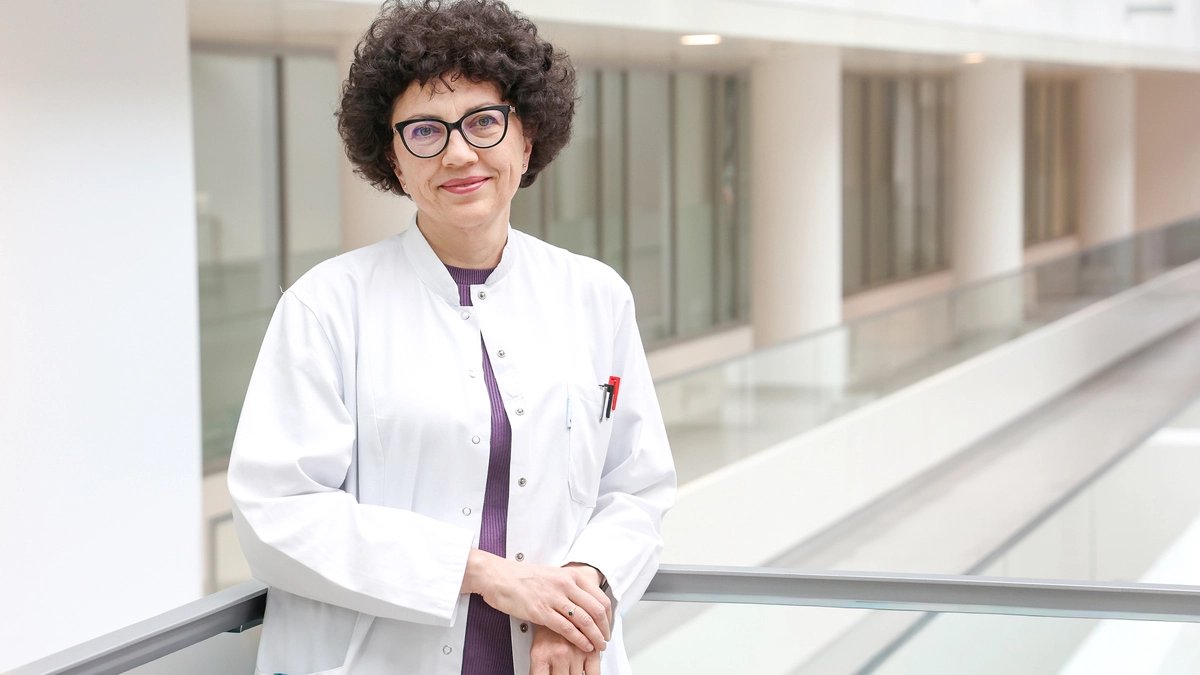
Parkinson’s disease is the second most common neurodegenerative disease after Alzheimer’s; In Austria, around 25,000 people suffer from Parkinson’s disease. But there are still no treatments to cure the disease. Nadia Stefanova, Director of the Department of Neurobiology and Professor of Translational Neurodegeneration Research at the Medical University of Innsbruck, was now looking for a new approach to treat Parkinson’s and multiple system atrophy (see lexicon), a related rare disease. This aims to stop inflammation in the brain.
With success: “A clinical study has currently been carried out at the University of Cambridge started to study the effect in Parkinson’s patients,” says Stefanova.
Parkinson’s disease and multiple system atrophy are triggered when a protein called alpha-synuclein accumulates and clumps together in cells. “In Parkinson’s disease, misfolded alpha-synuclein accumulates in nerve cells, and in multiple system atrophy in certain glial cells, the oligodendrocytes,” explains Stefanova. “The pathological protein also triggers inflammation in the brain, the so-called neuroinflammation. It is suspected that this inflammation contributes to the death of nerve cells and thus promotes the progression of the disease.” The NLRP3 inflammasome plays a central role in neuroinflammation. This protein complex is a sensor of cellular stress and increases inflammation in the brain.
“When we started the study, the NLRP3 inflammasome was a completely new player in the Parkinson’s field,” recalls Nadia Stefanova. She decided to test exactly this as the goal of Parkinson’s therapy. “I searched online to see if an agent that targets NLRP3 already exists and is being tested in clinical trials, because NLRP3 plays a role in many inflammatory diseases.”
She came across Dapansutril from Olatec Therapeutics, which was being studied as a drug against gout and heart failure – but not against Parkinson’s. Together they decided to further research the effect of dapansutril on neurodegenerative diseases in mouse models. What was crucial was that this substance could cross the blood-brain barrier. Initially it was shown that dapansutrile would work well as a prophylactic. With a crucial objection: “But prophylaxis is not possible in humans because Parkinson’s disease and MSA are only recognized later, when motor deficits become apparent.”
“A clinical study has recently been started at the University of Cambridge to investigate the effect in Parkinson’s patients.”
Nadia Stefanova,
Med University Innsbruck
So Stefanova and her team tested the effects of dapansutril again, after the motor deficits began. “This reflects the course as we see it in the clinic.” Within six months, the animals’ movements improved, the neurons were protected from cell death and inflammation in the brain decreased. “The genes that are upregulated in the reactive neuroinflammatory cells in Parkinson’s are downregulated by the therapy.” Plasma biomarkers that indicate nerve damage and inflammation also improved. “All of this is important evidence that this therapy is relevant for patients.”
Dapansutrile is now being tested on Parkinson’s sufferers. “Thanks to the previously collected clinical data in other diseases, a study on Parkinson’s patients could be started quickly,” explains Stefanova. “It is important to us that what we do in the laboratory ultimately helps patients and stops the progression of the disease.”
Lexicon
Alpha-synuclein is a protein that is deposited in the nerve cells of Parkinson’s patients.
Multiple system atrophy (MSA) is a rare, rapidly progressive neurodegenerative disease that is also triggered by alpha-synuclein.
Neuroinflammation refers to inflammation of nerve tissue.