World Jazz Day. The fight against racism and for freedom always played a major role in jazz. This also applies to the Trump era.
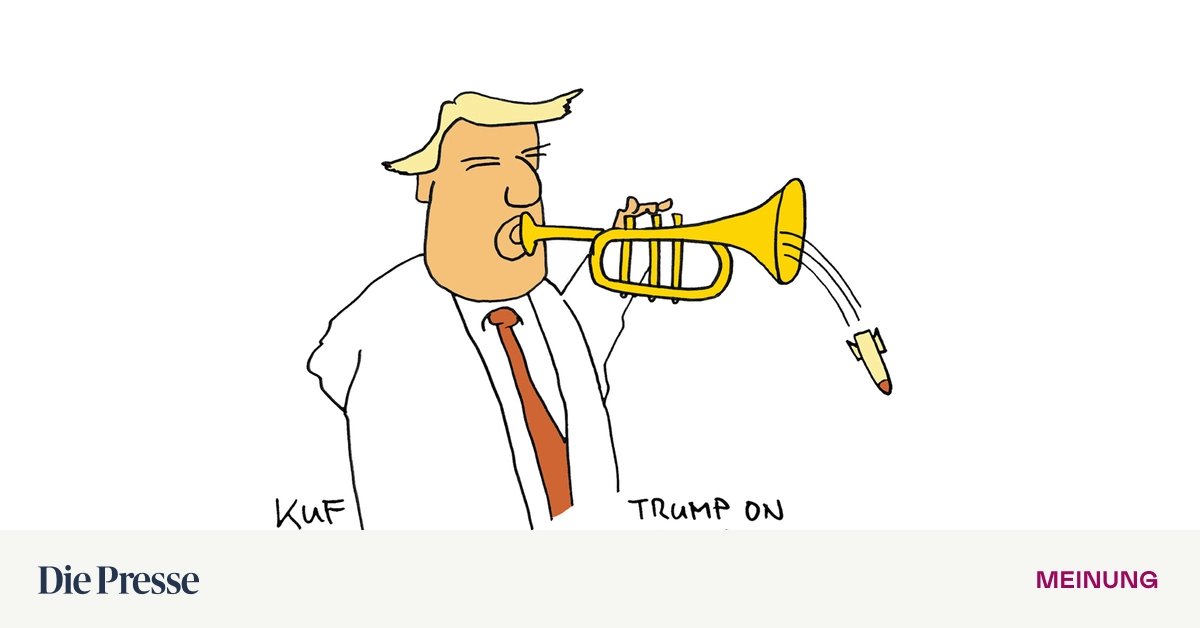
With his disruptive and polarizing politics, Donald Trump is leading the motherland of jazz – the music that is associated with freedom and democracy – into autocracy. This political development in the USA has led to a wave of protests from musicians of all genres.
The following artists from the pop, rock and folk scene have exposed themselves: Bruce Springsteen, Beyoncé, Harry Styles, Olivia Rodrigo, Taylor Swift, Green Day, Lady Gaga, Neil Young and Joan Baez. There are also prominent examples from the world of classical music, including the violinist Christian Tetzlaff and the pianist András Schiff. The “Rheinische Post” speculated that their statements about the conditions in the USA were so critical that they might not have gotten beyond the transit area when entering the country.
A notice:
Guest comments and contributions from external authors do not have to reflect the opinion of the editorial team.
Pianist András Schiff criticized the release and pardon of the criminals on January 6, 2021. Five people were killed in the violent attack by supporters of the then-elected President Trump on the Congress in Washington. He opposed the name change of the US capital’s cultural temple to the Trump Kennedy Center. “I’m not optimistic that things will get better,” said Schiff and canceled a series of concerts in the USA in protest.
And it actually doesn’t get any better, just think of the attack on Iran, with which the president broke his central election promise not to start wars, or the verbal attacks against the US-born Pope Leo XIV, with which he snubbed the 20 percent of Catholic voters.
The saxophonist Kamasi Washington (“Donald Trump deliberately uses intimidation and hatred to demonstrate power”), the drummer Terri Lyne Carrington, the guitarist Pat Metheny, the pianist Fred Hersch and the drummer Johnathan Blake were the first prominent jazz musicians to express themselves verbally or in their works.
Blake released “My Life Matters” – the title is deliberately based on the “Black Lives Matter” movement, which was founded in 2013 to protest against violence against people of color: “When I wrote the music, it seemed as if every day a person of color was killed at the hands of the people who were supposed to protect us. We musicians cannot remain silent, especially in times like these.”
Drummer and vibraphonist Chuck Redd gained international fame when he canceled his traditional Christmas concert at the Kennedy Center in December 2025 in protest of its renaming. This brought him a lawsuit for damages of one million dollars.
Since many other artists subsequently followed his example and also canceled announced performances, the “Trump Kennedy Center” is to remain closed for two years with the official reason that it needs to be structurally renovated.
Jazz, which emerged from the encounter between “black” and “white” around 1900 in the southern United States, was in its formative phase the music of an oppressed people and oppressed classes, as the social historian Eric J. Hobsbawm put it in his book “The Jazz Scene”. In it he described jazz as “a music of protest and rebellion”.
To this day, the fight against racism and for freedom and democracy plays a major role in jazz.
As early as 1939, singer Billie Holiday popularized the song “Strange Fruit” at New York’s Café Society, which was a musical denunciation of the racist lynchings of blacks in the southern states. Its composer Abel Meeropol also wrote the anti-racist song “The House I Live In,” which Frank Sinatra sang in the 1945 film of the same name, which earned him fierce attacks from white extremists.
Many great jazz musicians have dealt with the topic of racism in their compositions, from Duke Ellington (“Black, Brown and Beige”) to Max Roach (“We Insist! Freedom Now Suite”) to Dave and Iola Brubeck (“The Real Ambassadors”) and Oscar Peterson (“Hymn to Freedom”). Nina Simone castigated violence against African Americans with “Mississippi Goddam,” while Charles Mingus released “Fables of Faubus” in response to a racist governor in Little Rock, Arkansas. In the 1960s, jazz and gospel were the accompanying music for Dr. Martin Luther King.
When trumpeter Wynton Marsalis today describes Trump’s rhetoric as “cheap populism” and criticizes the cuts in public funding for art, culture and universities as part of a campaign against “wokeness”, he is following in the tradition of the jazz legends mentioned. About his highly political album “The Democracy Suite”, which was released in 2021, Wynton Marsalis said: “We live in a democracy that we should fight for.”
The Pulitzer Prize winner and artist who has won several Grammys in the fields of jazz and classical music draws a comparison between politics and music: “Democracy is like a living organism that should give everyone individual opportunities. It’s the same with jazz.”
And the New Orleans-born trumpeter, bandleader and composer explained the current situation in the USA: “Musicians have always said socially critical things. Jazz is a perfect form of expression for this, because African-American people have always suffered under the burden of being free in the land of freedom, but of being prevented by a majority from doing exactly that: being free.”
Pianist Brad Mehldau warned against a betrayal of the values of freedom and democracy, saying it was frightening that the US political leadership under President Donald Trump appears to be moving away from supporting sovereign Ukraine in its defense against Russian aggression, thereby endangering the shared democratic heritage with its European allies. The current US government no longer stands for freedom, but for tyranny.
The white Mehldau referred to his African-American role models Miles Davis (trumpet) and John Coltrane (saxophone), whose birthdays will be the hundredth anniversary in 2026. With their demeanor, their intelligence and their dignity, they represented qualities that he missed in the Trump administration.
Multicultural jazz is the musical counterprogram to the white Christian nationalism of the “Make America Great Again” movement. There is no better way to describe the political dimension of this music than the legendary impresario Norman Granz: “Jazz brings people together – with complete neglect of race, color and creed.”
The author
Johannes Kunz (*1947 in Vienna) worked for ORF radio, was Bruno Kreisky’s press spokesman and ORF information director from 1986 to 1994. Author of several books on politics and jazz music.