
23.06.2026. 11:07 a.m
While the battle for the title of world champion is being fought on the World Cup grounds, another, equally interesting match is taking place outside. Football’s once unassailable corporate partners – from sporting goods manufacturers and broadcasters to brewers and bookies – are facing increasing challenges and declining influence. In the text we are transmitting from the respected British magazine The Economist, it is analyzed how the biggest sporting event on the planet is increasingly revealing the weaknesses of companies that have profited from its popularity for decades, but also who could take their place in the future.
It is often said that money has ruined football. Holding the World Cup mainly in the United States of America, a country that produced so many successful businessmen and so few top footballers, was supposed to mark the final victory of big capital over the game itself.
Ticket prices are obscenely high. The tournament itself often feels more like a Silicon Valley conference circa 2016 than a soccer competition: the referees this year are wearing head-mounted cameras, and each player has their own “digital twin,” whatever that actually means.
However, despite the ambitious claims of the organizers, the work around the World Cup is essentially very simple. Traders, television companies, breweries and bookmakers, which form a kind of capitalism’s strike line-up, are today, in football terms, an aging and tired team prone to injuries. For some of them, this could even be the last championship.
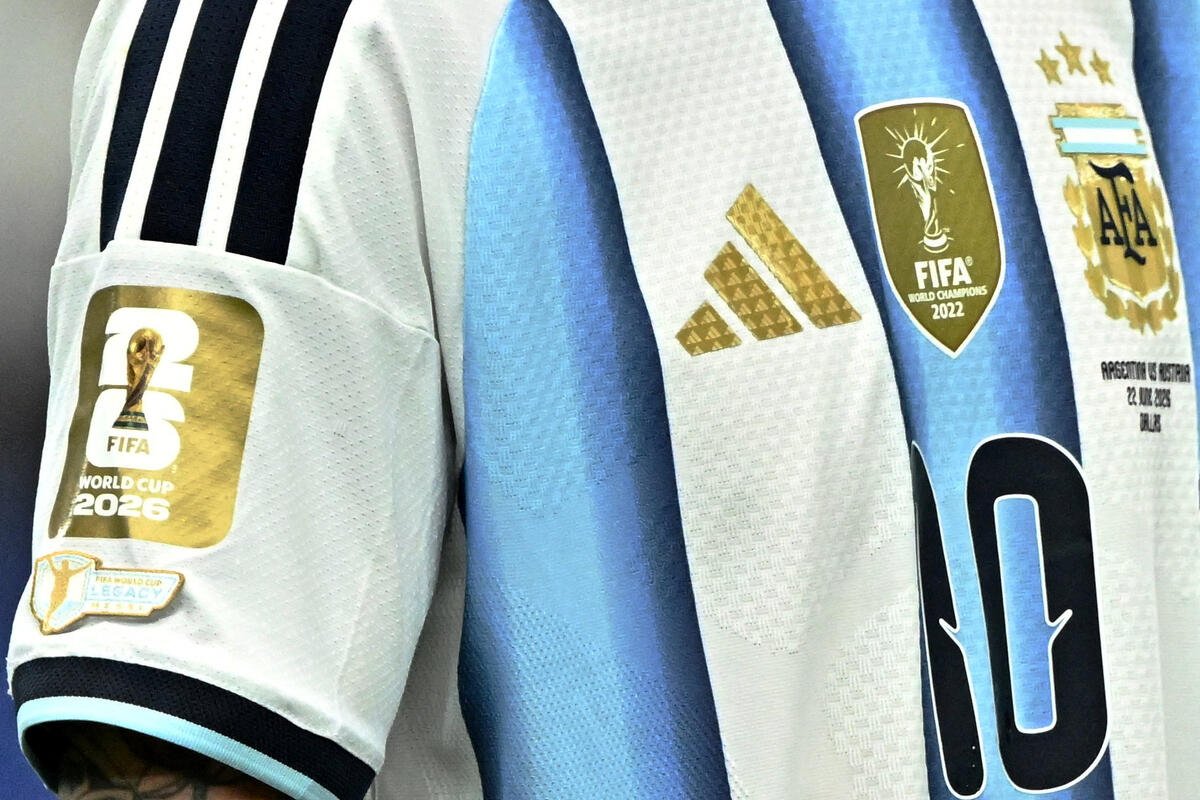
That the biggest sporting event in the world has become a kind of carnival of companies losing the race with time is best seen right on the field. On the left side of the chest, the players proudly wear the coat of arms of their national team, while on the right there are logos of sports brands that are facing serious problems.
Nike equips 12 of the total 48 national teams at this year’s tournament, less than Adidas, which has 14, and only slightly more than Puma, which equips 11 selections. The rest rely on the former giants who today mostly live off their old glory. The Democratic Republic of Congo, for example, is the sole customer of Umbra, the British brand that once equipped more national teams than any other manufacturer. The Iranian national team, for example, wears equipment from the domestic company Majid, which shares its name with the Iranian short-range anti-missile defense system.
All three of the largest manufacturers of sports equipment are worth less today than in 2018, when France defeated Croatia in the World Cup final, and both national teams wore Nike equipment. Shares of the American giant, which for years almost completely dominated global popular culture, have lost as much as three quarters of their value compared to the 2021 record. Part of the reason lies in the strengthening of competition from brands such as Switzerland’s Ona and Japan’s Asics.
Analysts, however, believe that an even bigger problem is the lack of new and exciting products. It’s hard to disagree with that assessment. Adidas designed the “Trionda” ball for this championship, which seems completely impersonal and easily forgotten. It is not striking like “Telstar” from the World Cup in Mexico in 1970, nor does it manage to capture the spirit of the host country like the technologically advanced “Timgeist” from Germany in 2006. The football boots are striking this year, but also incredibly similar – most come in different shades of pink. Even more concerning are Nike’s new “Aero-Fit” jerseys, some of which clearly don’t fit the players well. The seams on the shoulders cause the material to bulge uncomfortably, so thinner footballers look almost fairy-like in them.

At the behest of FIFA, which is showing a remarkable willingness to change the rules of the 19th-century sport it governs, but did not invent, the game that traditionally consists of two halves is now increasingly resembling a game with four quarters. Swiss football officials claim the new breaks, officially dubbed “Powerade Hydration Breaks”, are necessary due to high summer temperatures. Fans, however, believe that the breaks were introduced primarily to give broadcasters extra space for commercials.
Maybe those refreshment breaks are actually a disguised act of corporate humanity. Because is there anyone today who needs financial help more than television companies? Fox, which owns the rights to broadcast the championship in the US, has made extensive use of short breaks to air commercials, mostly featuring David Beckham. After last year’s growth, the price of its shares started a downward path again. Other broadcasters are not doing much better either. In France, the matches are broadcast by M6, whose shares reached their peak in 2000. In Great Britain, half of the matches are broadcast by ITV, whose best stock market days were behind it back in 2015. Many Spanish-speaking viewers in America watch the games on Telemundo, the network owned by Comcast, whose shares peaked in 2021.
A tournament with significantly more games – as many as 104 instead of 64 as there were in the previous championship – should also bring more alcohol consumption. However, the brewing industry is not going through the best days either. The biggest problem is the increasingly pronounced tendency of young people in rich countries to moderate and avoid alcohol. The World Cup could be the ideal antidote to such excessive prudence, when the English national team, once known for its fun-loving players, would not be so dedicated to promoting a healthy lifestyle today.
Players this year can be seen wearing Wup devices, wristbands for monitoring physical functions, which are especially popular among people who analyze their health too much and drink too little. England captain Harry Kane is also promoting the Oura ring, another popular tech accessory for those obsessed with health statistics.
Some breweries still look at the World Cup as the last chance for salvation and hope for a miracle. The world’s largest beer producer expects to increase sales between 0.2 and 0.3 percent this year thanks to the tournament. American brewers are especially counting on the benefit of hosting the championship. However, according to analysts from Morgan Stanley, the amount of beer consumed largely depends on which teams will reach the finals.
Looked at in this way, the knockout phase matches are not only duels between national teams, but also confrontations between their fans’ favorite beers. On the other hand, the unexpected elimination of certain national teams can leave huge amounts of unsold beer, as happened after England’s early exits from the 2006 and 2010 World Cups.

A similar logic applies to the betting industry: the more interesting and uncertain the tournament, the more money the betting companies make. However, investors do not particularly value them either. According to estimates by Deutsche Bank, users of the two big players in the industry, Flater and DraftKings, will place a record 2.4 billion dollars in bets during this championship in the USA. Despite this, the value of their shares fell by half or a fifth this year.
Unlike alcohol producers, who can blame their problems on changes in consumer habits, betting companies themselves are responsible for the existential threat they face today – the growth of prediction markets, platforms where users invest money on the outcomes of future events.
From the reserve bench
It is easier to observe the departure of the old guard of corporate partners of the World Cup than to assess who will replace them at future tournaments. It is difficult, for example, to predict who will produce jerseys if the big sports brands continue to lose importance.
The biggest players in the prediction market, Kalshi and Polimarket, seem like serious candidates to take the lead role. The same goes for streaming giants like Netflix and Amazon. Sooner or later, the gap between the enormous popularity of the World Cup and the diminishing importance of traditional television will become insurmountable.
Much will depend on FIFA, which, unlike its floundering corporate partners, still enjoys a near-monopoly position. Players, that is, sponsors and media partners, will change, but the coach will remain the same.
Download the application and follow the news


FOLLOW US ON

News