Government program “Energy Efficiency Fund in the Residential Sector of Moldova” (FEERM, managed by CNED, demonstrates concrete results in all three financial products: the rehabilitation of multi-family residential buildings, the support of rural households with high energy vulnerabilities and the modernization of individual houses within the Casa Verde product.
The results of the program were presented within the framework of the Press Club, organized by the National Center for Sustainable Energy (CNED) together with GIZ Moldova. The event was attended by representatives of development partners and the media.
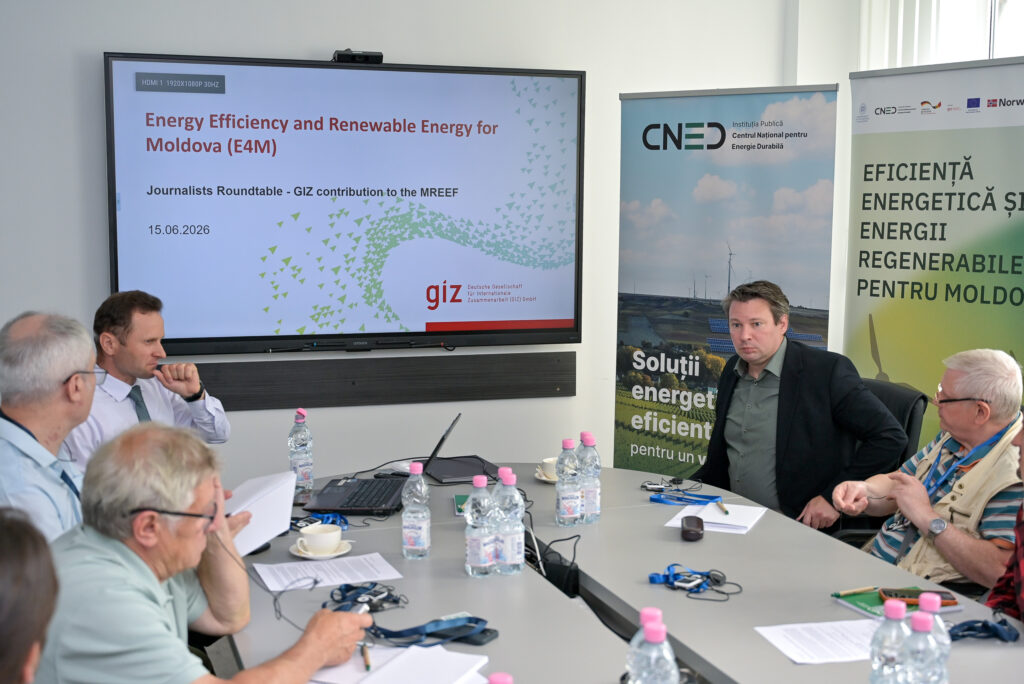
“Every lei invested in energy efficiency can bring more than 4 lei in economic and social benefits by reducing energy costs, creating jobs and stimulating the local economy. It is on this logic that FEERM is based – not temporary compensation, but structural investments with measurable long-term effects,” noted the director of CNED Ion Muntean, presenting the results of the FEERM program.
The head of the project “Energy Efficiency and Renewable Energy for Moldova” (E4M) of the German Society for International Cooperation (GIZ), Thorsten Greis, emphasized the contribution of international partners in the development and implementation of FEERM financial products.
“In 2024, we began cooperation with CNED to develop financial instruments within the framework of FEERM. Since then, we have managed to ensure the successful implementation of the program, bring the country closer to European energy efficiency standards, and support new financial products. Two years later, we continue to work at the same pace. To ensure the sustainability of the program, we are investing in IT systems, training specialists and working together with CNED to create new FEERM products,” – stated Thorsten Greis.
Energy efficiency of apartment buildings: the first projects are moving to the implementation stage
Thermal modernization of apartment buildings remains the most difficult area of the FEERM program, since it requires collective decisions on the part of the owners, preparation of technical documentation and complex execution of work.
By the end of 2025:
- Conducted 98 energy audits of apartment buildings throughout the country;
- 77 condominium owners’ associations (APCs) entered into the project implementation process;
- 17 projects were approved for a total amount of 74.2 million lei;
- the first 4 contracts for the performance of work for houses in Chisinau and Balti were signed;
- 3 more projects are at the stage of concluding contracts.
At facilities for which contracts have already been concluded, work has begun and is being carried out according to the approved schedule.
Under this product, APCs receive a grant equal to 70% of eligible upgrade costs. For low-income residents, additional support is available through the Fund for Reducing Energy Vulnerability (FRVE), which can cover up to 90% of their own contribution.
Financing can cover a range of measures:
- insulation of facades and roofs;
- modernization of heating systems;
- installation of energy-efficient LED lighting in common areas;
- modernization of elevators;
- installation of photovoltaic panels and heat pumps.
For residents, this means more comfortable living conditions: stable temperature in apartments with the ability to regulate in each room, reduced energy costs, increased safety of common spaces and increased housing costs.
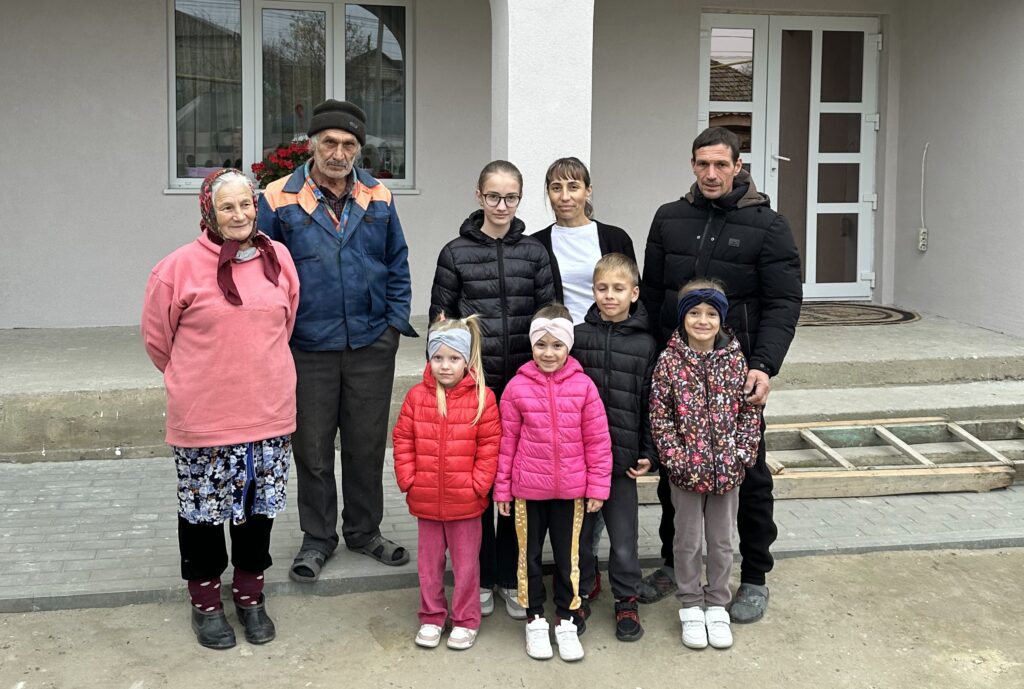
Energy efficiency of individual houses in rural areas: the first 42 households were modernized
A product targeting rural households with extreme energy vulnerability showed the most progress in 2025. The level of disbursement of grant funds has reached about 90% of the annual budget allocated for this product.
The selection of participants for the pilot phase was carried out through the System of Energy Vulnerability Information (SIVE), which ensured a balanced territorial distribution throughout the country.
The FEERM grant covers up to 95% of the cost of the work, and the family contribution is only 5%, minimizing the financial burden on families with limited resources.
Results:
- 190 applications submitted;
- 163 applications approved;
- 153 agreements were signed;
- work was completed in 42 houses;
- the total cost of completed projects amounted to 12.8 million lei.
Thanks to the implementation of the projects, the participants’ homes became more energy efficient, comfortable and affordable in terms of energy costs.
The total cost of approved projects is 51.2 million lei, and the average cost of one project is about 350 thousand lei per household. A second wave of funding is currently being considered for a further 99 rural homes.
Casa Verde: more than 1,700 applications in the first year of the program
Launched in July 2025, the Casa Verde financing program targets single-family homeowners looking to invest in energy-efficient upgrades and renewable energy. Interest from citizens was very high already during the first two calls for proposals.
For the first year of work:
- 1,745 applications were received through the feerm.md platform;
- 964 applications approved under Component I – energy audit and documentation;
- 528 dossiers were submitted under Component II – construction and installation works;
- 295 projects approved;
- 275 financing agreements were signed for a total amount of 55 million lei.
Most participants prefer integrated solutions, including photovoltaic systems with energy storage and heat pumps, which can increase household energy independence and reduce energy costs in the long term.
The average investment is about 400 thousand lei per household, of which 50% is covered by the FEERM grant, but not more than 200 thousand lei.
Energy and social effect: real results and new challenges
Beyond individual results for beneficiaries, the program creates a broader impact. Based on projects approved by the end of 2025, FEERM will provide annual energy savings of 5.86 million kWh, equivalent to RON 14.65 million in savings for beneficiaries on energy bills and a reduction in CO₂ emissions of 1,438 tons. The reduction in energy consumption at the single household level can reach 69%.
The effect is also felt in the local economy. FEERM stimulates demand for thermal insulation materials, energy efficient equipment and renewable energy systems, supports the development of energy audit and design services, and creates skilled jobs – from installers and designers to energy auditors and technical supervisors. In 2025, 35 eligible energy auditors have been identified and dozens of construction companies have registered, laying the foundation for the formation of an ecosystem of residential energy retrofit services.
The year 2026 marks the transition from the operationalization stage to the intensive investment implementation stage. CNED has defined clear goals: the rehabilitation of at least 8 apartment buildings, the completion of work in approximately 160 vulnerable households, the financing of more than 1,000 households through Casa Verde and the launch of at least two national competitions for this product.
In the medium term, the program provides for the rehabilitation of at least 500,000 sq. m. m of heated area with expected annual savings of 66.3 GWh. At the same time, at least half of the beneficiaries must be energy-vulnerable households.
FEERM’s progress has also been accompanied by a number of obstacles. The main challenge was the limited capacity of the local technical market – an insufficient number of specialized designers, certified energy auditors and construction companies with experience in the field of energy rehabilitation led to the re-launch of procurement procedures and longer lead times than planned.
At the level of apartment buildings, the challenges were of a different nature. Decisions about home rehabilitation must be made collectively by all owners – a process that includes general meetings and lengthy negotiations. Added to this is the difficulty for some engineering companies in managing complex and customized technical solutions. However, after overcoming these challenges, the projects have moved forward, and the first contracts for the work have already been signed and are at the implementation stage.
Based on the accumulated experience, the CNED has defined an action plan for 2026 in five areas: standardization and development of practical tools, digitalization and automation of processes, development of the energy efficiency market, acceleration of implementation and communication better adapted to the needs of beneficiaries.
In addition, to facilitate residents’ associations’ access to financing, CNED is developing a mechanism to guarantee and compensate bank loans. It will allow APC to obtain loans to cover the residents’ contribution to the investment. This mechanism is expected to become operational before the fall of 2026.