Would you pay for peace and quiet?

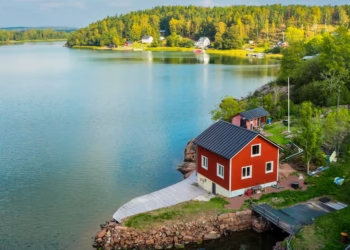
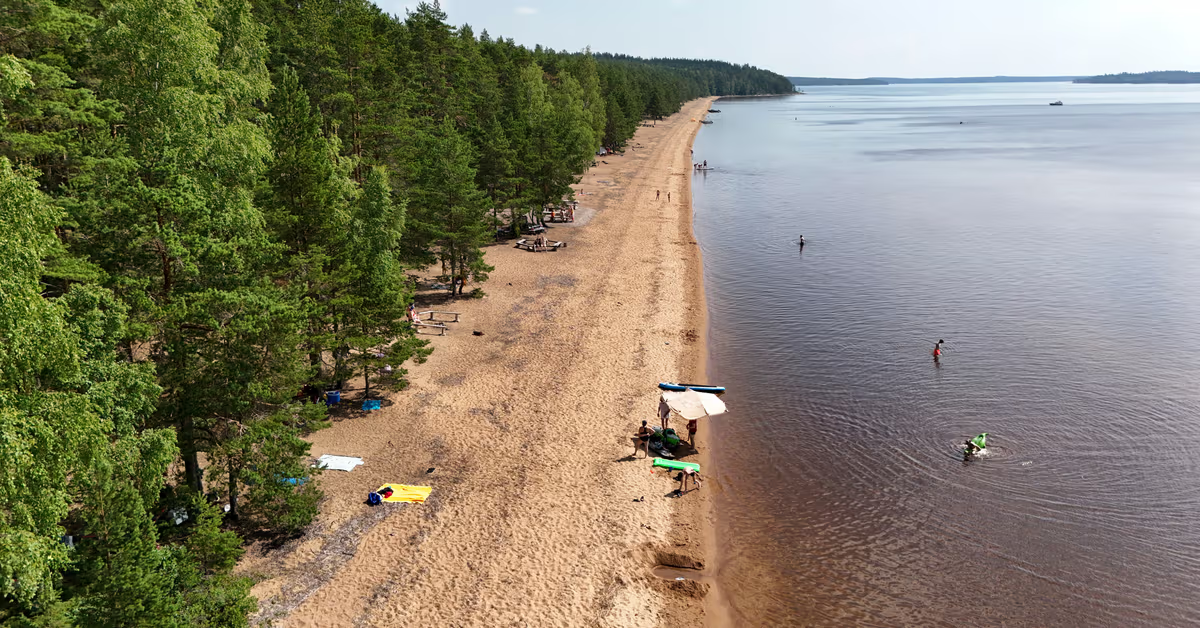
On the shores of Lake Saimaa, a growing number of visitors are paying a premium for something that doesn’t cost anything — silence.
Helsingin Sanomat spoke to Jake Davies, a 35-year-old Brit, who travelled to Ruokolahti to spend a week in near-total quiet. International participants pay more than 1,000 euros for the retreat, where mobile phones are either surrendered entirely or placed in airplane mode for the duration of the stay.
What does the science say?
Brain researcher Mona Moisala told HS that research suggests that periods of silence and meditation can alter neural networks associated with attention and emotional regulation. The more addicted one is to devices, the more useful the stimulation break is.
Juggling work and kids
Finnish schoolchildren enjoy a 10-week summer holiday. Most employees, on the other hand, receive only four weeks of annual leave during the summer months.
Hufvudstadsbladet points out that the proposal to delay the summer holiday would therefore solve little. The real dilemma is not the timing of the break, but the gulf between school holidays and the amount of time off that working parents can realistically take.
Parents patch together arrangements where they can, and summer camps provide a crucial solution for many households. But the competition can be intense, HBL reports. According to camp provider Folkhälsan, places at the most sought-after programmes were fully booked within a minute of registration opening.
Prepare to work into your 70s
Finland’s pension system is steadily shifting towards later retirement, according to new projections by the Finnish Centre for Pensions.
The statutory retirement age is rising in gradual steps. Talouselämä explains that for those born from 1955 onwards, the minimum old-age pension age increases by three months per birth cohort, until it reaches 65 for those born in 1962.
For those born in 1965 and later, the retirement age is tied to changes in life expectancy. It’s roughly 67 for those born in 1985, and about 69 for those born in 2010. The latest calculations suggest that those born last year will be the first cohort expected to retire at 70.
The upward drift reflects longevity. Life expectancy in Finland was 82.3 years last year and is projected to exceed 92 by 2100.
Yle News’ All Points North podcast explored how the Finnish retirement system will hold up.
Listen to the episode via this embedded player, on Yle Areena, via Apple, Spotify or wherever you get your podcasts.