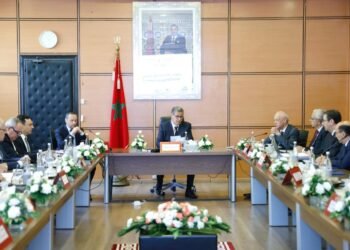
THE Morocco can already count its products. It must now build the medical confidence which will allow them to be prescribed. This is the main lesson of the first scientific day devoted to the therapeutic use of cannabisorganized Saturday June 6 in Casablanca by theNational Agency for the Regulation of Cannabis Activities (ANRAC)in partnership with the Moroccan Society of Medical Sciences (SMSM).
The sector has a regulatory, industrial and pharmaceutical base. More than 140 cannabis products have been manufactured by thepharmaceutical industry national and registered with theMoroccan Agency for Medicines and Health Products. They are available in more than 600 authorized points of sale. But these figures alone do not yet constitute a therapeutic practice. The real transition takes place elsewhere: in the actions of the prescriber, in the robustness of the indications, in the training of professionals and in the monitoring of patients.
An offer created, a use still retained
For Mohamed El GuerroujDirector General of ANRAC, the sector now has its first concrete support. Agricultural and industrial production has reached a milestone; the pharmaceutical industry has taken over; the Moroccan Agency for Medicines and Health Products (AMMPS) carried out the registration of the products; Authorized points of sale are identified. In this chain which goes from production to pharmacy, the pharmaceutical industry has, according to him, responded.
It remains to bring this offer into medical use. The Director General of ANRAC recognizes in this regard that the therapeutic use of cannabis products still remains “timid”. Availability, here, does not constitute prescription. It calls for a more precise clinical framework, made up of established indications, protocols, therapeutic guides and scientific words capable of instilling confidence.
It is towards learned societies, doctors prescribers and researchers which now turns to the rest of the project. It is up to them to give this legal sector its medical translation, documented and monitored. The issue goes beyond the sole act of prescription: it also involves the balance of a chain where small farmers, integrated into the legal circuit, remain a decisive link.
Learned societies at the clinical relay
This medical translation will go through learned societies. It is now up to them to give clinical content to the available offering: setting the indications, setting out the prescription conditions, establishing good practice guides and saying, with the necessary precision, how far the therapeutic use can go.
For Moulay Said Afifpresident of the SMoroccan Society of Medical Sciences (SMSM)the Moroccan experience of therapeutic cannabis is primarily due to the solidity of its legal framework. Cultivation, processing, medical use: each step must be part of a regulated system. It is this basis which today, according to him, makes it possible to advance the use of cannabis for health, through action plans built within a legal framework. This scientific day must, in this perspective, contribute to action plans capable of accelerating the use of cannabis for health, within a legal and regulated framework. The framework is therefore set. The sector produces, the pharmacy distributes, the law regulates. What remains is what medicine requires before sustainably integrating a product into practice: hierarchical evidence, controlled dosages, shared indications, rigorous monitoring and clearly assumed medical responsibility.
Caution as a course of action
The intervention of Jaafar Heikelgeneral director of the Strategy, development and international relations division of the Mohammed VI Foundation for Science and Healthwent in this direction, that of the medical requirement. A sector can be organized, products can be available; it is still necessary to say for which patients they can be prescribed, on the basis of what evidence and under what guarantees.
Without mincing his words, Mr. Heikel dismissed any confusion about the role of each: “My role today is absolutely not to tell you what the therapeutic indications are.” Learned societies and experts in each specialty are responsible for defining the medical scope of this use. Neurologists, pediatricians, oncologists, gastroenterologists, rheumatologists, intensivists, psychiatrists, geriatricians, dermatologists, cardiologists, pain specialists : it is up to everyone to say what can be retained, for which patient, according to what data and with what precautions.
THE medical cannabis should therefore not be presented as a general response. It can join existing management strategies when the expected benefit is established. But its use must remain based on the quality of the evidence. “There are levels of evidence that are completely different,” recalled Dr. Heikel. The path is open, but it remains marked: moving forward without confusing product availability and general validation of indications.
Produce scientific data
This caution is in no way a hindrance. On the contrary, it gives its reason for being to research. Dr Heikel recalled the work carried out for almost a year and a half with the ANRAC teams around scientific literature. He also highlighted that the therapeutic use of cannabis is documented in more than 65 countries and that the available work covers several physiological areas.
But international literature is not enough to found a national practice. American, Swedish or German data do not always respond to Moroccan realities: patient profiles, available products, prescription habits, monitoring conditions, access to care, vulnerabilities specific to certain categories of patients. Hence his call: “Let’s produce scientific data, data that is of course useful.”
This Moroccan data should shed light on the indications, dosages, galenic forms, routes of administration, drug interactions and the side effects. Dr. Heikel mentioned, in this regard, eight physiological domains identified in the literature, while recalling that the evidence does not present the same solidity from one indication to another.
Indications to sort, uses to mark
This shows the full extent of the field, but also the need for sorting. Neurology, pediatrics, oncology, gastroenterology, rheumatology, intensive care, psychiatry, geriatrics, dermatology, cardiology, chronic pain, sleep disorders, anxiety, refractory epilepsy, neuropathic pain, inflammatory or metabolic pathologies : the list is broad, but it does not have general validation value.
Dr Heikel also affirms that certain data appear more consistent in neurology, particularly for refractory epilepsy and neuropathic pain. In oncologythe elements mentioned mainly concern pain, nausea, vomiting and improving patient comfort. In pediatrics, the example of children suffering from refractory epilepsy has been cited with caution, under specialized control and with the necessary monitoring.
Each indication must therefore be examined for itself, with the same concern for proof, tolerance and expected benefit. This is where the role of learned societies becomes decisive: to bring order to possible uses, distinguish documented situations from those which still require research, and give prescribers solid clinical benchmarks.
Safety as a prerequisite
In the background, patient safety remains the strongest point of vigilance. Dr Heikel recalled this by mentioning adverse effects, intolerance, drug interactions, pharmaceutical monitoring, but also the populations most exposed: elderly people or vulnerable profiles. So many elements which cannot remain on the margins of future protocols. “We have an ethical obligation, a moral obligation,” he stressed.
The prescription of a product based on cannabis cannot therefore be reduced to the addition of a therapeutic option. It involves informing the patient, evaluating the expected benefit, choosing the appropriate form, monitoring risks and taking into account treatments already in progress. The routes of administration will also need to be specified. Depending on the forms used, bioavailability, onset of action, effectiveness and tolerance may vary. Here again, the prescription requires measurement: it must be adjusted to the patient, the indication and the available data, so that medical use is established within a safe, readable and monitored framework.
Maintaining the boundary with non-medical uses
Dr. Heikel also insisted on separating the records. THE medical cannabisas it is envisaged in the Moroccan context, is neither related to recreational use nor to a logic of trivialized distribution. Derived products and food supplements also remain subject to supervision. The message is clear: medical use must remain in the hands of the doctorwithin the framework of his clinical judgment and the interests of the patient. This distinction also applies to representations associated with cannabis, CBD or THC. Therapeutic openness does not mean releasing control; it calls for legible rules, defined dosages and assumed medical responsibility.
Towards a Moroccan therapeutic guide
The recommendations resulting from the meeting give a concrete translation to this line. They provide for the establishment of a national list of therapeutic indications, the development of prescription protocols, the preparation of good clinical practice guides intended for health professionals and the establishment of a patient monitoring observatory. This architecture must result in a reference framework specific to the Kingdom. “We are going to produce a Moroccan therapeutic guide,” affirmed Dr. Heikel, linking this ambition to the work of learned societies, the production of local data and the training of prescribers. Research occupies a central place in this roadmap. The participants thus called for encouraging programs of clinical and pharmacological researchto support national studies on the effectiveness, safety and indications of legal cannabis, to create a national database dedicated to scientific work and publications, as well as to launch an annual research prize in this area. Training completes this movement. The recommendations relate to diploma and certification training at the level of Faculties of medicine and pharmacyon the integration of therapeutic cannabis into medical, pharmaceutical and paramedical curricula, as well as continuing education sessions intended for doctors, pharmacists and other health professionals. Raising awareness among the general public is also among the areas chosen.
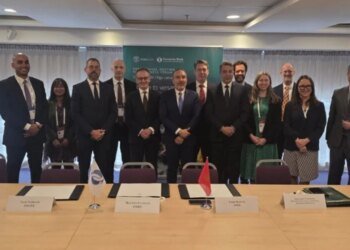
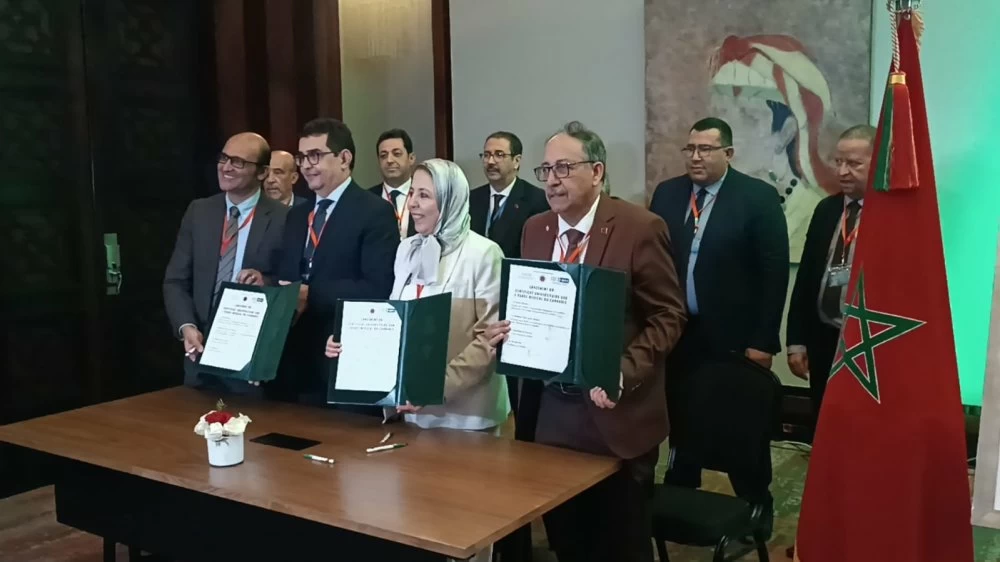
Two agreements were signed alongside the work. The first concerns the launch of a research prize dedicated to the therapeutic use of cannabis. The second concerns a training program leading to a university and professional certificate, in partnership with the Faculty of Medicine and Pharmacy of Casablancafalling under theHassan II University.