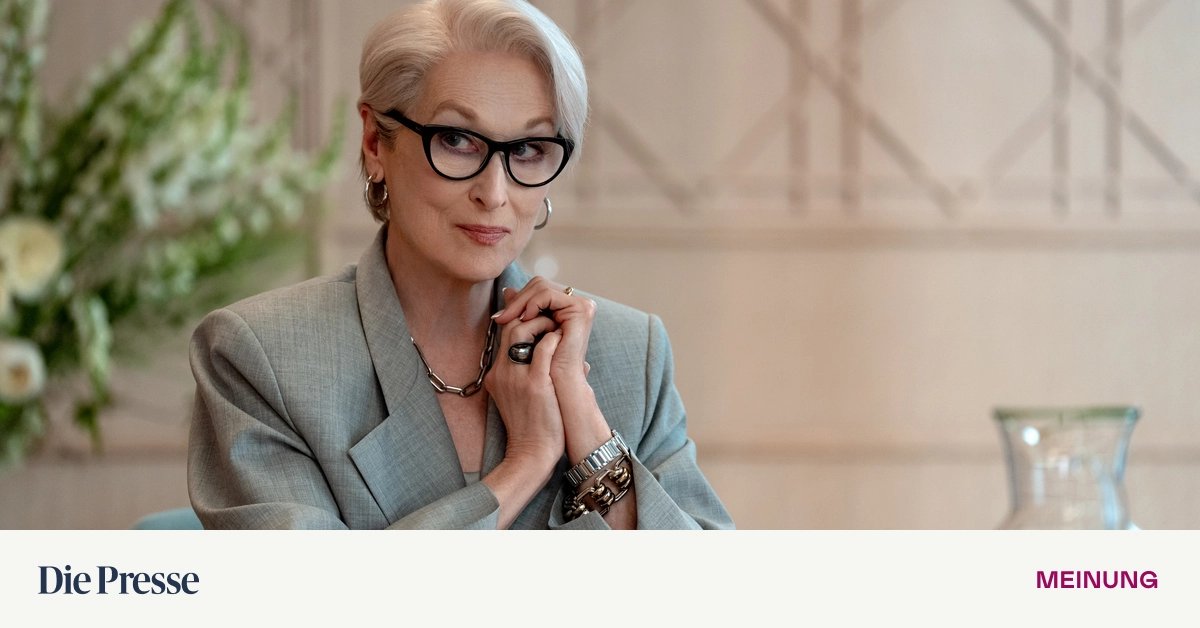
The sequel to the cult film tells of the decline of the media industry: despite a star cast and designer couture, it lacks the charm of the original.
No one crosses the streets of New York as elegantly – or as often – as Anne Hathaway. In her role as journalist Andy Sachs, she also does this in office outfits that change every minute and are worth admiring. Fans of the series “Sex and the City” know that just watching Carrie Bradshaw hail a taxi in extravagant Manolo Blahnik shoes and a bold ensemble is half the battle. It’s just stupid if no one pays the other half of the rent.
The second part of “The Devil Wears Prada” hits Austrian cinemas on Thursday. The cast initially sounds like the front row of a Prada fashion show: In addition to regulars Meryl Streep, Anne Hathaway, Stanley Tucci and Emily Blunt, Lady Gaga, Lucy Liu and Heidi Klum make a guest appearance, as do representatives of the fashion aristocracy such as Marc Jacobs, Zendaya stylist Law Roach, “New York Times” columnist Vanessa Friedman and Donatella Versace. The plot of the film is – in a nutshell – the struggle of print media fashion reporting with its declining relevance.
The original had a much more attractive story to tell: The surprise success 20 years ago was based not least on Meryl Streep’s pointed portrayal of one of the most influential and mysterious figures in the fashion industry and pop culture – “Vogue” editor-in-chief Anna Wintour. Remember: the film was released before global influencer culture. Before even luxury brands had to fear for their customers and “Vogue” for its readers. Before more and more fast fashion labels flooded the market with ever cheaper copies. And when individual star critics could still steer public opinion.
At the time, journalism graduate Andy Sachs (Hathaway) was desperately looking for a job and worked as Miranda Priestly’s (Streep) assistant in the editorial department of “Runway”. There she was introduced to the world of haute couture with all its intrigue and stylistic subtleties and also received a make-over (today we would probably say “glow-up”). She became more and more successful, but ultimately – the moral of the story – preferred values and private life to the superficial and labor-intensive fashion world. Today this is called: work-life balance.
Fast forward to 2026: Andy Sachs is now an award-winning journalist and finds out during another awards ceremony that she and her entire editorial team have been laid off. At the same time, the fashion magazine “Runway” is going through a veritable image crisis because of a poorly researched article. The solution: It’s best to hire a serious journalist who is currently looking for a job anyway. And Andy Sachs is back on “Runway”, but this time as chief reporter.
The dynamic that arises there seems familiar: Priestly is still the cold, beastly boss, who now has an assistant at her side who prevents her from embarrassments such as “fat shaming” through whispered comments. Despite 20 years of professional experience, Andy Sachs falls back into the role of a compliant subordinate and Stanley Tucci remains the rock for both of them. Unlike back then, however, Priestly now has to fawn over fashion houses and advertising clients; her opinion is no longer trend-setting. The three protagonists finally join forces against the new owner of the publishing house, a billionaire’s son in functional clothing with a penchant for increasing effectiveness. In a story that is a kind of swan song for esthete and tradition, this is what ultimate evil looks like.
Even the concentrated esprit of Meryl Streep and Stanley Tucci cannot hide the fact that this film lacks heart and wit. So, similar to the “Sex and the City” film adaptations, it seems much more like an advertising brochure for fashion brands that fear for their existence.