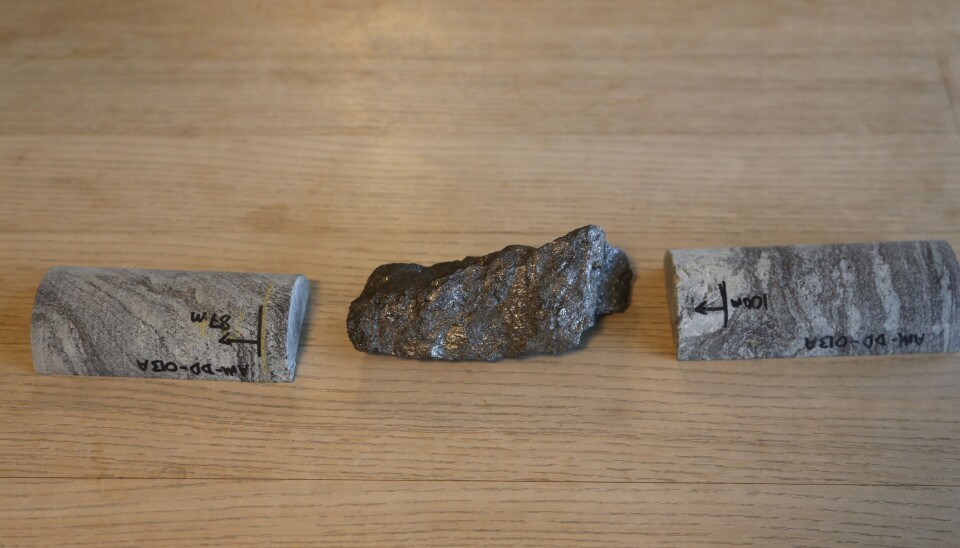
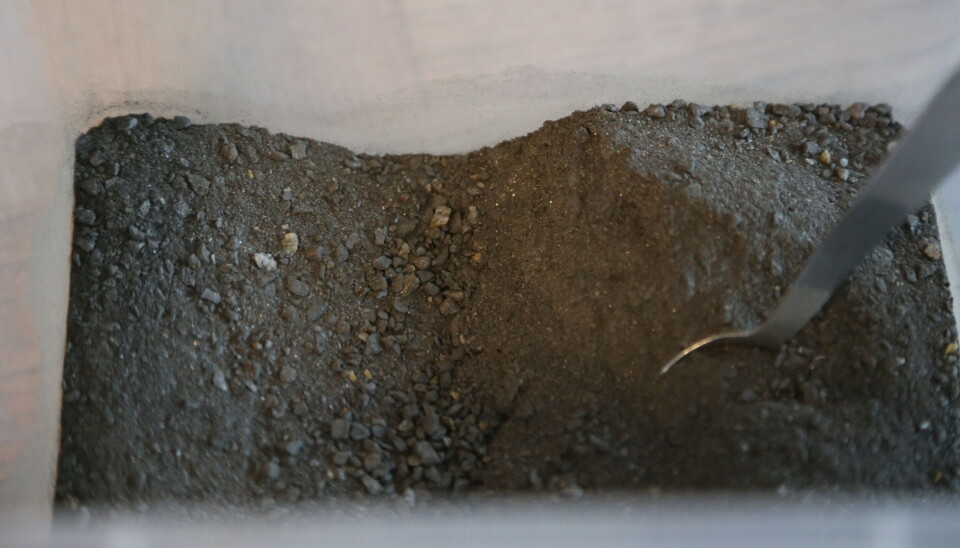
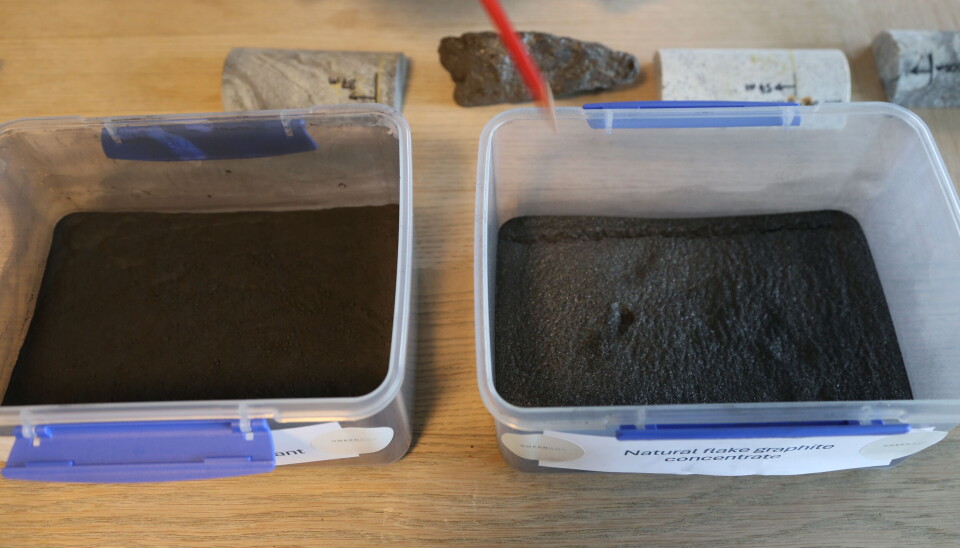
On the table in the office next to the warehouse is a soft gray-black stone that rubs off when you touch it.
The mineral graphite, which is best known for being the core of a pencil, but which these years is particularly sought after as the so-called anode material or active substance in lithium batteries.
On the table in the office next to the warehouse is a soft gray-black stone that rubs off when you touch it.
The mineral graphite, which is best known for being the core of a pencil, but which these years is particularly sought after as the so-called anode material or active substance in lithium batteries.
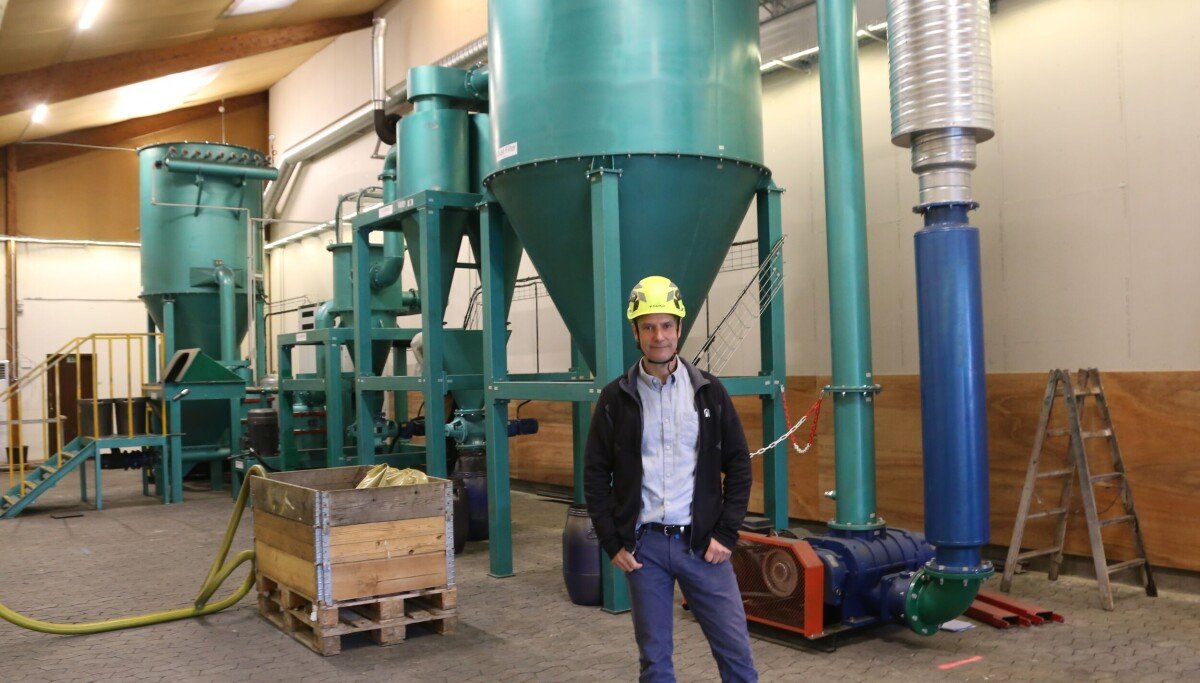
GreenRoc Strategic Materials – which via its subsidiary Greenland Graphite – has a 30-year exploitation permit for graphite from Piiaaffik Amitsoq at Nanortalik, is in the process of testing their graphite concentrate in a newly built pilot process plant that has been established in Hørsholm north of Copenhagen.
First pilot process plant in Europe
This is a so-called micronisation and spheronisation plant, which processes the graphite concentrate in 20-30 rounds from small flakes to perfectly shaped microscopic spheres. It is the Chinese who came up with the technology that GreenRoc is now trying its hand at on a mini scale.
So far, several batches of 100 kilo graphite concentrate have been run through the facility, and the preliminary results are promising, says director Stefan Bernstein, who has a Ph.D. in geology and who was previously head of the mineral department at GEUS.
– Our plant is actually the first pilot process plant in Europe that can transform the natural flakes of graphite into spheronized spheres. And so far we have received some good data that gives us a more solid foundation to stand on in relation to further optimization of particle size distribution and shape.
The spherical shape is particularly important because it provides a higher density and enables the lithium ions to move faster and more efficiently in the batteries during charging and discharging. In addition, the spherical shape ensures that the graphite has a smaller surface area in relation to the volume, which in turn gives a longer life for the battery.
Chemical baths
However, the good properties require extensive cleaning of the graphite balls, and this must also be done at the pilot plant later this year, where GreenRoc will establish chemical baths next to the process plant.
In China, they do it with the highly corrosive hydrofluoric acid, but GreenRoc has instead come up with a method where they use sodium hydroxide, also known as caustic soda, which is easier to handle and more environmentally friendly.
– Sodium hydroxide is then heated and the graphite is cleaned, and the graphite is subsequently treated in sulfuric acid.
A complicated process then follows, where each small cleaned ball is coated and heated before it can be sold as a finished product to customers such as battery factories. The last part of the process of coating graphite from the pilot plant will probably take place at a factory in Asia, with which GreenRoc has entered into a letter of intent.
Desirable mineral for batteries
It is Denmark’s Export and Investment Fund (EIFO) that has enabled the establishment of the pilot process plant with a loan of DKK 5.2 million. euros – corresponding to approx. 39 million kroner, which will also go to the upcoming drilling program at Amitsoq.
– We start the drilling program itself at the end of June and then it runs for 6-7 weeks, Stefan Bernstein tells.
The experiences from the drilling campaign and the pilot process plant will then be gathered in a larger profitability study, which the company hopes to start at the end of the year with a view to starting the construction of a full-scale process plant, which will probably be located either in Norway or Denmark.
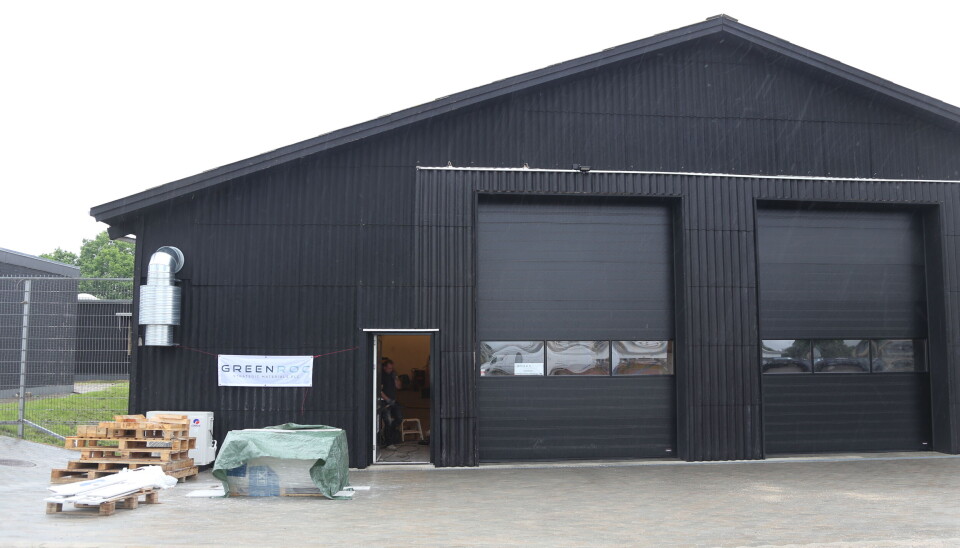
– So in a few years we would like to start building the mine and the crushing plant in Amitsoq and establish process plants in Denmark or Norway, says Stefan Bernstein.
Why don’t you set up the process plant in Greenland?
– Firstly, a process plant requires very large amounts of energy. Secondly, there are the environmental challenges in the cleaning process, which require the use of chemicals that we do not have to sail around and keep track of in Greenland. It is better to handle such chemicals in Denmark or Norway, where you already have a chemical industry, says Stefan Bernstein.
Today, China produces approximately 80% of the world’s total graphite. The country also accounts for close to 99% of the global processing of graphite into spherical graphite.