Co-owner of Delo Group of Companies Sergei Shishkarev will not buy out 49% of the group from Rosatom: he was unable to raise money on acceptable terms. Now the initiative is up to the partner: Rosatom may try to buy out 51% or leave everything as it is. To buy out the state corporation, it will be necessary to find 77 billion rubles. Analysts suggest that, most likely, Rosatom will also have difficulties raising funds, which makes maintaining the status quo more likely.
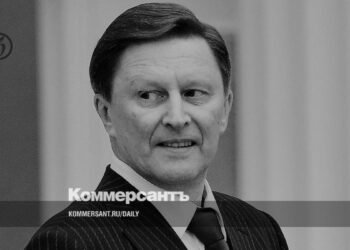
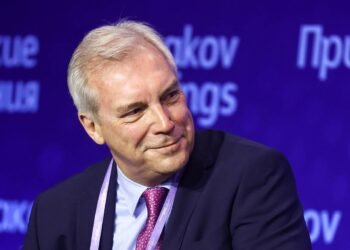
Sergei Shishkarev did not agree on raising money on acceptable terms to buy out Rosatom’s share in the Delo group. He reported this on his Telegram channel. “My team and I have done a lot of hard work,” he writes, “we have considered various mechanisms for financing the transaction, but I have to admit: the macroeconomic situation and market conditions do not allow us to formulate a transaction configuration that would suit all interested parties and guarantee a sustainable future for the Delo group of companies.” The transaction format available, given the circumstances, did not provide guarantees of stable activity and development of the group, he explained.
“I will not buy out the stake,” said Mr. Shishkarev. “This is a difficult decision for me, but I made it as the founder, as the person responsible for the company, based on the interests of a business with more than 30 years of history, a business that today employs thousands of people.”
Rosatom entered the capital of Delo Group of Companies in 2019 with 30%, and over time raised its share to 49%. Relations between the parties were not cloudless, and in December 2024, Transmashholding (TMH) entered the capital of the group as a third partner: it bought out 1% in Management Company Delo from Sergei Shishkarev and received the right to appoint a general director, who soon became Alexey Lebedev. It was assumed that TMH could then buy out Rosatom’s share in exchange for its own shares, but it did not work out due to disagreements regarding the valuation of the package (see “Kommersant” dated November 6, 2025). As a result, Sergey Shishkarev bought 1% from TMH (see “Kommersant” dated February 20), and the two partners began dissolution proceedings.
For this purpose, a “corporate roulette” procedure was provided, when one party can offer the other a price at which it can either sell its share or buy out the partner’s share (see “Kommersant” dated February 18). On February 20, Rosatom made an offer to Mr. Shishkarev, and Mr. Shishkarev decided not to sell, but to buy the stake (see “Kommersant” dated February 24). It was valued at 74 billion rubles. (or 77 billion rubles, if we are talking about the option of Rosatom buying out Sergei Shishkarev’s share).
In early April, Sergei Shishkarev announced that he plans to sell the purchased share to Rostec – in whole or in part (see “Kommersant” dated April 2). He explained that he sees synergy with the holding both as the owner of Uralvagonzavod (UVZ), which produces cars, and as a potential partner in the production of domestic containers. Subsequently, already on the sidelines of SPIEF, the head of the state corporation Sergei Chemezov spoke about interest in 25% of the group, but only after the procedure for offering a mutual buyout of the share was completed (see “Kommersant” dated June 5).
Now “the right to choose the ownership structure of the group passes to the state corporation Rosatom,” said Sergei Shishkarev. Kommersant sent a request to Rostec.
The redemption period expires on June 30. Now “the right to choose the ownership structure of the group passes to the state corporation Rosatom,” said Sergei Shishkarev. Rosatom head Alexei Likhachev said much remains to be “clarified and translated into legally significant form.” He noted that in Rosatom’s understanding, the partner does not have the opportunity to buy out the stake, “which implies our obligation, in accordance with the element of Russian roulette, to carry out this work on our part within several months.” “It is clear that we will not delay any months, we will make a decision in the near future, but only after Mr. Shishkarev’s decision is legally confirmed,” said Mr. Likhachev. He clarified that we are talking about legally significant steps, “which can be clearly interpreted by lawyers as a refusal to purchase.”
However, a source familiar with the terms of the agreement told Kommersant that all legally binding documents have been signed and come into force within the agreed time frame.
As for the prospects for buying out Mr. Shishkarev’s share, Mr. Likhachev assured that he considers “either of the two decisions to be fair—a buyout by Sergei Nikolaevich or a buyout by us.” In both cases, he assured, Rosatom will continue to “create a large logistics cluster of international scale and with an international capital structure, in order to increase national logistics sovereignty.” In April, Rosatom received permission from the FAS to create a joint venture with the port holding DP World (UAE) on the basis of FESCO. The 92.5% stake in FESCO owned by the state corporation will be contributed to the Global Logistics joint venture, in which the Emirati holding will receive 49% in exchange for a cash contribution.
The head of Infoline-Analytics, Mikhail Burmistrov, believes that from the point of view of distribution of shares, maintaining the status quo between shareholders looks more likely than a potential buyout of 51% by Rosatom, since the state corporation will also face the difficulty of attracting investments and issues of compliance of a full buyout with its strategic goals. The market today is not the easiest, the expert notes, and in this situation it is important to achieve maximum efficiency of corporate governance, since in the current conditions not all processes work optimally. “The main thing is for shareholder interaction to become more effective and less emotional,” the expert notes. In his opinion, other configurations of the transaction can be considered – for example, an installment plan.