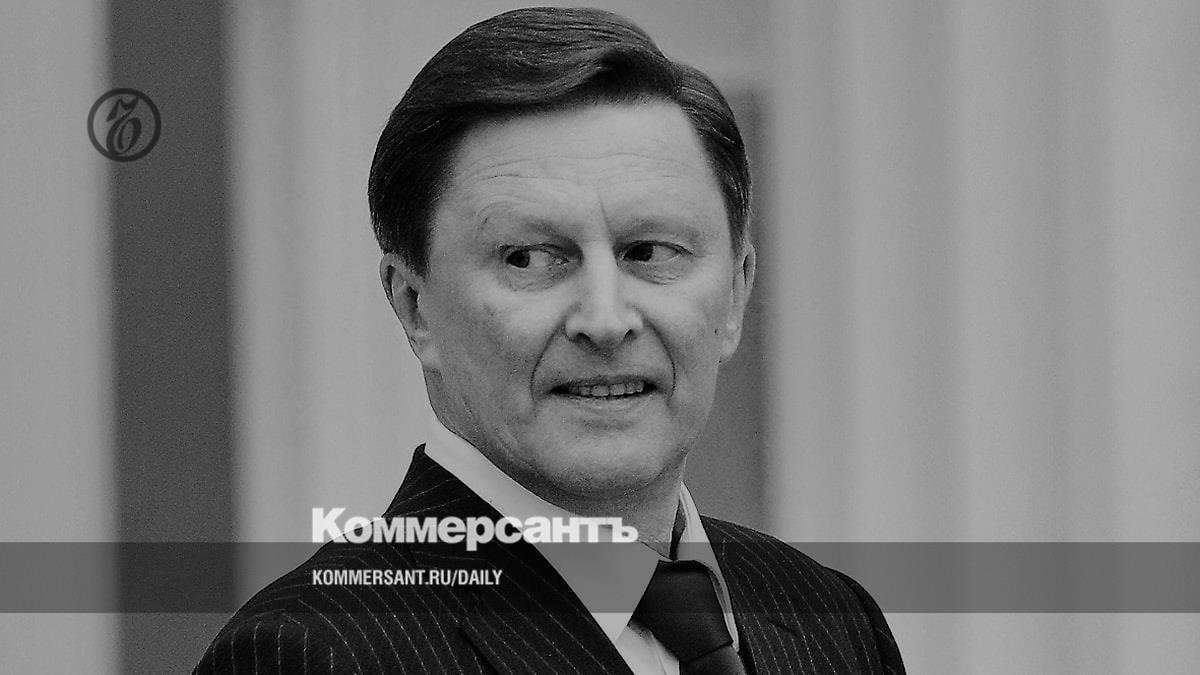
Sergei Ivanov, one of Vladimir Putin’s closest associates, who worked at the highest government level for more than a quarter of a century, died at the age of 73. He served as secretary of the Russian Security Council, defense minister, deputy prime minister and head of the presidential administration, and in the mid-2000s was considered one of Mr. Putin’s possible successors as president. Mr. Ivanov left the civil service in February 2026, resigning from the post of special representative of the head of state for ecology and transport.
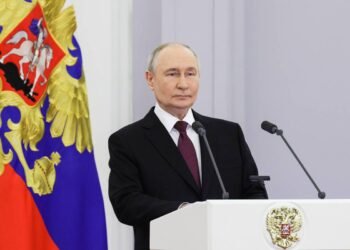
About the death of Sergei Ivanov on June 26 reported press service of the VTB United League, of which he was the honorary president. Presidential press secretary Dmitry Peskov confirmed this information to reporters, adding that Vladimir Putin “deeply sympathizes with the family and friends of Sergei Borisovich” and sent a telegram of condolences to the family.
The career path of Sergei Ivanov is practically inseparable from the political biography of Vladimir Putin. They met in the Leningrad KGB department, where both began their service in Soviet times. Mr. Putin later recalled Mr. Ivanov as a person he “can rely on” and with whom he has “a feeling of comradeship.” In the late 1990s, when Vladimir Putin headed the FSB, Sergei Ivanov became his deputy and head of the department of analysis, forecasting and strategic planning. In November 1999, he replaced Mr. Putin as Secretary of the Security Council, and in March 2001 he was appointed Minister of Defense.
This appointment became one of the key personnel decisions of Vladimir Putin’s first presidential term. Mr. Ivanov became the first civilian defense minister in modern Russian history. He himself later said that in order to get acquainted with army service, he underwent a month’s training in the Pskov Airborne Division under a false name with the rank of lieutenant. His work at the Ministry of Defense occurred during the period of reconstruction of the army after the crisis of the 1990s and the second Chechen campaign. Under him, the military budget grew, large-scale exercises were resumed, permanent readiness formations were created, the pay of military personnel increased, the transfer of individual units to a contract basis began and the conscription service period was reduced to one year.
One of the notable projects of that time was the construction of a naval base in Novorossiysk, which later became one of the key bases of the Black Sea Fleet. During the same period, the Space Forces were formed as an independent branch of the military and a number of structures under the control of the Ministry of Defense were consolidated. Sergei Ivanov himself noted that in the early 2000s, the army, for the first time after a period of reductions, moved from survival mode to systematic development.
The minister’s foreign policy rhetoric sometimes outpaced the Kremlin’s official line. For example, at the Munich Security Conference in 2006, he declared Russia’s right to launch preemptive strikes against terrorist threats outside the country.
This speech was subsequently seen as one of the early signals of Russia’s coming transition to a new foreign policy, proclaimed by Vladimir Putin a year later in his famous Munich speech.
In the mid-2000s, Sergei Ivanov was considered one of the most likely successors to the president in the 2008 elections, along with another Deputy Prime Minister Dmitry Medvedev. However, according to experts, the case of private Andrei Sychev became a serious blow to the minister’s positions. The 2006 scandal surrounding hazing at the Chelyabinsk Tank School caused widespread public outcry.
And in Mr. Ivanov’s words that “hazing begins in kindergarten,” critics saw an attempt to remove responsibility from the Ministry of Defense, shifting it to the “moral pathology of society” as a whole.
In December 2007, Vladimir Putin supported the presidential nomination of Dmitry Medvedev.
Sergei Ivanov retained his position in the country’s top leadership. As Deputy Prime Minister, he oversaw the defense industry, the space industry, GLONASS and the construction of the Vostochny cosmodrome. In 2011, he headed the presidential administration, replacing Sergei Naryshkin in this post. It was during the period of Mr. Ivanov’s work in the Kremlin that mass post-election protests of 2011–2012 and the events of 2014 occurred, including the “Crimean spring” and the beginning of the conflict in Ukraine. In 2016, Sergei Ivanov was appointed special representative of the president on environmental issues, ecology and transport, retaining—uniquely for a position of this level—a permanent seat on the Security Council. In February 2026, he resigned from the post of special representative of his own free will.
Vladimir Putin expressed deep condolences to the family and friends of Sergei Ivanov. Condolences were also expressed by Deputy Chairman of the Security Council Dmitry Medvedev, State Duma Speaker Vyacheslav Volodin, Chairman of the Federation Council Valentina Matvienko, Defense Minister Andrei Belousov, Patriarch Kirill, Head of the Investigative Committee Alexander Bastrykin, Director of the Russian Guard Viktor Zolotov, Moscow Mayor Sergei Sobyanin, Governor of St. Petersburg Alexander Beglov and many others.
State Duma deputy from United Russia, retired aviation major general Leonid Ivlev, who worked with Sergei Ivanov for many years, in a conversation with Kommersant, characterized him as “an intelligent, tactful and respected person,” noting his disciplined and demanding management style. Mr. Ivanov’s contribution to Russian politics and abroad was highly appreciated. Former US Secretary of State Condoleezza Rice described him in her memoirs as a person who was “the most reliable channel of communication with Vladimir Putin” and “never promised what he could not deliver.”