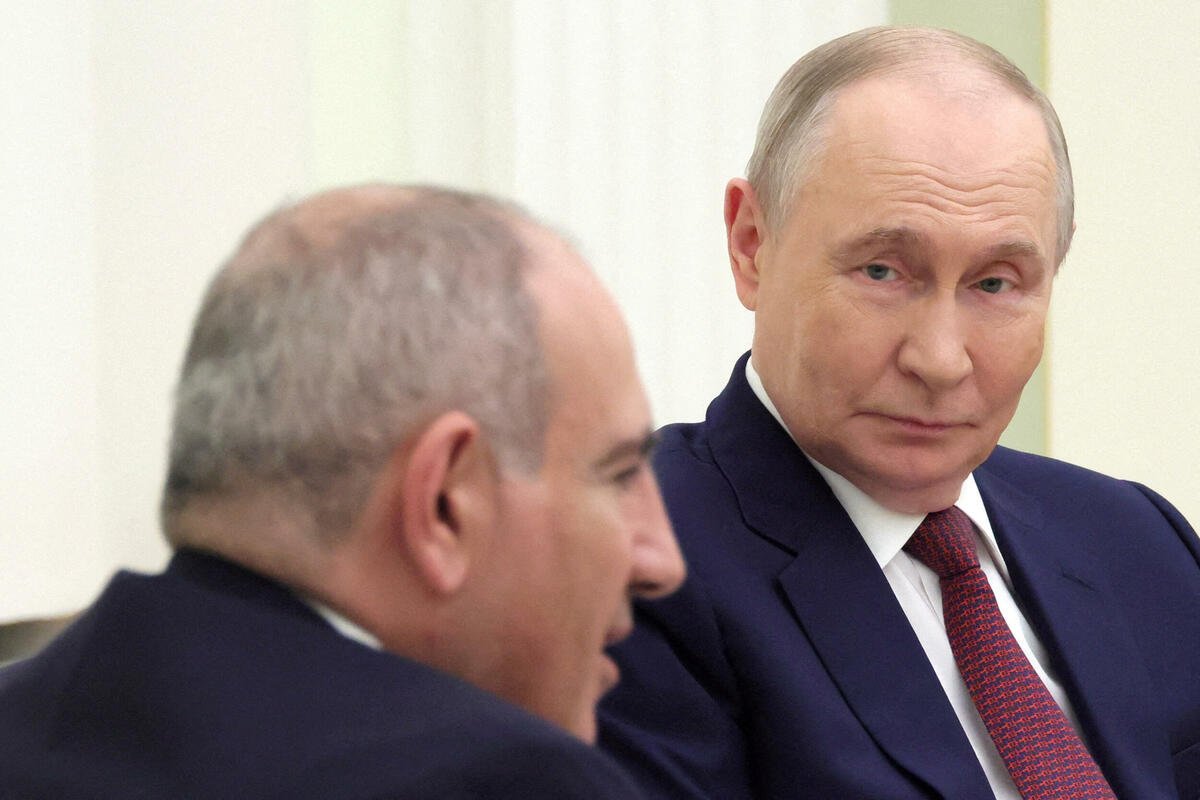
President Vladimir Putin read the beech tree to his long-time ally Armenia: if he continues to want to enter the European Union, he can say goodbye to cheap Russian oil and gas.
The Russian leader issued a warning ahead of today’s parliamentary elections in Armenia, which, according to polls, will be won by the pro-Western Prime Minister Nikol Pashinyan’s party.
That’s not an empty threat. Armenia, a continental country of three million inhabitants with centuries-old ties to Russia, is largely dependent on Moscow, which has already imposed temporary bans on important Armenian exports ahead of the elections.
However, Putin’s words also reflect an unpleasant truth for Moscow. While waging a war in Ukraine, which, after more than four years of fighting, has no end in sight, Russia is waging an increasingly intense and increasingly complex defensive battle around the world in order to preserve its geopolitical influence.
As Moscow focuses resources on the war in Ukraine, the European Union and the United States are seeking to win over and pressure traditional Russian allies and interests – both in what Moscow considers its own backyard and in areas further afield.
From Havana and Caracas, through Belgrade to the steppes of Central Asia, and even in West Africa, where Russian forces are helping to fight Islamists, Russian influence is under pressure.
Armenia, a longtime recipient of Russian aid and home to a Russian military base, signed a partnership agreement with the US last month, and Pashinyan has received strong support from President Donald Trump.
Armenia, once part of the Soviet Union, last year also adopted a law establishing the legal basis for joining the EU.

“Of course, we are deeply concerned about the policy of the Armenian authorities aimed at rapprochement with the Euro-Atlantic community, whose essential policy is directed against Moscow,” the spokeswoman for the Russian Ministry of Foreign Affairs, Maria Zakharova, told reporters.
“The Anglo-Saxons are openly boasting that, as they say, they are ‘extricating’ Armenia from the bearish embrace of ‘authoritarian Russia’.”
Russian war bloggers and analysts say Russia is facing a concerted and largely Western attempt – as in other regions around the world – to be pushed out of the wider South Caucasus region, of which Armenia is a part.
“In such conditions, the question of adjusting the Russian strategy (to include soft power and economic leverage) becomes crucial,” announced the Russian analytical Telegram channel “Secret Office”, which has more than 400,000 followers.
A source close to the Russian government said that Moscow sees that countries like Armenia “are all waiting to see how the war in Ukraine will end” and that some are already building new ties while Moscow is mostly preoccupied with other issues.
From Havana and Caracas, through Belgrade to the steppes of Central Asia, and even in West Africa, where Russian forces are helping to fight Islamists, Russian influence is under pressure
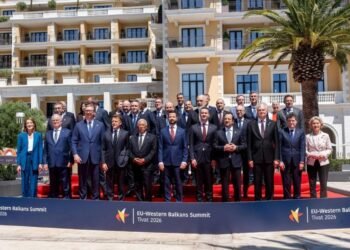
The last straw for Moscow was that Armenia hosted a meeting of European leaders last month, including Ukrainian President Volodymyr Zelensky.
Since then, Russia has temporarily banned the import of a number of Armenian goods, warned that it could cut off shipments of cheap oil, gas and rough diamonds, hinted that Armenia could be excluded from the Eurasian Economic Union, the Russian-led trade bloc, and recalled its Armenian ambassador to Moscow for consultations.
Dmitry Medvedev, the deputy president of the powerful Russian Security Council, known for his harsh statements, also hinted that the Armenian prime minister, if he is not careful, could suffer the fate of the Bolshevik revolutionary Leon Trotsky, who was killed with an ax by order of Joseph Stalin.
Meanwhile, Trump, whom Moscow had hoped would force Ukraine to seek peace by now with strong pressure, instead focused on three countries traditionally sympathetic to Russia – Iran, Venezuela and Cuba.
His moves have boosted oil prices, providing some relief to Russia’s war-weary economy, but have also exposed Moscow’s inability to significantly help its old friends. So far, Havana has received only one shipment of Russian oil.
In Europe, Moscow complains that it is faced with an increasingly hostile and rearming continent, while at the same time offering the prospect of EU membership to countries where Russia once had influence.
Putin’s ally Viktor Orban lost power in Hungary in April, which led to the unblocking of billions of euros from EU funds for Budapest. Serbian President Aleksandar Vučić, another Russian ally, is also under pressure as moves are underway to end visa-free entry for Russians, as Belgrade seeks to move closer to EU membership.
Russia is also feeling the pressure in Transnistria, a separatist enclave with a Russian garrison, which is internationally recognized as part of Moldova, whose current political leadership wants to join the EU.
Russia is also concerned about what it sees as the increasing penetration of Western influence into Central Asia, while Putin in the South Caucasus is trying to overcome a turbulent period in relations with Azerbaijan, an oil producer that has strengthened ties with the West in recent years.
Prepared by: A. Š.
Download the application and follow the news


FOLLOW US ON

News