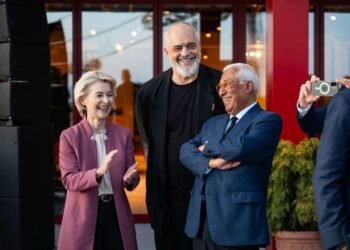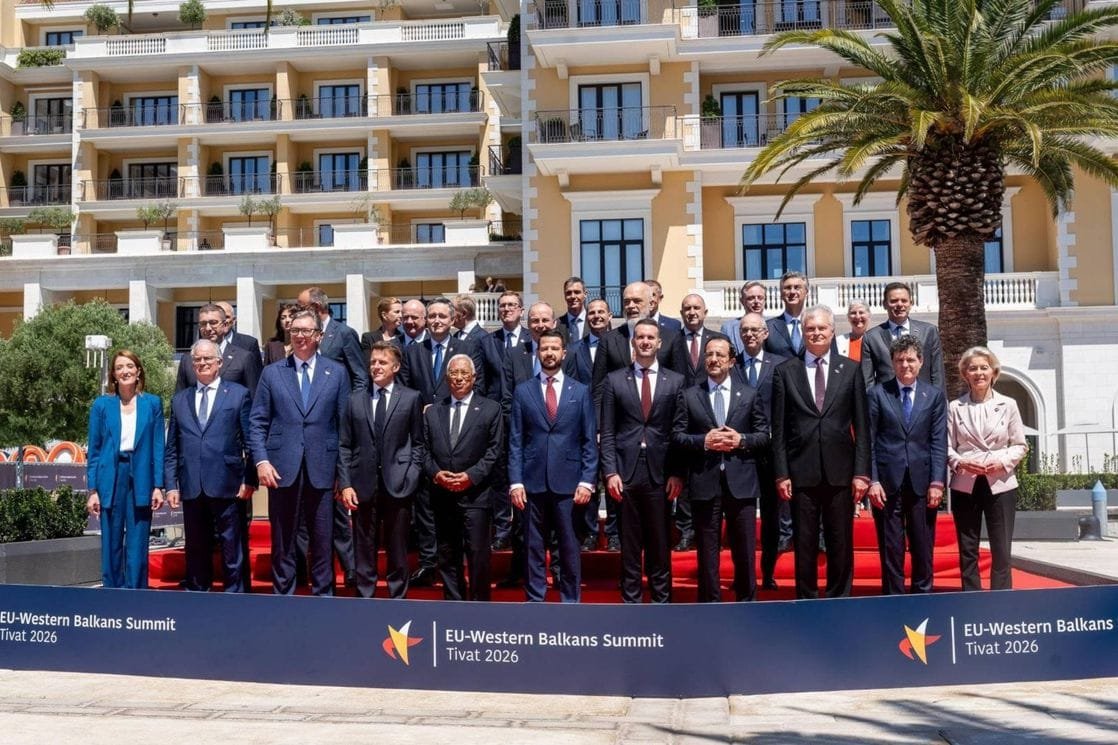
The European Union-Western Balkans summit in Tivat once again showed the strong support of the leading EU members for the accession of Montenegro until 2028. And almost the entire Western Balkans one step closer to Brussels.
“Montenegro will become the 28th member of the European Union by 2028, and that is achievable.”
“For the first time since 2013, we are really counting down to the next enlargement – until Montenegro becomes the 28th member by 2028.”
These statements by the highest officials of the EU – President of the European Commission Ursula von der Leyen and President of the European Council Antonio Košta, after the EU-Western Balkans summit, once again showed that hardly anything can stop Montenegro’s entry into the European bloc in a few years, writes Nurse said.
The statements made in Tivat, at the largest international summit in the history of Montenegro, should give Podgorica an additional incentive to close the remaining negotiation chapters and speed up reforms in order to find itself in the company of the most important European states.
Award to Montenegro for reforms
Over the past two days, Montenegro has been in a kind of semi-impaired state, with closed roads, major security measures and awaiting the arrival of almost 40 delegations, including the leaders of the most powerful EU members.
The first to arrive was French President Emmanuel Macron, who also “declared” Montenegro a new member of the EU and said that there is no need to fear major political changes in his country after the elections next year, if Podgorica progresses and implements reforms. Macron also arrived to jog in Tivat and visit the Cetinje Monastery.
German Chancellor Friedrich Mertz and Spanish Prime Minister Pedro Sánchez also arrived in Tivat, who also gave unequivocal support to Montenegrin aspirations to join the EU.
All in all, hosting such a large gathering was a reward for this small country’s reforms, as the President of Montenegro, Jakov Milatović, has repeatedly indicated.
It also costs Ukraine and Moldova
Košta reminded that the momentum in the enlargement process is also shown by the fact that last month the EU started drafting the treaty on the accession of Montenegro, and he also praised other countries in the region.
“The European Commission proposed closing three negotiation chapters with Albania. The Government of Serbia presented a concrete calendar for the adoption of the remaining elements of electoral legislation reform and the completion of the judicial reform. And what is very important, this week we open the process for launching the first negotiation cluster for Ukraine and Moldova. This is proof that the reforms and engagement of all social actors bring results, and that the European Union is committed to expansion,” said Košta.
Milatović said that, as he says, Montenegro is ready to fulfill the remaining obligations and use the momentum given to it by its European partners. He believes that Montenegro is already behaving like a member of the EU in many areas.
“Today, from Montenegro, we are sending a very clear message. Our country is ready for the final stage of our European journey, which we started by starting negotiations with the EU back in 2012,” Milatović said.
Membership is still based on merit, but with possible acceleration
Von der Leyen said the accession process will continue to be based on merit, but must become more dynamic.
“And that’s exactly what we want to do – to reward reforms with real integration, access to our programmes, closer links with the single market and EU funding that rewards reforms,” Von der Leyen said.
Her message is in the tone of the new “non-paper” drawn up by the most powerful EU members – Germany and France – in which the European Commission is invited to present proposals for facilitating the gradual integration of candidate countries into the Union.
It envisages privileged access of those countries to the EU internal market based on significant progress in negotiations and a closer connection with European institutions in the daily decision-making process.
So, under certain circumstances, the candidate states could get full access to the single European market even before formally joining the bloc, which would certainly be Vučić, who is a great incentive for all those who aspire to join the EU. Also, they could get some kind of observer status in the EU institutions.
This proposal, among others, was welcomed by Serbian President Aleksandar Vučić, who said that in this way the accession process will be faster and more dynamic.
Numerous European media that followed the summit in Tivat agree that momentum is possible on the path of the Western Balkans towards EU membership, that Montenegro is progressing, while Serbia is controversial, and that most countries in the region are lagging behind in reforms.