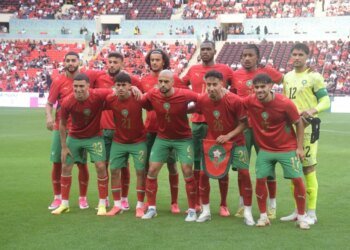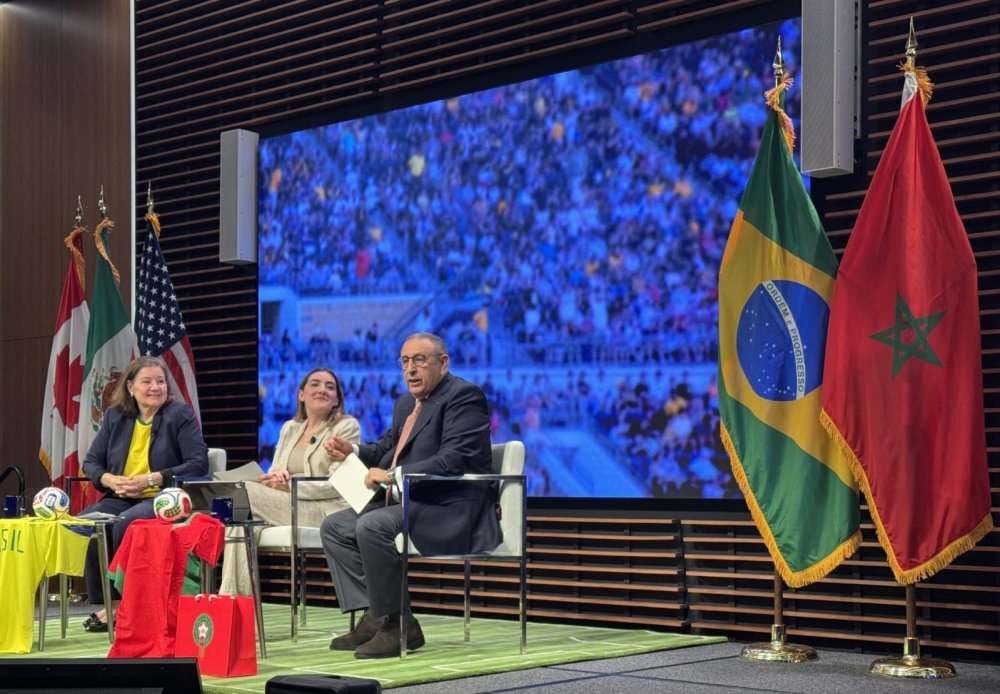
One week before the highly anticipated meeting between the national teams of Morocco and of Brazil during the 2026 FIFA World Cupthe ambassadors of the two countries in Washington hosted, for almost 90 minutes, a conference debate on the “Power of sport in diplomacy”, organized at the initiative of the American think tank Atlantic Council.
On this occasion, the Moroccan ambassador to the United States, Youssef Amraniand the Brazilian ambassador to Washington, Maria Luisa Ribeiro Viotti, argued that the people of the two countries are “united” by the same passion for football, emphasizing that Morocco-Brazil relations have all the necessary assets to strengthen themselves further, thanks to the strong convergences between the two countries and the complementarities of their economies.
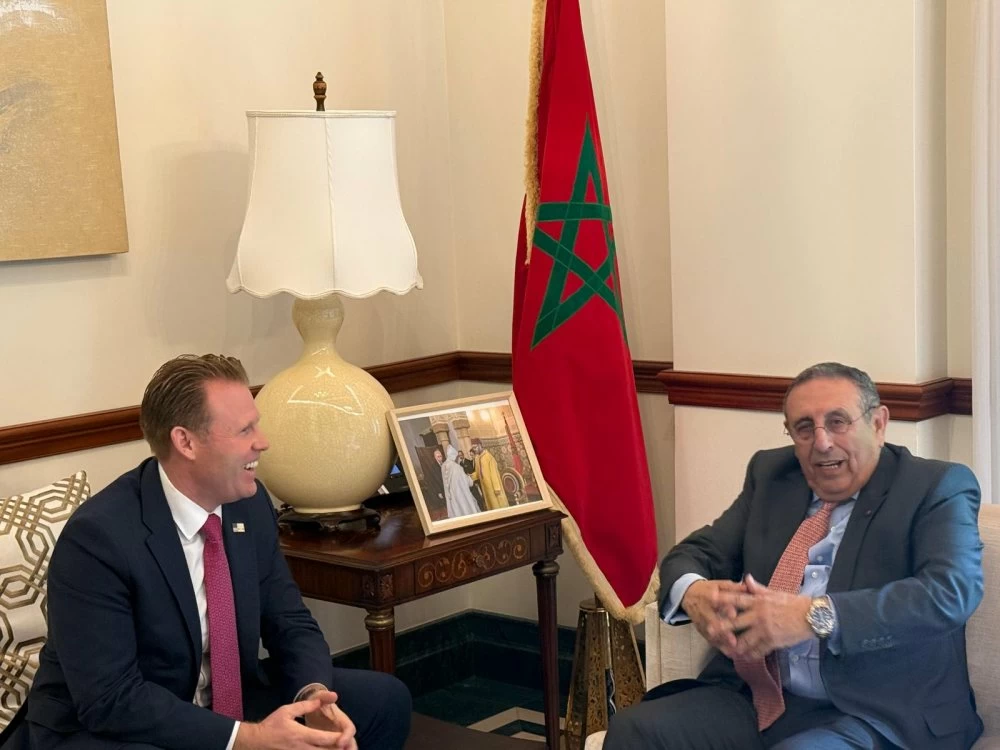
In an intervention focused on the place of sport as a lever of influence, rapprochement between peoples and international projection of nations, Mr. Amrani underlined that football “today constitutes a universal language capable of transcending borders, cultures and divisions”.
“After almost fifty years of diplomacyI understood that football can open doors and build connections in 90 minutes that diplomacy sometimes takes years to build. Sport connects instantly. It transcends borders, languages, cultures and politics,” he said.
Referring to the 2026 World Cup, the Moroccan diplomat welcomed the “remarkable work” carried out by the United States in terms of preparations for this “global meeting which takes place in a highly symbolic context marked by the 250th anniversary of diplomatic relations between Morocco and the United States”.
As an extension of this spirit of openness and rapprochement between continents, Mr. Amrani highlighted the historical significance of the 2030 World Cup which Morocco will host alongside Spain and Portugal.
This deadline, he underlined, establishes “the unique positioning of the Kingdom, as desired by the Vision of His Majesty King Mohammed VI, making Morocco a link between Africa, Europe, the Atlantic and the Mediterranean”.
“Morocco, rooted in Africa, linked to Europe and open to the Atlantic and the Mediterranean, is naturally a bridge between worlds. The World Cup is more than matches: it is about bringing together, dialoguing, understanding and demonstrating that cooperation remains possible in a fragmented world,” he maintained.
Returning to sports strategy carried by the Kingdom in the wake of the High Directions of His Majesty King Mohammed VI, the ambassador stressed that Morocco has taken the lead for several decades, thanks to an ambitious vision based in 2008 on investment in sports infrastructure, human capital and territorial development.
“Today, the Kingdom is reaping the fruits of tireless work carried out with great self-sacrifice, structuring and ambition,” he said, highlighting the world-class infrastructure developed by the Kingdom, the rise of the Mohammed VI Academy of Football as well as a fully assumed sports diplomacy as a tool of influence and transformation.
The results obtained in recent years testify, according to him, to the foresight of this strategic vision: historic semi-final of the 2022 World Cup in Qatar, world title for the under-20s in 2025 in Chile or even the remarkable progress of Moroccan women’s football.
Beyond the sporting dimension alone, the ambassador stressed that hosting major international competitions acts as a powerful accelerator of economic and social transformation, now making sport “a strategic investment for youth, development and the international influence of the Kingdom”.
Returning to relations between Rabat and Brasilia, Mr. Amrani insisted on the strong convergences which bring Morocco and Brazil closer together around the same vision of multilateralism, sustainable development and the strengthening of South-South cooperation.
The diplomat also recalled that Morocco constitutes today Brazil’s second largest trading partner in Africawhile Brazil remains a major partner for the Kingdom in the areas of agriculture, food security, fertilizers and industry.
“The Atlantic relationship is no longer limited to North America and Europe. The South Atlantic is today becoming a strategic space for cooperation and growth,” he insisted, while highlighting the strong complementarities between the two economies which open the way to strategic cooperation bringing growth, investment and jobs.
Sport appears, in this context, as a powerful accelerator of human, cultural and economic rapprochement between nations, he continued, stressing that Morocco today sees sport as an instrument of influence but also as a vector of solidarity, partnership and shared development.
A few days before the Morocco-Brazil meeting, planned June 13 at the New York/New Jersey stadiumthe ambassador concluded on a note of fraternity and optimism: “May the best team win. But whatever the score, Morocco and Brazil are already winning together through friendship, cooperation and a common vision of the future.”
For her part, the Brazilian Ambassador to Washington, Maria Luisa Ribeiro Viotti, explained how football constitutes a powerful vector of rapprochement between peoples and a universal language capable of creating lasting bridges between cultures and nations.
She also greeted the remarkable journey of Moroccan football in recent years as well as the momentum generated by the historic performance of the Atlas Lions during the 2022 World Cup, believing that the Kingdom today embodies “a new energy in world football” and that June 13 will undoubtedly be a contested and close match between two great nations, two talented teams and two historic partners.
The ambassador also made a point of welcoming the great level of the Moroccan national team, which she described as “one of the best selections in the world”, noting that the Atlas Lions are widely recognized for “their tactical intelligence, their playing discipline and their effectiveness in counterattack”.
As a result, the meeting between Brazil and Morocco promises a high level show and arouses keen interest among supporters of both nations, she noted.
Referring to the 2030 World Cup, co-organized by Morocco, Spain and Portugal, Ms. Ribeiro Viotti said she was convinced that this edition will be “a great success”. In a MAP statement, she stressed that this global event will offer the Kingdom a privileged opportunity to increase its visibility and its appeal on the international scene.