Concern is growing about increasing extreme weather with droughts, floods and record temperatures.

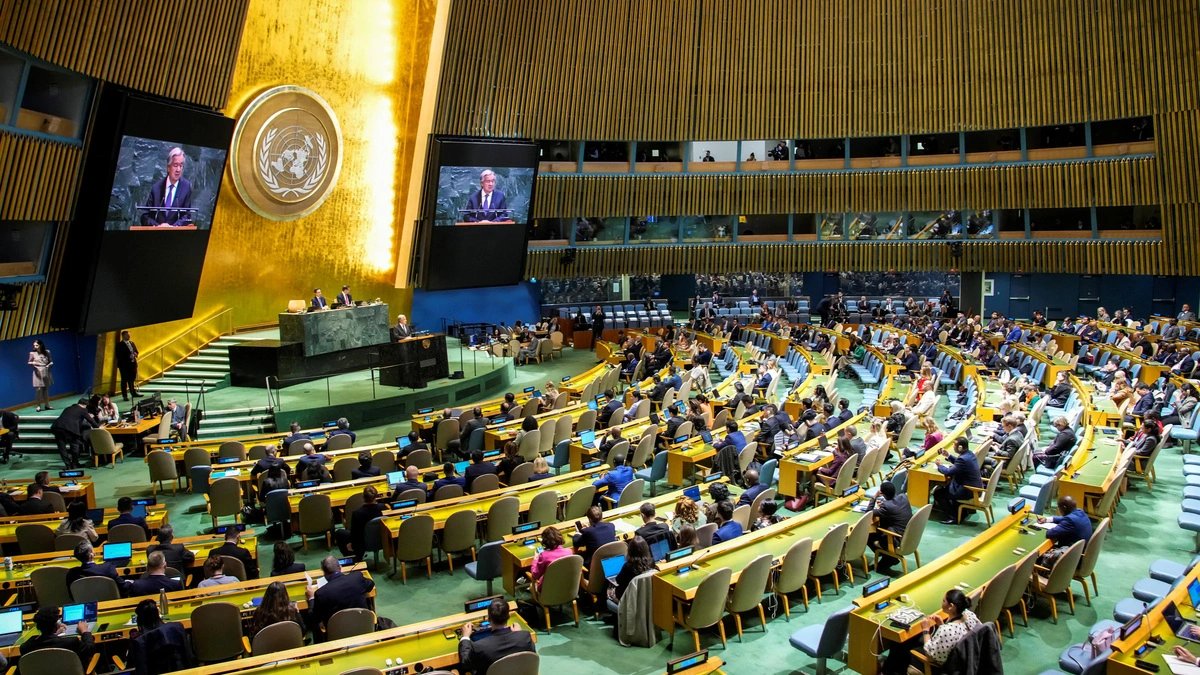
Archive image: UN Secretary-General António Guterres speaks at a meeting at the UN headquarters in New York. Eduardo Munoz/Reuters
Now it is practically a certainty: the unusually high sea temperatures in the tropical Pacific herald the recurring weather phenomenon El Niño to. This comes with concerns about more extreme weather with droughts, floods and a possible record-breaking global average temperature in the near future, according to the World Weather Organization WMO in Geneva. “El Niño conditions add fuel to the global warming fire,” said U.N.-Secretary General António Guterres.
“The consequences will be even more severe and will spread even further,” Guterres warned in a video message on Tuesday. The probability of El Niño starting between June and August is now 80 percent and lasting until at least November is around 90 percent. “We must prepare for a potentially strong El Niño event that will worsen droughts and heavy rains and increase the risk of heatwaves both on land and in the ocean,” said WMO Secretary-General Celeste Saulo.
The weather phenomenon that occurs naturally every two to seven years was last seen in 2023/24. This was one of the five strongest El Niños since records began, which, according to the WMO, began in 1950. This contributed to 2024 being the hottest year since industrialization (1850-1900), as measured by the global average temperature.
An El Niño exacerbates the consequences of man-made climate change. The effects are particularly felt in regions in the southern hemisphere with droughts and floods. For Europe, the consequences are limited.
The surface temperature on the Pacific coast of South America rose to levels seen in El Niño years between late April and mid-May, the WMO reported. In addition, there is unusually warm water from lower altitudes, the temperature of which is sometimes six degrees above the long-term average. (APA/dpa)