Shastri Boodan
Freelance Contributor
Trinidad and Tobago generates more waste per person than any other country in the Caribbean, according to Ugo Blanco, Resident Representative of the United Nations Development Programme (UNDP) Multi-Country Office.
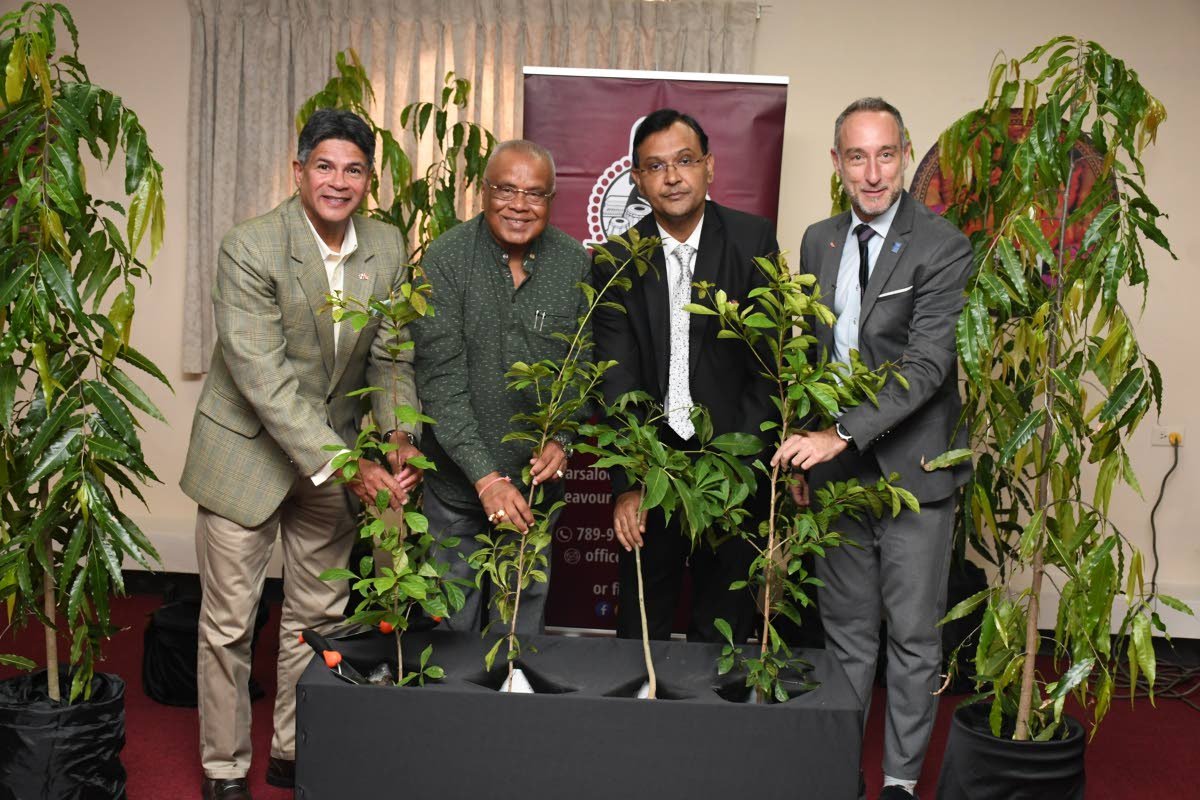
Blanco made the disclosure while addressing a tree-planting exercise hosted by the National Council of Indian Culture (NCIC) at the NCIC Nagar in Chaguanas yesterday to mark World Environment Day.
Speaking to students, diplomats and environmental advocates, Blanco said the country’s growing consumption habits were contributing significantly to its waste problem.
“The average person in the Caribbean produces about 1.3 kilogrammes of waste per day, but in Trinidad and Tobago the figure is approximately 2.6 kilogrammes per day. There is a lot to be done in that regard,” he said.
Blanco noted that sustainability was not solely about infrastructure, economics or technology, but about humanity’s relationship with the natural world.
He said traditional cultures, including Indian culture, have long recognised the interconnectedness of people and nature, a principle modern societies are now rediscovering.
He urged citizens to adopt more responsible consumption habits, suggesting that people carefully consider whether they truly need an item before purchasing it and avoid accumulating unnecessary possessions.
“If everyone in the world consumed at the levels seen in some societies today, there would not be enough resources on the planet to sustain that lifestyle,” he warned.
Blanco also praised the participation of young people in the event, saying environmental stewardship could no longer be viewed as an issue for future generations alone.
“The youth is not just the future; the youth is the present. We are in your hands,” he said.
The UNDP representative acknowledged that climate change, biodiversity loss and environmental degradation were among the greatest challenges facing the world and said every individual had a role to play in protecting the planet.
“Sustainability is at the core of UNDP’s mandate globally. Humanity and the planet must come together if we are to create a sustainable future,” he said.
Also addressing the gathering was Diomedes Heraclio Carles Cleghorn, Ambassador of the Republic of Panama, who highlighted his country’s environmental achievements.
Cleghorn said Panama is one of only three carbon-negative countries in the world, alongside Suriname and Bhutan.
“More than half of Panama’s territory remains covered by forests, which absorb more carbon dioxide than the country emits,” Cleghorn said.
“This demonstrates that economic progress and environmental protection can successfully go hand in hand.”
The ambassador said climate change, biodiversity loss, pollution and the depletion of natural resources were no longer distant threats but realities affecting economies, public health and food security throughout the Caribbean and Latin America.
He pointed to environmental initiatives undertaken by the Panama Canal, including efforts to improve fuel efficiency, reduce vessel emissions and electrify parts of its vehicle fleet, as examples of sustainable development in practice.
Cleghorn stressed that lasting environmental change begins within communities and cannot be achieved by governments and international organisations alone.
“Environmental awareness must begin at the community level,” he said.
“Lasting change occurs when individuals, families, schools, businesses and community organisations embrace sustainable practices in their daily lives.”
He described the NCIC’s tree-planting initiative as a practical example of environmental action, noting that trees help absorb carbon dioxide, improve air quality, strengthen climate resilience and preserve biodiversity.
The event formed part of the NCIC’s observance of World Environment Day and concluded with participants planting trees around the Nagar compound as a symbol of their commitment to environmental protection and sustainable development.