This program constitutes the basis of a new model of territorial development based on resilience, social cohesion and inclusion.
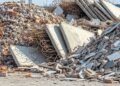
Al Haouz earthquake: Morocco and the EIB officially commemorated in Rabat the signing of the second tranche of 500 million euros of the “Morocco Post Earthquake Reconstruction” program, granted under the European Union’s FEDD+ program and, as such, benefits from the EU guarantee. The program benefits from this support following an implementation system extending until 2030, in order to support the entire investment cycle until its end.
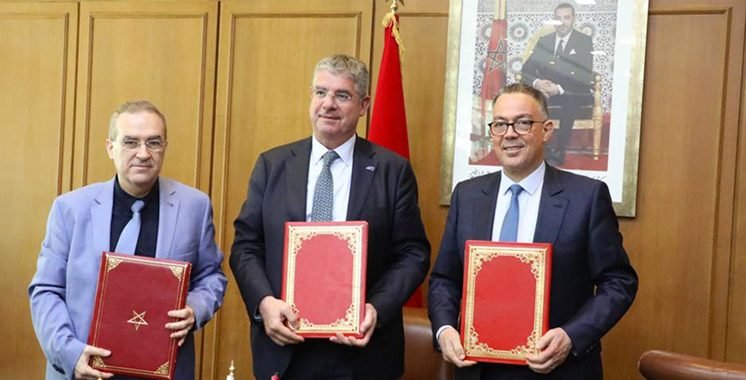
Morocco and the European Investment Bank (EIB) publicly formalize the signing of the financing contract for the second tranche of the “Morocco Post Earthquake Reconstruction” program. This second tranche of 500 million euros, which took place on December 1, 2025, is part of global financing of one billion euros committed by the EIB to support reconstruction efforts in the regions affected by the earthquake of September 8, 2023. In this sense, a ceremony to commemorate the signing of this second tranche took place on Friday in Rabat under the presidency of Fouzi Lekjaa, Minister Delegate in charge of the Budget, Ioannis Tsakiris, vice-president of the European Investment Bank (EIB), and Dimiter Tzantchev, ambassador of the European Union to Morocco. “This commemoration is an extension of a cooperative relationship firmly anchored in history between Morocco and its European partners,” indicates Fouzi Lekjaa, highlighting the construction, over the years, of a reliable, responsive partnership based on deep collaboration, which results in long-term commitments in the service of the development of the Kingdom. For his part, the Ambassador of the European Union, Dimiter Tzantchev, indicated that “with the EIB, the EU is today strengthening this cooperation in a “Team Europe” approach, in order to accelerate the reconstruction of critical infrastructure”.
With this longer-term support objective, the diplomat noted that the European Union will support the High Atlas Development Agency through the mobilization of technical expertise aimed at strengthening the resilience of infrastructure in the face of earthquakes and the effects of climate change and the integration of demanding environmental and social standards to reduce the vulnerability of territories.
It should be noted that this program goes beyond just responding to a natural disaster. It constitutes the basis of a new model of territorial development based on resilience, social cohesion and inclusion, aiming to sustainably transform affected areas into stable development spaces resistant to future shocks.
The 2023-2025 phase of the said program focused on emergency interventions undertaken immediately after the earthquake: reconstruction of basic infrastructure – schools, health centers -, rehabilitation of the road network and opening up of isolated areas, with the aim of rapid restoration of essential social services. Concerning the 2026-2030 phase, it aims to go beyond reconstruction to accelerate the development of the affected regions: modernization of road infrastructure, improvement of the educational offer and health services, and strengthening of the climate resilience of the affected territories.