The curtain fell on Saturday evening on the first edition of the Marrakech Comedy Festivalleaving behind three days of shows, laughter and meetings which confirmed the Moroccan public’s appetite for humor in all its forms. Organized at the Palais des Congrès in Marrakech, the event brought together Moroccan and French-speaking comedians around a common ambition: to offer the ocher city a new cultural event dedicated to comedy.
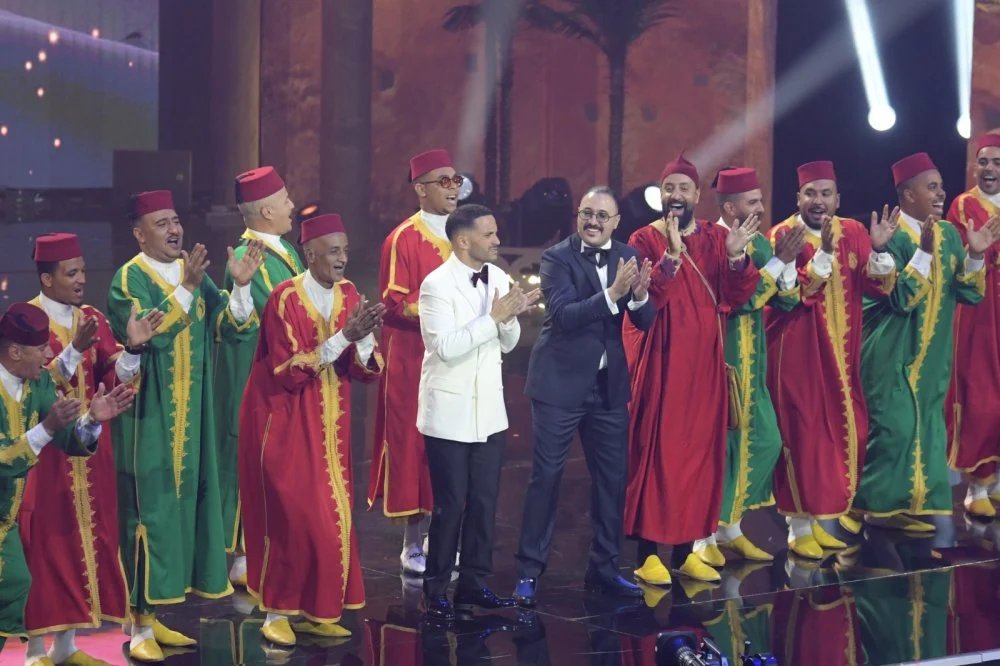
From the opening night, the tone was set. Under the artistic direction of the comedian Ekothe Arabic-speaking gala was sold out and immersed spectators in a universe where Moroccan traditions, self-deprecation and views on society were intertwined. Carried by a staging inspired by the soul of Marrakech, with the famous Jamaa El Fna square in the background, the show put the spotlight on a new generation of Moroccan comedians while celebrating popular figures of local heritage.
A festive opening carried by Eko and the new Moroccan scene
Dressed in a “guerrab” costume, accompanied by the Bola Bola Dekka Marrakchia troupe and DJ Red Supa, Eko kicked off an evening mixing music, humor and Moroccan cultural references. The master of ceremonies continued the interventions and presented a series of artists who embody the renewal of the national comedy scene.
Amine Belghazi opened the ball with a universe nourished by childhood memories and absurd everyday situations. Soufiane Figuigui tackled family dynamics and sibling relationships, while Ghita Kitane offered a performance combining sports news, society and the female perspective. Seifeddine Settif, Marouane Nbalsi, Ahmed Boudrouze and Azzedine Fetouhi also contributed to this humorous fresco, each with their own style and themes.
Among the most notable moments of this inaugural evening was the appearance of Malik Bentalhawarmly received by the public. The Franco-Moroccan comedian shared several sequences with Eko in a register full of references to Moroccan culture and the popular codes of the Kingdom.
According to the organizers, this first evening far exceeded expectations, with a full house and tickets sold out several weeks before the event. For Karim Debbouzeproducer and co-founder of the festival alongside Malik Bentalha, this successful launch constitutes an important step in the construction of an event that will last over time.
The successful bet on the diversity of styles
Beyond popular success, the festival also highlighted the richness of the Moroccan comedy scene. The artists praised an organization favoring the complementarity of styles and generations. Eko stressed the importance of building a balanced show, capable of alternating rhythms and sensitivities in order to maintain a constant dynamic on stage. Several comedians insisted on the quality of the reception given by the Marrakech public, known to be demanding but particularly generous when they adhere to an artistic proposal.
Soufiane Figuigui described Marrakech as a city where laughter is part of everyday life, while Ghita Kitane spoke of an experience marked by emotion and kindness. For his part, Azzedine Fetouhi insisted on the spirit of solidarity that reigned behind the scenes, comparing all the artists to a real family. This friendly atmosphere largely contributed to the success of the event and the support of the public, who came as much to discover new talents as to rediscover already established figures of Moroccan humor.
Malik Bentalha at the head of a unifying French-speaking gala
The international dimension of the festival was affirmed Friday evening with the French-speaking gala presented by Malik Bentalha. The comedian imposed his rhythm through a show built around interaction with the public, improvisation and self-deprecation. Around him, several representatives of the new French-speaking scene took the stage. Charlie Haid proposed an act combining mentalism and humor, while Younes Hanifi drew on the realities of everyday life, family and housing to construct his sketches. Tom Baldetti and Paul de Saint Sernin completed this program by exploring ordinary situations transformed into comic material. This diversity of writings and universes allowed the festival to reach a wide audience, made up of both Moroccan spectators and visitors who came to discover a program open to the French-speaking world.
The weekend continued with solo shows by Nordine Ganso then Yassar, two highly anticipated artists, before ending with a new performance of Malik Bentalha’s show.
At the end of this first edition, the Marrakech Comedy Festival seems to have found its place in the Moroccan cultural landscape. With full rooms, satisfied artists and a ready audience, the event laid the foundations for a project which aims to make Marrakech a major destination for French-speaking and Arabic-speaking humor. For the organizers as for the artists, the essential thing is now acquired: the first laugh has been launched, and it has found its audience.
Interview with Malik Bentalha, initiator of the Marrakech Comedy Festival: The Moroccan public has always given me love
On the occasion of the first edition of the Marrakech Comedy Festival, Franco-Moroccan comedian Malik Bentalha looks back on his attachment to Morocco, his view on the new generation of comedians and his vision of artificial intelligence in live performance. Between emotion, transmission and authenticity, he delivers a testimony full of gratitude towards a country which has marked his journey.
Le Matin: What does the birth of the Marrakech Comedy Festival mean to you?
Malik Bentalha: I am very proud and very happy to see the Marrakech Comedy Festival born. Firstly because Morocco is my mother’s country, so it is also my country of origin. I am from Meknes and seeing such a dynamic humor scene emerging today fills me with joy. This festival highlights many emerging talents who are extremely excited to take the stage in Marrakech. It’s a great initiative for Moroccan humor.
You maintain a special relationship with the Moroccan public. For what ?
The Moroccan public has always given me love. I have participated in all the editions of Marrakech du Rire and I have always been welcomed with great warmth and kindness. Morocco occupies a very special place in my career, because my career really took a turning point after my time at Marrakech du Rire. It was from that moment that I began to fill large venues in France and elsewhere. Coming back today with a new festival is therefore both an honor, an immense pleasure and a great pride.
How would you describe Moroccan humor?
For me, it’s simply one of the best humors in the world. I grew up with the shows of Gad Elmaleh and Jamel Debbouze, but also with emblematic figures like Abderraouf. Moroccan humor is extremely complete. It doesn’t just rely on words. There are facial expressions, gestures, looks, repartee and all these subtleties that make a situation funny. The biggest laughs of my childhood were experienced at home watching my mother imitate my aunts. It was extraordinary. This humor is at the same time precise, fair and universal.
What advice would you give to young comedians who dream of success?
I think there is a fundamental rule: sincerity. When we go on stage, we have to talk about what really touches us, what we hold in our hearts. The audience immediately feels the authenticity. Conversely, wanting to absolutely follow trends or reproduce what works at a given moment is often the best way to get lost. When I talk with young comedians, I always tell them to stay true to their world and their emotions. This is what builds a lasting artistic identity.
Artificial intelligence sparks a lot of debate. How do you view its impact on humor?
I would say you have to take a balanced position. Artificial intelligence is now part of our times and its role will certainly continue to grow. It can be a useful tool, capable of accompanying or supporting certain creative approaches. On the other hand, I do not believe that it can replace humans. Emotions, live performance, interpretation and sensitivity remain profoundly human. AI should be seen as a complement to creativity, never as a substitute.
Do you think that an artificial intelligence will one day be able to write a better joke than a comedian?
No, I don’t think so. What makes an artist strong is his identity, his experience, his way of interpreting the world and above all the emotions he transmits. Today, artificial intelligence does not sense things like a human being. She can analyze, produce or assist, but she does not sweat emotions like a comedian can do on stage. And it is precisely this human dimension that creates the bond with the public.
A final word for the Moroccan public?
I would just like to say thank you. Thank you for this love and loyalty that has accompanied me since my beginnings. It’s always a joy to return to Morocco, to find this energy, this generosity and this passion for laughter. Long live Morocco!