Monday, June 8, 2026
    The GeoStrategic Consensus
    No Result
    View All Result
    • Login
    • HOME
    • AMERICAS
      • Argentina
      • Brazil
      • Canada
      • Chile
      • Colombia
      • Costa Rica
      • Cuba
      • Dominican Republic
      • Ecuador
      • El Salvador
      • Greenland
      • Guatemala
      • Honduras
      • Mexico
      • Nicaragua
      • Panama
      • Paraguay
      • Peru
      • United States
      • Uruguay
      • Venezuela
    • ASIA-PACIFIC
      • Australia
      • Brunei Darussalam
      • Cambodia
      • China
      • Federated States of Micronesia
      • Fiji
      • Indonesia
      • Japan
      • Kiribati
      • Laos
      • Malaysia
      • Marshall Islands
      • Mongolia
      • Myanmar
      • Nauru
      • New Zealand
      • North Korea
      • Palau
      • Papua New Guinea
      • Philippines
      • Samoa
      • Singapore
      • Solomon Islands
      • South Korea
      • Taiwan
      • Thailand
      • Timor-Leste
      • Tonga
      • Tuvalu
      • Vanuatu
      • Vietnam
    • CARICOM
      • CARICOM – Non-English
        • Haiti
        • Suriname
      • CARICOM Associates
        • Anguilla
        • Bermuda
        • British-Virgin-Islands
        • Cayman-Islands
        • Curacao
        • Turks-and-Caicos
      • CARICOM English
        • Antigua and Barbuda
        • Barbados
        • Belize
        • Dominica
        • Grenada
        • Guyana
        • Jamaica
        • Montserrat
        • Saint Kitts and Nevis
        • Saint Lucia
        • Saint Vincent and the Grenadines
        • The Bahamas
        • Trinidad and Tobago
    • EURASIA
      • Armenia
      • Azerbaijan
      • Balarus
      • Georgia
      • Kazakhstan
      • Kyrgyzstan
      • Moldova
      • Russia
      • Tajikistan
      • Turkmenistan
      • Ukraine
      • Uzbekistan
    • EUROPE
      • Albania
      • Andorra
      • Austria
      • Bosnia and Herzegovina
      • Bulgaria
      • Croatia
      • Cyprus
      • Czech Republic
      • Denmark
      • Estonia
      • Finland
      • France
      • Germany
      • Greece
      • Holy See
      • Hungary
      • Iceland
      • Ireland
      • Italy
      • Kosovo
      • Latvia
      • Liechtenstein
      • Lithuania
      • Luxembourg
      • Malta
      • Monaco
      • Montenegro
      • Netherlands
      • North Macedonia
      • Norway
      • Poland
      • Portugal
      • Romania
      • San Marino
      • Serbia
      • Slovakia
      • Slovenia
      • Spain
      • Sweden
      • Switzerland
      • United Kingdom
    • MIDDLE EAST AND NORTH AFRICA
      • Algeria
      • Bahrain
      • Egypt
      • Iran
      • Iraq
      • Israel
      • Jordan
      • Kuwait
      • Lebanon
      • Lybia
      • Morocco
      • Oman
      • Palestinian Territories
      • Qatar
      • Saudi Arabia
      • Syria
      • Tunisia
      • Turkey
      • United Arab Emirates
      • Western Sahara
      • Yemen
    • SOUTH ASIA
      • Afghanistan
      • Bangladesh
      • Bhutan
      • India
      • Maldives
      • Nepal
      • Pakistan
      • Sri Lanka
    • SUB-SAHARAN AFRICA
      • Angola
      • Benin
      • Botswana
      • Burkina Faso
      • Burundi
      • Cabo Verde
      • Cameroon
      • Central African Republic
      • Chad
      • Comoros
      • Cote d’Ivoire
      • Democratic Republic of the Congo
      • Djibouti
      • Equatorial Guinea
      • Eritrea
      • Eswatini
      • Ethiopia
      • Gabon
      • Gambia
      • Ghana
      • Guinea
      • Guinea Bissau
      • Kenya
      • Lesotho
      • Liberia
      • Madagascar
      • Malawi
      • Mali
      • Mauritania
      • Mauritius
      • Mozambique
      • Namibia
      • Niger
      • Nigeria
      • Republic of the Congo
      • Rwanda
      • Sao Tome and Principe
      • Senegal
      • Seychelles
      • Sierra Leone
      • Somalia
      • South Africa
      • South Sudan
      • Sudan
      • Tanzania
      • Togo
      • Uganda
      • Zambia
      • Zimbabwe
    • HOME
    • AMERICAS
      • Argentina
      • Brazil
      • Canada
      • Chile
      • Colombia
      • Costa Rica
      • Cuba
      • Dominican Republic
      • Ecuador
      • El Salvador
      • Greenland
      • Guatemala
      • Honduras
      • Mexico
      • Nicaragua
      • Panama
      • Paraguay
      • Peru
      • United States
      • Uruguay
      • Venezuela
    • ASIA-PACIFIC
      • Australia
      • Brunei Darussalam
      • Cambodia
      • China
      • Federated States of Micronesia
      • Fiji
      • Indonesia
      • Japan
      • Kiribati
      • Laos
      • Malaysia
      • Marshall Islands
      • Mongolia
      • Myanmar
      • Nauru
      • New Zealand
      • North Korea
      • Palau
      • Papua New Guinea
      • Philippines
      • Samoa
      • Singapore
      • Solomon Islands
      • South Korea
      • Taiwan
      • Thailand
      • Timor-Leste
      • Tonga
      • Tuvalu
      • Vanuatu
      • Vietnam
    • CARICOM
      • CARICOM – Non-English
        • Haiti
        • Suriname
      • CARICOM Associates
        • Anguilla
        • Bermuda
        • British-Virgin-Islands
        • Cayman-Islands
        • Curacao
        • Turks-and-Caicos
      • CARICOM English
        • Antigua and Barbuda
        • Barbados
        • Belize
        • Dominica
        • Grenada
        • Guyana
        • Jamaica
        • Montserrat
        • Saint Kitts and Nevis
        • Saint Lucia
        • Saint Vincent and the Grenadines
        • The Bahamas
        • Trinidad and Tobago
    • EURASIA
      • Armenia
      • Azerbaijan
      • Balarus
      • Georgia
      • Kazakhstan
      • Kyrgyzstan
      • Moldova
      • Russia
      • Tajikistan
      • Turkmenistan
      • Ukraine
      • Uzbekistan
    • EUROPE
      • Albania
      • Andorra
      • Austria
      • Bosnia and Herzegovina
      • Bulgaria
      • Croatia
      • Cyprus
      • Czech Republic
      • Denmark
      • Estonia
      • Finland
      • France
      • Germany
      • Greece
      • Holy See
      • Hungary
      • Iceland
      • Ireland
      • Italy
      • Kosovo
      • Latvia
      • Liechtenstein
      • Lithuania
      • Luxembourg
      • Malta
      • Monaco
      • Montenegro
      • Netherlands
      • North Macedonia
      • Norway
      • Poland
      • Portugal
      • Romania
      • San Marino
      • Serbia
      • Slovakia
      • Slovenia
      • Spain
      • Sweden
      • Switzerland
      • United Kingdom
    • MIDDLE EAST AND NORTH AFRICA
      • Algeria
      • Bahrain
      • Egypt
      • Iran
      • Iraq
      • Israel
      • Jordan
      • Kuwait
      • Lebanon
      • Lybia
      • Morocco
      • Oman
      • Palestinian Territories
      • Qatar
      • Saudi Arabia
      • Syria
      • Tunisia
      • Turkey
      • United Arab Emirates
      • Western Sahara
      • Yemen
    • SOUTH ASIA
      • Afghanistan
      • Bangladesh
      • Bhutan
      • India
      • Maldives
      • Nepal
      • Pakistan
      • Sri Lanka
    • SUB-SAHARAN AFRICA
      • Angola
      • Benin
      • Botswana
      • Burkina Faso
      • Burundi
      • Cabo Verde
      • Cameroon
      • Central African Republic
      • Chad
      • Comoros
      • Cote d’Ivoire
      • Democratic Republic of the Congo
      • Djibouti
      • Equatorial Guinea
      • Eritrea
      • Eswatini
      • Ethiopia
      • Gabon
      • Gambia
      • Ghana
      • Guinea
      • Guinea Bissau
      • Kenya
      • Lesotho
      • Liberia
      • Madagascar
      • Malawi
      • Mali
      • Mauritania
      • Mauritius
      • Mozambique
      • Namibia
      • Niger
      • Nigeria
      • Republic of the Congo
      • Rwanda
      • Sao Tome and Principe
      • Senegal
      • Seychelles
      • Sierra Leone
      • Somalia
      • South Africa
      • South Sudan
      • Sudan
      • Tanzania
      • Togo
      • Uganda
      • Zambia
      • Zimbabwe
    No Result
    View All Result
    Agentially
    No Result
    View All Result
    Home MIDDLE EAST and NORTH AFRICA Morocco

    Rachid Yazami: Morocco has a card to play in the global battle for electric batteries

    The Analyst by The Analyst
    June 8, 2026
    in Morocco
    Rachid Yazami: Morocco has a card to play in the global battle for electric batteries


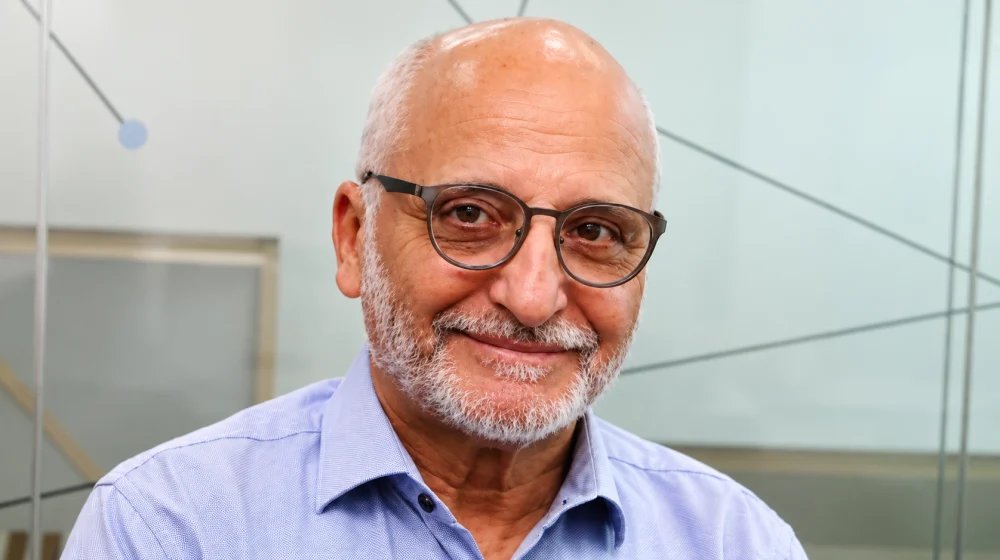
    In Singapore, where he has lived for fifteen years, Rachid Yazami observes the world with the eye of a scientist, but also with the intact attachment of someone who continues to support Morocco in major international debates. World-renowned physicochemist, inventor of the graphite anode who made the growth possible lithium-ion batteries, he is one of those Moroccan figures whose trajectory goes beyond national borders. His name is associated with a silent but decisive revolution: the one which allowed the advent of mobile phones, computers, electric vehicles and, more broadly, a new energy economy.

    READ ALSO

    Last test before the World Cup: Morocco and Norway leave each other back to back

    Early diagnosis: Artificial intelligence is coming to public hospitals – Morocco Today

    Guest of “Info in Face”Mr. Yazami didn’t just talk about batteries. He spoke of sovereignty, industry, scientific diplomacy, training, quality and the future. In a global context marked by tensions in the Middle East, rising energy prices and the fragilities of supply chains, the scientist believes that the energy transition is no longer an option, but a strategic necessity. The current crisis, he emphasizes, is a stark reminder of the world’s persistent dependence on hydrocarbons. It also shows to what extent countries capable of producing, storing and controlling their energy will be better equipped to face future shocks.

    For Mr. Yazami, the rise in the cost of fossil fuels can paradoxically accelerate interest in clean solutions. Consumers, faced with the rising cost of transport and everyday products, are looking more towards electric or hybrid vehicles. This movement, still progressive, reflects, according to him, an awareness: the future of mobility will necessarily involve technologies less dependent on oil. But this transition can only succeed if it is based on a solid, competitive industry capable of producing reliable batteries. This is where Morocco enters the scene. With his phosphate reservesits geographical positioning, its free trade agreements, its already structured automobile industry and its qualified human resources, the Kingdom has, according to Yazami, considerable assets.

    The rise of LFP technology, based on lithium, iron and phosphate, represents a major opportunity. Less dependent on cobalt, this chemistry is now increasingly used in batteries for electric vehicles. It offers the Morocco a strategic map, provided that not limit yourself to the export of raw materials, but to develop a real capacity for industrial transformation.

    Morocco facing a historic industrial opportunity

    The future Kenitra gigafactory, driven by Gotion High-Tech’s investment, marks a historic turning point in its eyes. Rachid Yazami recalls having predicted, in 2014, that Morocco would needa giant lithium-ion battery factory. Ten years later, this prospect is becoming a reality. The Kingdom is thus preparing to welcome the first major battery factory of this type in Africa and the Middle East. For the scientist, this project can open the way to a new industrial sector, not only for electric automobiles, but also for the storage of renewable energy. Because the energy transition is not limited to producing clean electricity. You still need to be able to store it. Morocco has a solar and wind potential considerable, particularly in its southern regions. But the energy produced by the sun or the wind must be captured, stabilized and redistributed. In this area, lithium-ion batteries remain, according to Mr. Yazami, one of the most efficient and adaptable solutions. The scientist believes that the future needs of the Kingdom in storage capacities will be much higher than the initial volumes planned by the Kenitra gigafactory. In other words, the current factory would only be a first milestone.

    This industrial ambition, however, raises a central question: that of the quality. Rachid Yazami insists at length on this point. Producing batteries is not enough. It is necessary to produce very high level batteries. In a competitive global market, dominated by China, Korea and JapanMorocco’s credibility will depend on its ability to respect the most demanding standards. A battery intended for an electric vehicle must be able to withstand hundreds of charge and discharge cycles, guarantee sufficient autonomy and maintain its performance over time. The slightest industrial defect can be costly.

    The scientist recalls that Europe she herself has experienced major difficulties in this area. Some European gigafactories have failed or encountered quality problems because they failed to meet the required level of standards. For Rachid Yazami, Morocco must learn lessons from these experiences. Success will come through rigorous control of each manufacturing stage, using high-precision equipment and perfectly trained human capital.

    On this point, he appears confident. He says he was impressed by the Moroccan engineers and technicians he met in the industrial zones of Tangier, Tetouan and Kenitra. Their discipline, their sense of quality and their ability to learn constitute, according to him, a decisive advantage. This confidence fuels a strong conviction in him: Morocco will not remain eternally dependent on foreign technologies. The first gigafactories will perhaps be developed with Chinese or international partners, but the know-how acquired will ultimately make it possible to build entirely Moroccan units. Rachid Yazami goes so far as to predict that by 2032, the Kingdom could havea 100% Moroccan gigafactory. An ambitious perspective, but one which is part of a logic of increasing industrial skills.

    Morocco will also have to play finely on the geopolitical level. Chinese investors are interested in the Kingdom because it offers a gateway to several markets: Europe, the United States, Africa, the Middle East and Turkey. But this strategic position can also give rise to tensions, particularly with a Europe keen to protect its industry. For Mr. Yazami, the key will be the rate of local integration. The more Morocco integrates components, processed raw materials and local added value into its batteries, the more it will be able to defend the “Made in Morocco” label. Phosphates, cobalt, iron and local industrial capacities can work in the Kingdom’s favor.

    Beyond industrial issues, Rachid Yazami also embodies a personal story linked to innovation. His invention of the graphite anode, made at the end of the 1970s, was not immediately recognized for its true value. At the time, some industrial decision-makers did not see its potential. History has proven them wrong. Today, the graphite anode remains at the heart of lithium-ion batteries used in billions of devices in the world. With humor, the scientist recalls that if each mobile phone user paid him a tiny fraction of a cent, he would be a billionaire. But beyond the anecdote, this story says something deeper: innovation may be ahead of its time, but it always ends up imposing its obviousness.

    Mr. Yazami is also continuing his work. Today he claims major advances in rapid battery charging. His method, based on non-linear charging, would make it possible to recharge a battery in a few minutes, while preserving its lifespan. However, he is very critical of certain spectacular announcements from the Chinese market, affirming that the promised performance is not always demonstrated by independent tests. For him, the future of the electric car will depend as much on autonomy as on recharging time, safety and the real durability of the batteries.

    Quality, key to Moroccan competitiveness

    The scientist believes that the electric vehicle will end up being imposed for economic as well as environmental reasons. Even if its purchase cost may still seem high, its operating cost remains significantly lower than that of a thermal vehicle. Over ten years, he says, the user wins, provided the battery is reliable and guaranteed. The question of battery life therefore remains central. Manufacturers will have to reassure consumers, particularly in countries where temperatures, distances traveled and charging infrastructure vary greatly.

    Through this debate, Rachid Yazami appears less as a simple technical expert than as a scout. It links geopolitical tensions, raw materials, engineering training, technological choices and industrial sovereignty in a single vision. His message to Morocco is clear: the opportunity is immense, but it will only be realized through demand. The Kingdom can become a major player in batteries and electric vehicles, provided that it targets quality, local integration and technological mastery.

    In a world where energy becomes an instrument of power, the battery is no longer just an industrial component. It is a lever of sovereignty. And in this global battle, Rachid Yazami reminds us that Morocco has a card to play. A map that requires ambition, precision and confidence in national skills. The journey of this Moroccan inventor, whose discovery today irrigates the daily lives of billions of individuals, is the best demonstration of this: great revolutions often begin in laboratories, but they then change the destiny of nations.

    Source link

    Related Posts

    Last test before the World Cup: Morocco and Norway leave each other back to back
    Morocco

    Last test before the World Cup: Morocco and Norway leave each other back to back

    June 8, 2026
    Early diagnosis: Artificial intelligence is coming to public hospitals – Morocco Today
    Morocco

    Early diagnosis: Artificial intelligence is coming to public hospitals – Morocco Today

    June 8, 2026
    Béni Mellal-Khénifra: More than 15,000 candidates take their baccalaureate session in June 2026 – Today Morocco
    Morocco

    Béni Mellal-Khénifra: More than 15,000 candidates take their baccalaureate session in June 2026 – Today Morocco

    June 7, 2026
    2026 World Cup: Morocco and Brazil ‘united’ by the same passion for football (Ambassadors)
    Morocco

    2026 World Cup: Morocco and Brazil ‘united’ by the same passion for football (Ambassadors)

    June 7, 2026
    Marrakech hosts the 2nd International Congress of Interventional Pneumology – Today Morocco
    Morocco

    Marrakech hosts the 2nd International Congress of Interventional Pneumology – Today Morocco

    June 7, 2026
    Ophthalmology: professionals warn of several shortcomings and abuses
    Morocco

    Ophthalmology: professionals warn of several shortcomings and abuses

    June 7, 2026
    Next Post
    NCDC: No Ebola cases in Libya

    NCDC: No Ebola cases in Libya

    POPULAR NEWS

    Azerbaijani foreign minister congratulates Kyrgyzstan on UN Security Council membership

    Azerbaijani foreign minister congratulates Kyrgyzstan on UN Security Council membership

    June 7, 2026
    Keeping waste disposal responsible | The Star

    Keeping waste disposal responsible | The Star

    June 7, 2026
    Telex: Parliament will also elect the members of four investigative committees on Monday

    Telex: Parliament will also elect the members of four investigative committees on Monday

    June 7, 2026
    First projects for the development of the Arctic and the Third Transport Ring: metallurgy in Murmansk and Yakutia

    First projects for the development of the Arctic and the Third Transport Ring: metallurgy in Murmansk and Yakutia

    June 8, 2026
    Igor Angelovski will pass his first tests. The Tajikistan national team is preparing for matches with India

    Igor Angelovski will pass his first tests. The Tajikistan national team is preparing for matches with India

    June 8, 2026

    EDITOR'S PICK

    Belmont Stakes 2026: when is it, favorites, participants and how to watch the last race of the Triple Crown

    Belmont Stakes 2026: when is it, favorites, participants and how to watch the last race of the Triple Crown

    June 8, 2026
    Global SWF lauds OIA model

    Global SWF lauds OIA model

    June 7, 2026
    FSCC launches Franchises Committee to boost local and international brand presence

    FSCC launches Franchises Committee to boost local and international brand presence

    June 7, 2026
    Keir Starmer attacks Musk after knife murder, says he’s trying to split

    Keir Starmer attacks Musk after knife murder, says he’s trying to split

    June 7, 2026

    Recent Posts

    • First projects for the development of the Arctic and the Third Transport Ring: metallurgy in Murmansk and Yakutia
    • Igor Angelovski will pass his first tests. The Tajikistan national team is preparing for matches with India
    • The President of Turkmenistan congratulated King Carl XVI Gustaf on Sweden’s National Day
    • Died volunteer Tina Peer: what is known about her

      © 2026 Agentially - Navigating shifting sovereignties and global risk .

      Welcome Back!

      Login to your account below

      Forgotten Password?

      Retrieve your password

      Please enter your username or email address to reset your password.

      Log In
      No Result
      View All Result

        © 2026 Agentially - Navigating shifting sovereignties and global risk .

        This website uses cookies. By continuing to use this website you are giving consent to cookies being used. Visit our Privacy and Cookie Policy.