MACEDONIA IS WAITING FOR THE NEW EUROPEAN MOMENT, BUT ALSO DEMANDS EQUAL DIALOGUE
- The new Franco-German non-paper, initiated by German Chancellor Friedrich Merz and French President Emmanuel Macron, is expected to be the focus of the upcoming talks and topics brought up by European Commissioner Kos. But the essential question is what new could Kos bring to Skopje when the key message for this initiative has already been conveyed directly to the Macedonian leadership by its authors?!
At the beginning of July, the European Commissioner for Enlargement, Marta Kos, arrives in Macedonia. Her visit takes place at a sensitive moment for Macedonian European integration, immediately after the EU-Western Balkans summit in Tivat and in a period when the debates on possible mechanisms for accelerating the accession process are reopening.
From “first-hand” information in Tivat to “second-hand” echoes in Skopje
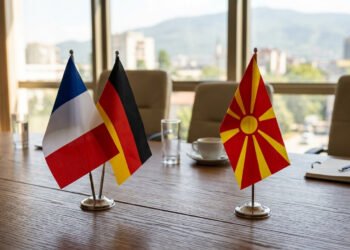
The new Franco-German non-paper, initiated by German Chancellor Friedrich Merz and French President Emmanuel Macron, is expected to be the focus of the upcoming talks and topics brought up by European Commissioner Kos. The document is already attracting attention in European and regional political circles because it foresees a model of accelerated integration of the candidate countries in the European Union.
N, the essential question is what new could Kos bring to Skopje when the key message for this initiative was already conveyed directly to the Macedonian leadership by its authors?!
According to diplomatic sources and public information from the summit in Tivat, the prime minister has already had the opportunity to directly hear Macron’s (and Merz’s) views on the Franco-German vision for the future of enlargement. Hence, the visit to Kos is perceived more as an “institutional clarification of an already communicated political message than as bringing a new initiative”.
This does not mean that the visit is without meaning. On the contrary. The European Commission (EC) remains a key actor in the enlargement process. But the public is increasingly asking the question whether in such circumstances additional “interpretation” of messages that have already been received from the highest political addresses in Paris and Berlin is necessary.
The Franco-German non-paper: Chance or a new “hunter in the Chase quiz”?
That is why the attention is not focused so much on the person of Marta Kos, as on the content of the Franco-German document. Namely, the non-paper envisages “gradual integration of candidate countries into European policies and institutions even before formal membership”. It is about a concept that would allow “gradual access to the European single market, greater participation in the creation of common policies and wider use of the benefits of the Union already during the accession process.”
In European circles, this is interpreted as an attempt to overcome enlargement fatigue and offer a more tangible perspective for countries that have been in the EU’s waiting room for years. For Macedonia, which has been stuck between political promises and new conditions for two decades, this approach could represent a concrete opportunity to finally feel the benefits of the European path even before formal membership. But not that this scenario for Macedonia does not have its own challenges.
The proactive response of President Siljanovska-Davkova
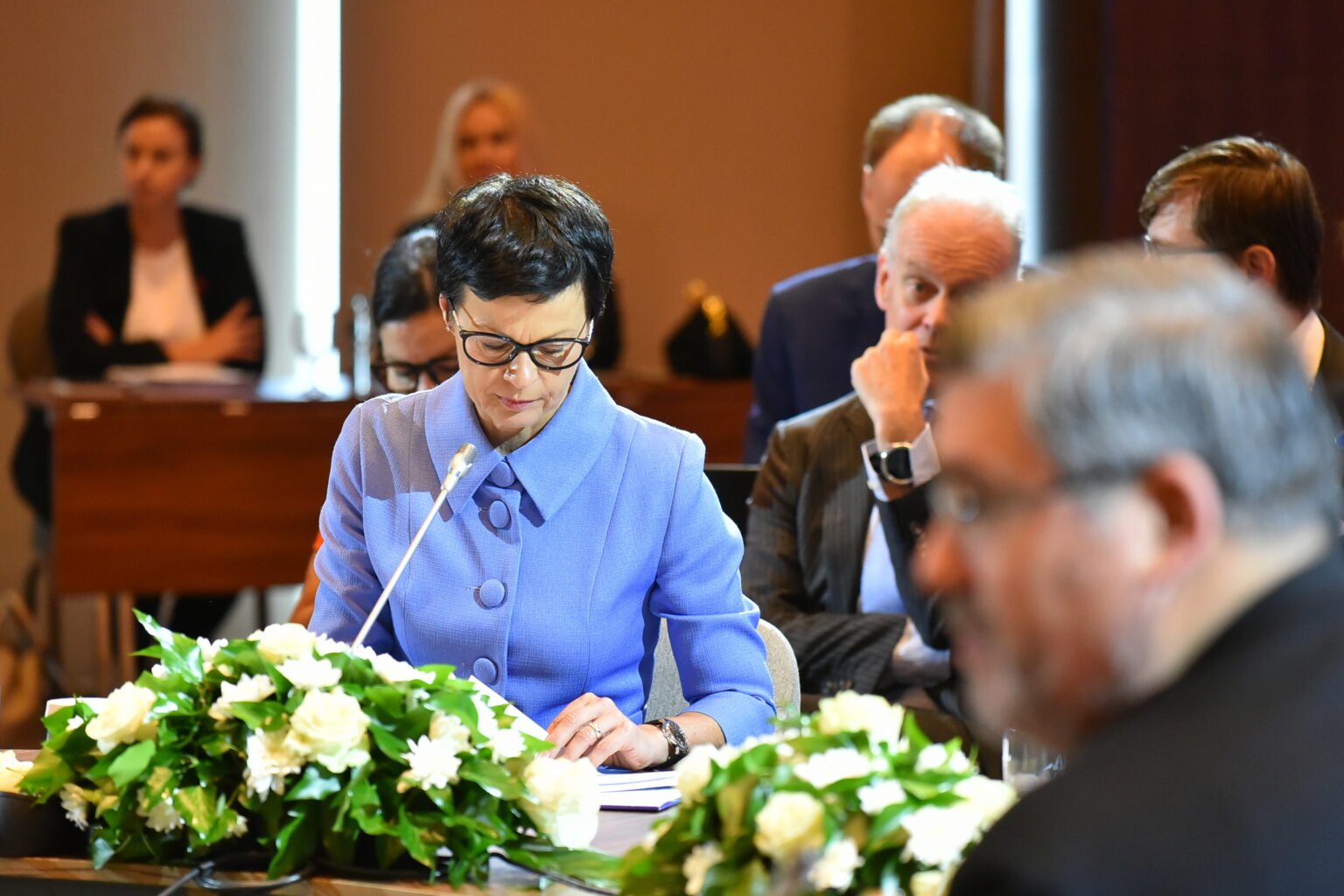
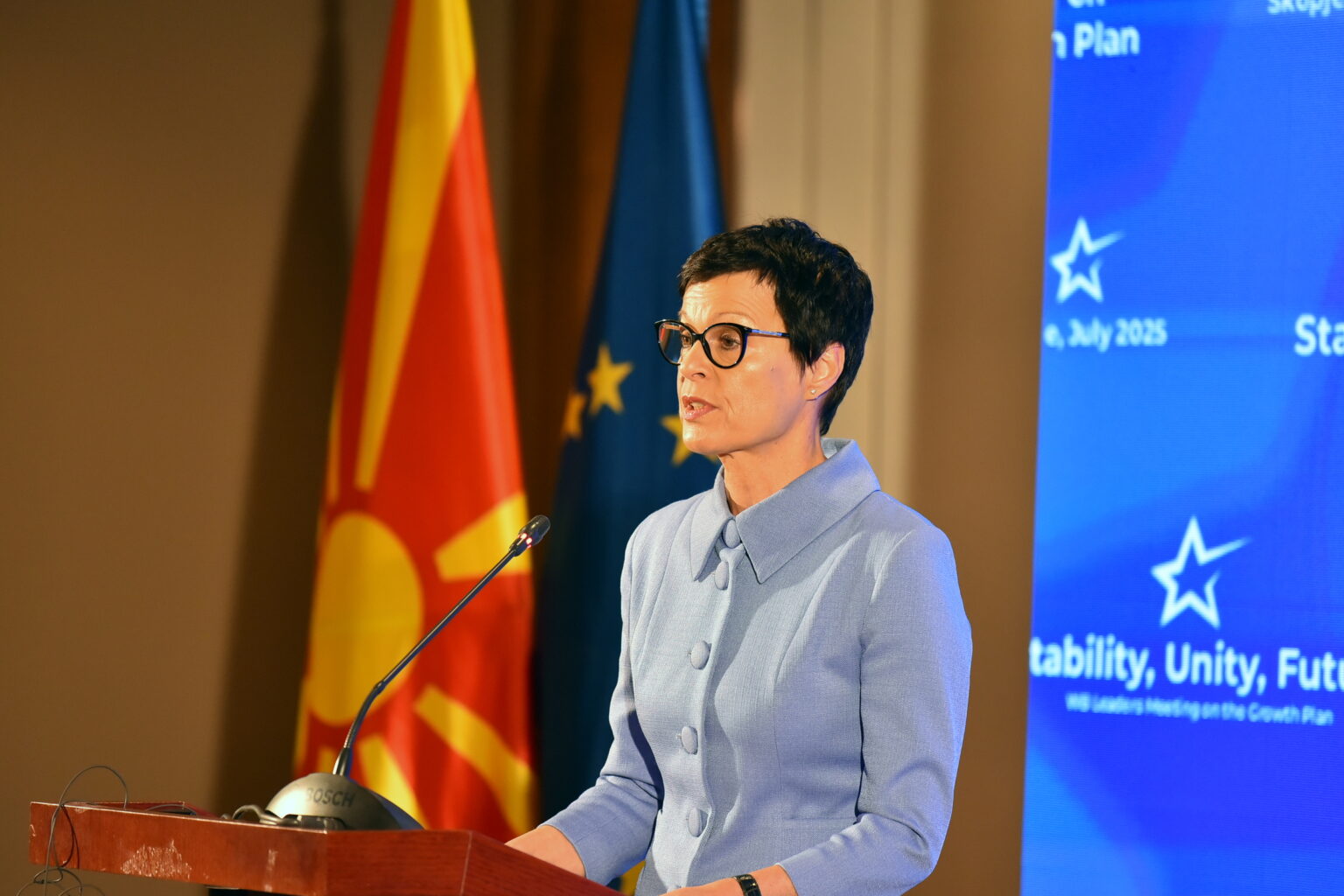
On the eve of the visit to Kos, President Gordana Siljanovska-Davkova clearly set the framework in which Macedonia expects future talks with European partners to be conducted.
Its main message is that the state must not behave like a “small state” that only listens and fulfills tasks without the right to its own position. According to the president, “Macedonia must act confidently, reasoned and dignified, always keeping in mind who it represents and what its national interests are.”
In that direction, she openly indicates that “the European Union itself needs serious reforms” and that “the methodology of the accession negotiations cannot be reduced to a one-sided communication in which the candidates only receive the instructions from Brussels”.
It cannot be “shut up and listen”, said the president, stressing that candidate countries also have the right to present their arguments and remarks when they consider that certain solutions are not in accordance with European principles. Siljanovska-Davkova’s message that “Macedonia should insist on a policy based on evidence” is interesting. But according to analysts, it’s not that we didn’t have or didn’t provide evidence until now. But instead of a package of emotions, she proposes a reasoned debate on all open questions.
Such an approach represents an attempt to move the Macedonian position from a defensive to an active role in the European process. Instead of constantly reacting to other people’s demands, the state would act in a focused and targeted manner, with its own arguments and initiatives.
The exhaustion of the European narrative
The president also touched on the increasingly pronounced disappointment among citizens from the long-standing European integration process. Her statement that “carrots are eaten and sticks are broken” represents perhaps the most plastic description of the state in which Macedonian society finds itself after more than two decades of European expectations. The public is increasingly under the impression that the rules are not always the same for everyone, and this undermines confidence in the process itself. An additional dilemma is created by the fact that Macedonia is fully compliant with the common foreign and security policy of the EU, but still remains outside the essential progress in the negotiations. That is why the new Franco-German approach is perceived as an opportunity to bring new dynamics to the process, which has stagnated for too long.
The message to Brussels from Skopje: Partnership instead of “patronage”
In essence, the message that Skopje officially sends before the arrival of Marta Kos is very clear. Macedonia remains committed to the European future, but is no longer ready to endlessly accept models of communication in which the candidate’s role is reduced to listening and fulfilling. In the most optimistic scenario for us, the Franco-German non-paper opens up space for new thinking about enlargement. If it really grows from a non-paper into an official principled European policy, as the president expects, then a new phase in relations with the Union could open before Macedonia – a phase in which integration will not be just a promise for the future, will not contain ultimatums and blackmail, but will be a process with concrete benefits in the present. In such circumstances, the visit of Marta Kos will not be decisive because of the message it brings, because it has already been heard by the highest European addresses. Its true meaning will be measured by whether Brussels is finally ready to turn the new rhetoric of enlargement into a concrete policy that will restore confidence in the European project in the Western Balkans. And in Macedonia, of course. PR