From an editorial angle
- There is a real possibility that a blockade will be replaced by a new center of political influence. Instead of clashing with the Bulgarian veto, Macedonia could to face a much more subtle, but also much more powerful decision-making mechanism concentrated in the hands of the strongest European states. This is exactly why sobriety is needed. We must not confuse efficiency with equality!
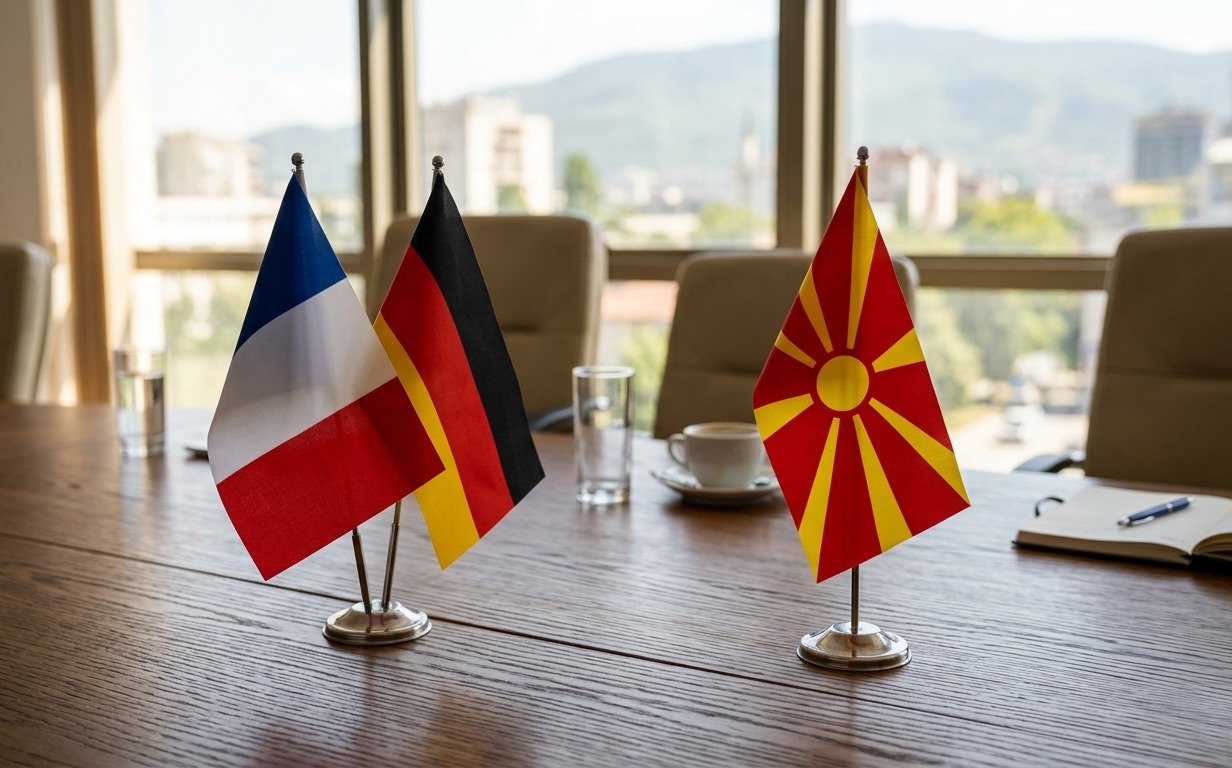
The visit of Marta Kos to Skopje comes at a time when the attention of the Macedonian public is focused on the new French-German initiative for the gradual integration of the candidate countries in the European Union. At first glance, that seems like good news. After two decades of waiting, a model is finally being offered that promises benefits even before full membership. But every major European reform has its other side.
That is why, while Macedonia is rightly looking for a way to overcome the Bulgarian blockade, we must not forget that the process of restructuring the European Union pushed by Emmanuel Macron and Friedrich Mertz is a double-edged sword.
In essence, what is presented today as the modernization of European decision-making is a clear signal that the romantic concept “one state – one vote” in key European policies is gradually going down in history.
The argument of the great European powers is well known. The world is in crisis. The war in Europe continues. Geopolitical risks are growing. Quicker decisions are needed. And small states, according to this reasoning, have neither financial capacity, nor military weight, nor global responsibility to dictate the direction of European foreign and security policy.
On paper it sounds rational. In practice, this means a gradual shift of political weight from the periphery to the center. From the smallest states to the largest. From Brussels to Paris and Berlin.
The logic of the great powers is simple: if Germany and France bear the biggest financial burden for European defense, if they pay the biggest political price for the security of the continent, then they will demand more influence on the final decisions. Macedonia must be especially careful here. Yes, it is possible that the new rules will one day reduce the possibility of Sofia independently blocking the Macedonian European route. But that does not automatically mean that Skopje will get more space for its own policy. On the contrary.
There is a real possibility that a blockade will be replaced by a new center of political influence. Instead of confronting the Bulgarian veto, Macedonia could face a much more subtle, but also much more powerful, decision-making mechanism concentrated in the hands of the strongest European states.
This is exactly why sobriety is needed. We must not confuse efficiency with equity. We must not assume that any reform that reduces the power of national blockades automatically increases justice in the European process. And even less must we forget that the history of Europe is filled with examples when the political centers of power were convinced that they knew best what was good for smaller nations.
Macedonia has no reason to fear Europe. But he has an obligation to carefully read the changing Europe. Therefore, while we welcome any initiative that can move integration forward, we must keep all political senses open. Because the biggest mistake would be if, in the desire to escape from one form of domination and blockades, we imperceptibly enter another.
In the years to come, the real question will not only be whether Macedonia will become a member of the European Union. The question will also be what kind of European Union it will become. For a country that has been fighting for its own voice for decades, this is not a small difference. That is the crux of the whole story. R.N.M.