A United States federal judge expressed concern that Cole Thomas Allen —man who allegedly tried to kill Donald Trump in dinner with the press at the end of April— being held in exceptionally severe detention for several days.
During a hastily scheduled hearing in Washington, Judge Zia Faruqui demanded answers about how the man had been placed on suicide watch, deprived of several basic services and held in what she called “effective solitary confinement” for nearly a week while the government took time to establish crucial facts in the process federal against him.
Cole Tomas Allen, 31, appeared in court last week, where prosecutors accused of trying to assassinate Trump and firing a gun while storming the White House Correspondents’ Association dinner, an annual event for journalists.
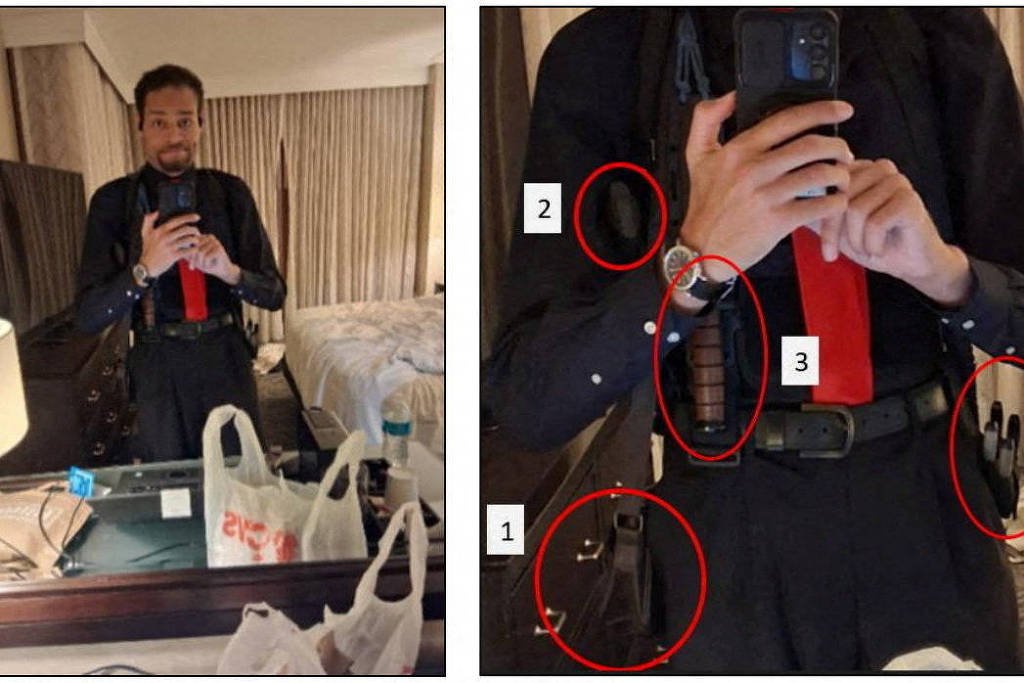
The Justice Department also accused Allen of transporting weapons, including a shotgun, from California to Washington and conspiring to kill several high-ranking officials in a predetermined order.
Allen was expected to appear in court at the end of May, but Faruqui scheduled a quick hearing on Monday after the suspect’s lawyers raised concerns over the weekend about the conditions of his detention. Among other things, his supporters claimed that he had been placed on suicide watch without a full psychiatric evaluation and was regularly being kept in isolation for up to 23 hours a day.
Washington Department of Corrections official Tony Towns told the court that the psychiatric evaluation process had been routine, adding that “each case is different” and that no final decision had been made about how Allen would be kept in custody going forward.
At the hearing, Faruqui questioned Towns about how Allen had been placed under surveillance, depriving him of some basic privileges, including visits, phone calls unrelated to legal matters and access to a Bible. Eugene Ohm, a federal public defender representing Allen, said he had been kept alone for up to 23 hours a day — conditions Faruqui described as “effective solitary confinement.” “Obviously, I’m very concerned about how we got to this point,” Faruqui said.
The judge compared Allen’s treatment to that of dozens of people convicted of violent crimes during the Jan. 6, 2021, Capitol riot, who were placed in lower-security housing and exempt from suicide prevention measures. By comparison, Faruqui said, Allen was placed under the “most punitive and severe” conditionsdespite having no criminal record. “He has been treated completely differently than anyone I have ever seen,” the judge added.
Faruqui ordered the Department of Corrections to submit a report by Tuesday morning outlining any decision or update on Allen’s housing status.
Throughout the hearing, Allen appeared subdued, dressed in an orange jumpsuit. At the end of the hearing, he complied with Faruqui’s request that he continue to communicate through his lawyers if conditions did not improve. “You can’t just accept that this is how things are going to be,” the judge said, earning a nod from the suspect.
Since Allen’s initial hearing last week, the government has been more determined to seek harsh sentences. Last week, investigators presented new information about the hours leading up to the dinner, releasing a timeline that they said showed Allen inspecting the wing of the hotel where the event was held and preparing to attempt an attack.
Even though prosecutors had initially announced serious charges against Allen, who could carry a life sentencethe government had avoided making a fundamental finding: that it was Allen who shot and wounded a Secret Service agent who was hospitalized after dinner.
But over the weekend, Jeanine Pirro, a federal prosecutor in Washington, said investigators concluded that Allen was responsible. “It’s definitely his bullet,” she said on CNN’s “State of the Union” on Sunday.
“This was a violent, premeditated act calculated to take down the president and anyone else in the line of fire,” Pirro said.