Author: assistant dr. Domen Stropnik, Ph.D. med., spec. orthopedic surgery

Assist. dr. Domen Stropnik, Ph.D. med., spec. orthopedic surgery; PHOTO: Arthrosis
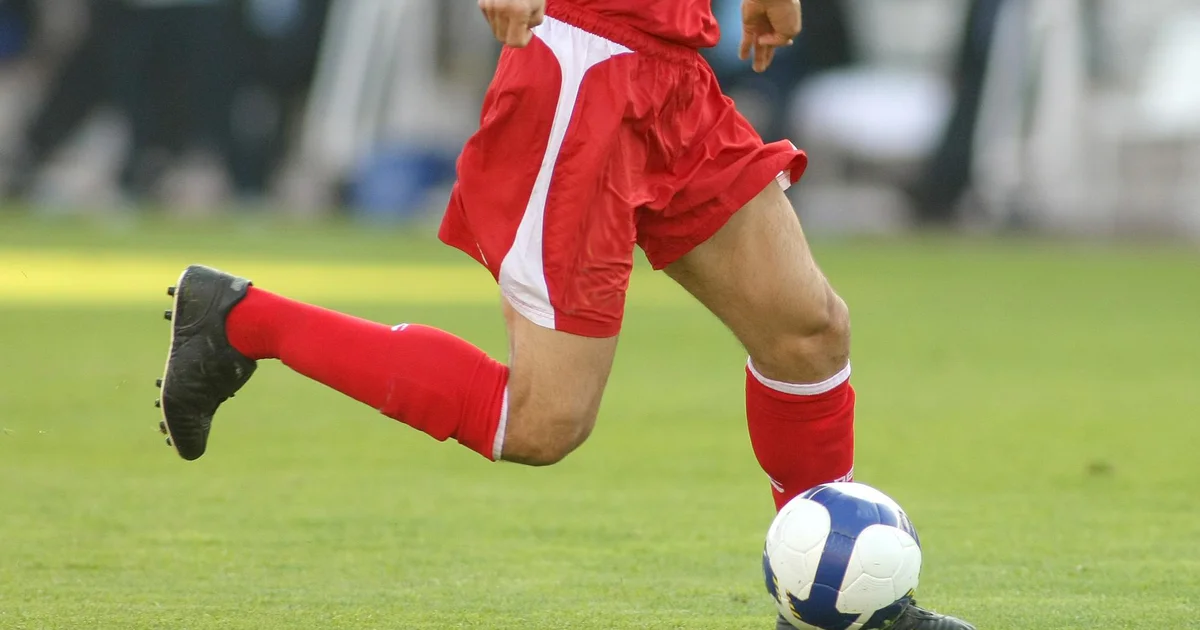
At among professional soccer players, muscle injuries account for as much as a third of all injuries, among them, the most common are the injuries of the posterior thigh bone. But why are these muscles so susceptible to injury, who is most at risk, and how do we properly recover from injury?
What are hamstrings and how do they work?
The hamstrings are a group of three muscles that run along the back of the thigh from the pelvis all the way to the shin. They are crucial in everyday movements such as walking, running and jumping, as they are involved in both knee flexion and hip extension. Since they cross two joints at the same time, hip and knee, they are exposed to great forces, especially during fast running or during sudden movements.

The hamstring muscle is a group of three muscles PHOTO: Artros
How the injury occurs
The injury most often occurs in two ways. In the first type, the injury occurs during a sprint, when the muscle is maximally tensed and stretched. In the second type, an overextension injury occurs when the hip is deeply flexed and the knee is extended.
The injury usually presents as a sudden, sharp pain in the back of the thigh, often accompanied by a popping or jerking sensation. With more severe injuries, especially when the tendon is torn from the growth on the pelvis, some patients do hear a loud pop. Injuries in the area near the pelvis are generally more serious, associated with a longer recovery and a higher risk of complications. Injuries to the muscle part are more frequent and easier at the beginning, but the risk of recurrence is higher.
Who is more at risk?
The biggest risk factors are male gender and previous injury to the same area. Anyone who has already injured the hamstring muscle is significantly more susceptible to recurrence. Inappropriate warm-up, fatigue, muscle imbalance and weak trunk stabilizers also increase the risk.
Diagnosis: how we determine how severe the injury is
After an injury, the doctor first performs a clinical examination. He assesses the location and intensity of the pain, muscle strength and mobility of the joint and looks for a possible defect in the muscle by palpation. Magnetic resonance imaging (MRI) and ultrasound are key to accurately assess the extent of the injury. Based on the findings, injuries are graded from 0 to 4, with grade 1 being a mild injury with a minimal number of torn fibers, and grade 4 being a complete tear of the muscle or tendon. This classification is key to planning treatment and predicting recovery time.
How the treatment works
Milder injuries are treated without surgery in stages: first, rest, cooling and protection of the injured area, then gradual introduction of strengthening and mobility exercises, and finally return to running and sport-specific loads. The entire process takes from three weeks to several months, depending on the severity of the injury
Operative treatment is necessary for complete ruptures of the tendon or for avulsions, i.e. tearing of the tendon from the growth point on the pelvis. Non-operative treatment of such injuries often leaves lasting deficits in strength and worse functional outcomes.
Platelet plasma therapy: yes or no?
In recent years, there has been a lot of talk about treatment with platelet plasma (PRP)in which the patient’s blood is taken, it is centrifuged and the obtained plasma with growth factors is injected into the damaged tissue. The theory is attractive, but the results in the literature are conflicting. The International Olympic Committee does not officially recommend this type of treatment for muscle injuries. However, some research suggests that PRP may be beneficial in younger athletes or with more severe injuries, where it slightly shortens the time to return to full training.
Prevention: the best treatment is the one we don’t need
The good news is that with the right prevention programs, hamstring injuries can be reduced by 47 to 58%. Proven effective programs include warm-up exercises with eccentric exercises for the hamstrings, strengthening of the trunk stabilizers and optimization of running technique. Unfortunately, only around 17% of coaches and athletes regularly implement them in practice, which is an extremely low rate considering the proven effectiveness.
The message is clear: invest in prevention before an injury forces you into weeks or months of recovery. Regular and properly performed hamstring exercises are the most effective tool at our disposal, and at the same time the least utilized.
Most frequently asked questions
| How does an injury to the hamstrings manifest itself? | The injury usually presents as a sudden, sharp pain in the back of the thigh, often accompanied by a popping or jerking sensation. With more severe injuries, especially when the tendon is torn from the growth on the pelvis, some patients do hear a loud pop. |
| When and how does the injury occur? | The injury most often occurs in two ways. In the first type, it happens during a sprint, when the muscle is maximally tensed and stretched. In the second type, an overextension injury occurs when the hip is deeply flexed and the knee is extended. |
| Who is more at risk for a hamstring injury? | The biggest risk factors are male gender and previous injury to the same area. Anyone who has already injured the hamstring muscle is significantly more susceptible to recurrence. Inappropriate warm-up, fatigue, muscle imbalance and weak trunk stabilizers also increase the risk. |
| How long does recovery take? | The entire process takes from three weeks to several months, depending on the severity of the injury. Injuries in the area near the pelvis are generally more serious and associated with a longer recovery and a higher risk of complications. |
| Does a hamstring injury require surgery? | Milder injuries are treated without surgery in stages: rest, cooling and protection, then gradual introduction of strengthening and mobility exercises and finally return to running. Operative treatment is necessary for complete tendon tears or avulsions, as non-operative treatment of these injuries often leaves permanent deficits in strength and worse functional outcomes. |
| Is platelet plasma (PRP) treatment effective? | The results in the professional literature are conflicting and the International Olympic Committee does not officially recommend this method for muscle injuries. Some research suggests that PRP may be beneficial in younger athletes or with more severe injuries, where the time to return to full training is slightly shorter. |
| How effective is prevention? | With the right prevention programs, the number of hamstring injuries can be reduced by 47 to 58%. Proven effective programs include warm-up exercises with eccentric exercises for the hamstrings, strengthening of the trunk stabilizers and optimization of running technique. Despite their proven effectiveness, only around 17% of coaches and athletes regularly use them in practice. |
The customer of the advertising content is Artros.