It began with a membership by Qaqortoq’s tourist association in 2006. Today, 20 years later, Pitsi Høegh heads the tourist company Greenland Sagalands.
– I joined the tourist association in Qaqortoq in 2006. Before that I worked with accounts at Polar Seafood, but tourism has shaped my working life for many years through various positions. At the time, I was on the board of the tourist association, and we were looking for a long time for a new manager. There were no applicants, so I thought that someone had to take the job, and so I applied myself, says Pitsi Høegh.
Pitsi Høegh says that the tourist association had existed as a municipal company since the early 1980s. When she ran it for a few years, it ended up making a profit. But because an association that receives public support does not have to generate a profit, the municipality assessed that the company was ready to stand on its own two feet.
– In 2008 it was therefore privatised. At the same time, the municipality wanted to release the operation, which had been associated with large expenses for, among other things, marketing and employees. I bid on the company, took it over and have been running it ever since, says Pitsi Høegh.
Headwind from the start
The dream of running your own tourism business was quickly put to the test.
– I bought the company with a loan from the Bank of Greenland in 2008. Soon after, the financial crisis hit, and 2009 was a very tough year. There was almost no activity, but luckily I had a strong and supportive business partner in the Bank of Greenland, who got us through.
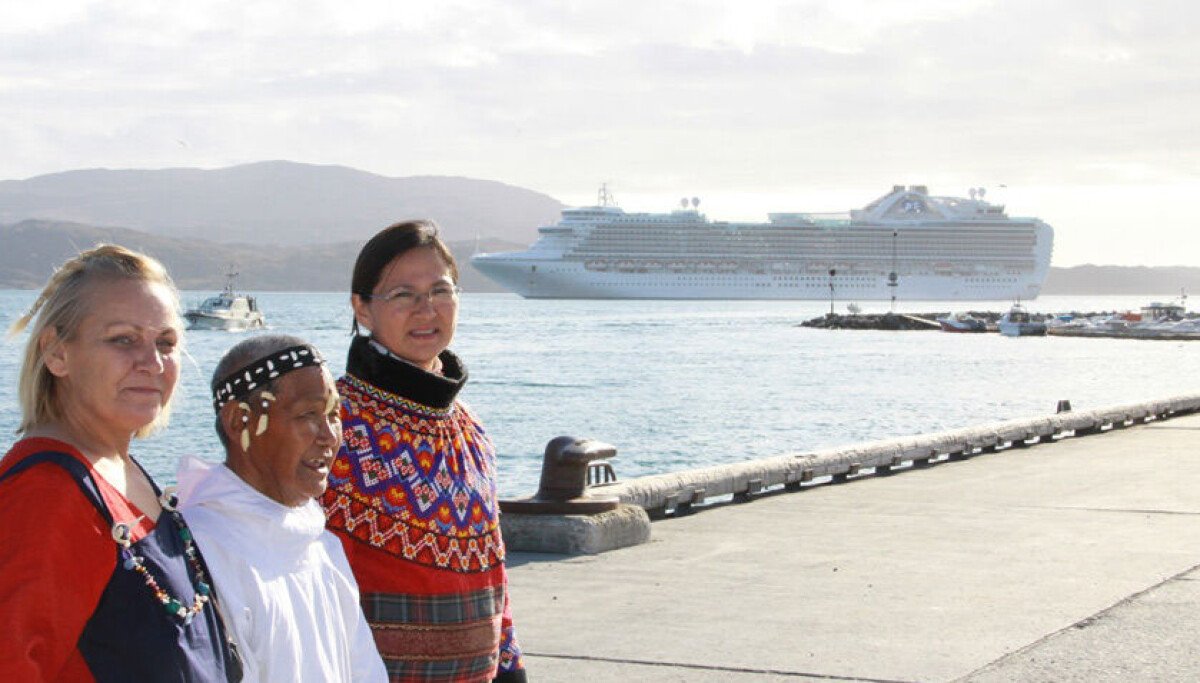
Pitsi Høegh has followed the development of cruise tourism closely – from the first discussions about getting the ships to Qaqortoq to today’s record number of calls.
– Tourism in South Greenland took off already in the 1960s, while the rest of Greenland followed. Tourism has therefore always been part of the area, but what is special for us has been cruise tourism.
– I remember when I first came on board a cruise ship in 1996 to guide guests to Hvalsø Kirkeruiner at Qaqortukulooq. At the time, there was talk about why the ships did not dock in Qaqortoq itself, and the tourism consultant at the time suggested that they should start calling at the city.
– When I took over the company in 2008, there were about ten cruise calls. Since then, the number increased to 12, then 15, and last year we had around 50 arrivals. This year, there are just over 40 on the list.
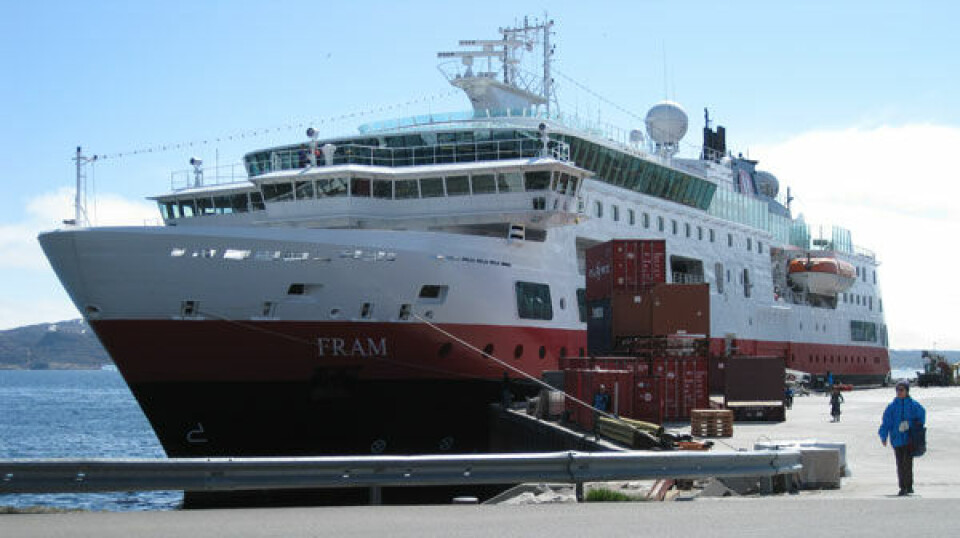
– There are fluctuations from year to year, but development is generally going in the right direction. Two years ago, however, the powerful drift ice, sikorsuit, created great challenges, says Høegh.
The years in the tourism industry have taught Pitsi Høegh that flexibility is a crucial part of the work.
– We have experienced sailing tourists towards the ice cap at, for example, Qalerallit Sermiat or the Qooroq fjord, where the fjord was suddenly so full of drift ice that we could not get all the way to the ice cap. It annoyed me terribly, but the guests were delighted. For them, it was instead a fantastic trip among the icebergs – an experience in itself. I have learned that changed plans are not necessarily a disappointment for the guests, says Høegh.
Many guests are deeply moved when they experience the incomprehensible size of the ice cap and notice how small people are in the magnificent nature – an experience that also affects Pitsi Høegh personally.
– Many guests are deeply affected when they experience the ice cap. They have heard of it, but cannot imagine its size until they stand there and feel how small people are in the magnificent nature.
– It also touches me – especially when the drift ice is dense and you feel the enormous forces of nature.
One of the strongest things for Pitsi Høegh is experiencing the old church full of guests; when they sit with tears in their eyes during the events, she knows she has touched them deeply.
– One of the strongest things is when the old church is full of guests, and you see how many sit with tears in their eyes during the event. There you know that it has succeeded, says Høegh.
The family business
While cruise tourism has grown, the company has at the same time become closely linked to both the city and the family.
– It is a family-owned business that I run together with my children. They have all worked here over the years. The two oldest are now self-employed, while the two youngest still help out in the summer.
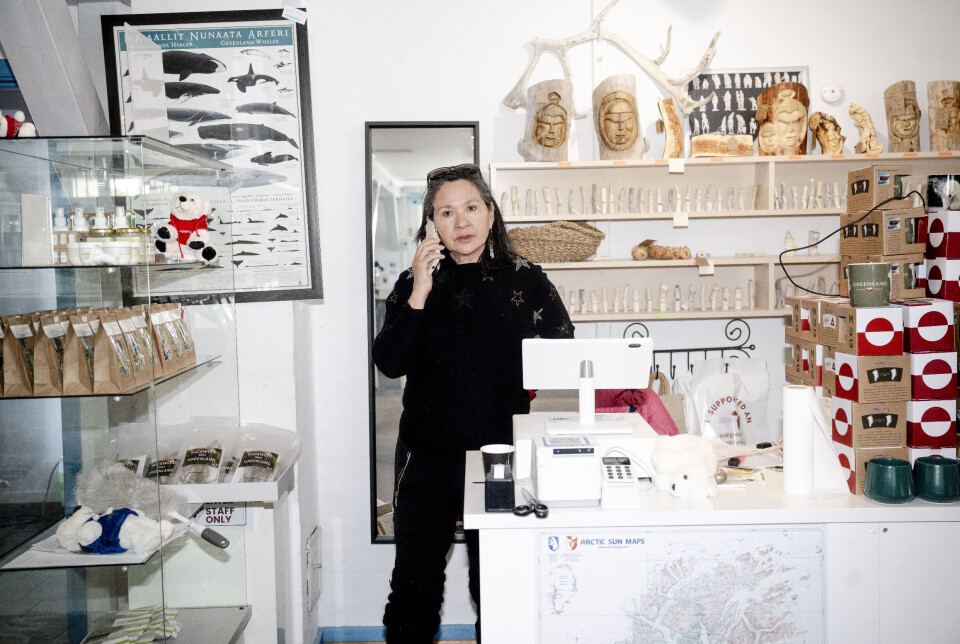
– Apart from the years with the financial crisis and the corona pandemic, the company has been growing. Today, we stand strong because we are firmly rooted in the city. When citizens and tourists seek information about Qaqortoq or want to book tours, they turn to us.
It is not only the view of the ice cap and the deep fjords that attract tourists to South Greenland. According to Pitsi Høegh, it is often the close encounters with people, traditions and everyday life that linger long after the journey home. This is precisely why cultural communication has become a central part of the company’s work.
– Tourism helps to keep our culture alive because we create the framework for it to be experienced and shared.
– We arrange coffee parties, family visits and lunches and dinners with local families. Here, guests get an insight into everyday life, see the national costume and experience how it is made, says Høegh.
At larger events, everything from fishing methods and climate change to choral singing and drum dancing is communicated. Pitsi Høegh explains that these traditions are a crucial part of the local identity – an identity that the guests actively help to preserve when they take part in the experiences.
– At larger events, we hold presentations on culture, weather conditions, catching and fishing. Before climate change really came on the agenda, we also talked about how global warming affects our everyday life and business.
– Among other things, we showcase Great Greenland and talk about fishing methods, sealskins and our cultural life. In addition, we offer experiences with choir singing, drum dancing and guitar playing.
– It is part of our identity, and when the guests take part in it, they also help to preserve it, says Pitsi Høegh.
Thanks to the Icelandic sagas
When Pitsi Høegh has to explain the name Greenland Sagalands, she points to the Icelandic sagas, which, according to her, help to tell not only the story of the Norse, but also the story of us, the Greenlandic Inuit culture.
– Without the sagas, which were written down – thanks to the Icelanders – and without the nuns and monastic life, we would not know so much today. We have some unique historical sources which make it possible to tell our own story – not only that of the Nordics, but also ours.
– We appear in the sources from the 15th century, and in 1408 there is the last evidence of the Norsemen’s presence, where we, the kalaallit, are also mentioned.
– We live in an area that is closely linked to the sagas, which is why the company was named Greenland Sagalands, explains Pitsi Høegh.
The many cruise calls increase the pressure on the city’s capacity, but according to Pitsi Høegh, experience and local knowledge are essential for it to work in practice.
– We are skilled at arranging these huge calls. However, we cannot activate all the guests at once, as we lack large buses and larger boats.
– Then people go to the various places, do city tours, coffee parties or kayak shows, and in this way they move around with the help of maps and directions.
– We try to organize it so that it does not disturb city life too much, Pitsi Høegh says.
Qaqortoq Airport and the good advice
Where tourism in Qaqortoq used to be sharply divided into a hectic summer and a quiet winter, the boundaries are now shifting. The new airport structure has made the road to Qaqortoq shorter, and it has changed the rules of the game for Pitsi Høegh’s business.
– We have calls from Iceland several times a week and a direct route from Nuuk, so it has a big effect. Previously, we only waited for the cruise ships to get revenue, but now we can feel that individual tourists are coming and requesting tours. We have never started a season so early before or had the boat so early in the water, says Høegh.
Although the new airport brings optimism and new tourists to the region, the local infrastructure on land occasionally hampers growth plans. If the private actors are to be able to keep up with the development, it requires the public sector to keep up.
– In general, we are far behind in construction maturity. For example, we would really like to build more along Lufthavnsvejen in Qaqortoq, but there is simply a lack of construction maturity from the public sector, Pitsi Høegh explains.
After two decades at the forefront of tourism in South Greenland, Pitsi Høegh has built up invaluable experience. If she is to pass the baton on to young Greenlandic entrepreneurs who dream of starting their own business in the industry, she has three clear pieces of advice:
– The season may only last three months. Make sure you have a job in the winter so you can earn extra money to cover your fixed expenses. You are personally liable for your debt in the bank, regardless of where you are, so it is a huge responsibility.
– Don’t copy others or try to outdo the greats. Instead, look at what the market is missing and find your own niche. Start from the bottom, not from the top. Greenland needs entrepreneurs and local activities, so that we don’t always just wait for foreign companies to come and save us. Research the market, do market analysis and learn about accounting.
– Go out and experience the world first. My last piece of advice is that you should not just stay at home in the beginning. Go travelling, see the world and get inspiration. When you then come back home to start your business, you have a completely different perspective on things. It is incredibly important, advises Pitsi Høegh.