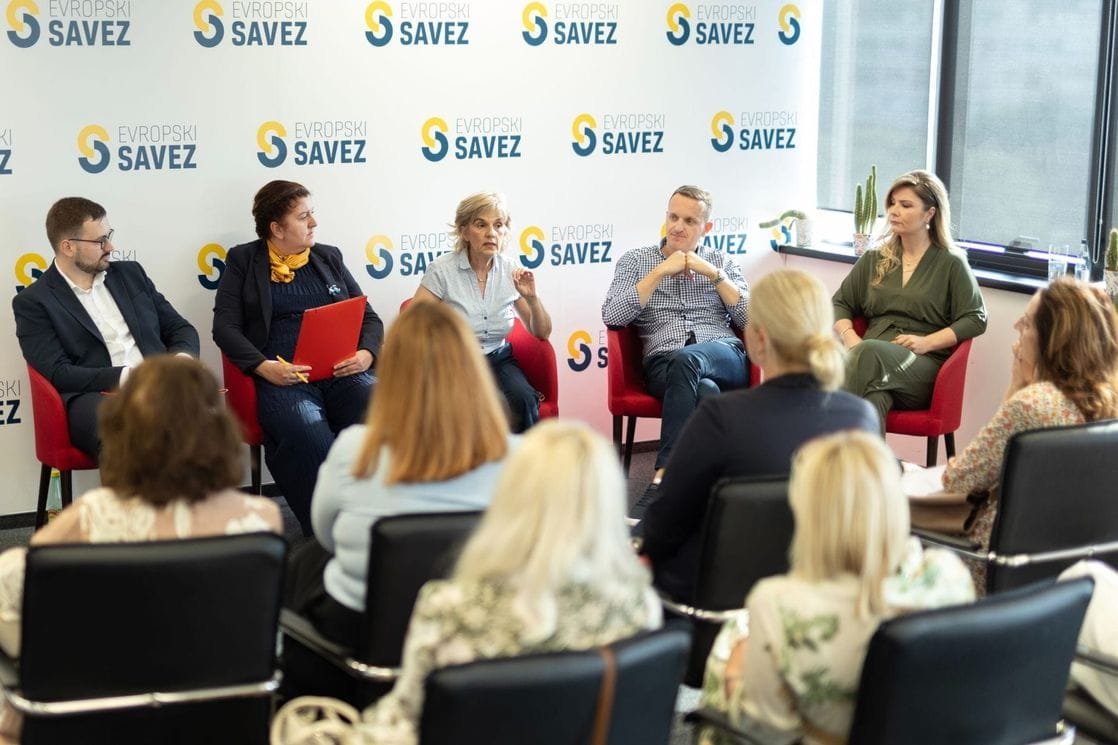
The Women’s Forum of the European Union organized a round table on the topic “Participation of women in politics – between participation and power”, dedicated to the position of women in political life, their real influence on decision-making processes, as well as challenges and perspectives for greater participation of women in decision-making positions.
Through an open and meaningful discussion, a clear message was sent that the democratic development of society is not possible without the full and equal participation of women in the creation of public policies and decision-making.
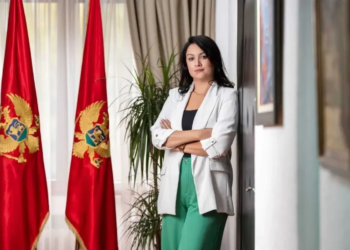
The meeting was opened by Jovana Vuković, a member of the Presidency of the Women’s Forum of the European Union, who pointed out that one of the key issues of the modern democratic society was being discussed.
“We’re not just talking about how much women are present in politics, but how much they really participate in decision-making and shaping policies. Numbers are important, but the essence is in being able to influence processes and create a society of equal opportunities. We must work together to create more space for women in politics, especially in places where key decisions are made,” said Vuković.
Member of the State Election Commission Damir Suljević, member of the European Union in SO Bar Milena Vujačić, member of the Presidency of the European Union Women’s Forum Biljana Ćulafić, member of the European Union in the Assembly of the Capital City Miloš Đuričković and president of the Women’s Forum of the Party of European Progress Azra Redžić Radulović took part in the panel discussion. The moderator of the panel was Balša Knežević, a member of the Presidency of the Youth Forum of the European Union.
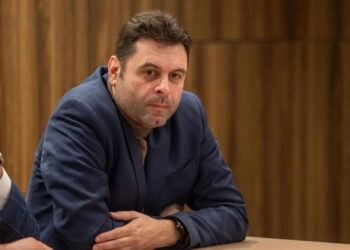
Suljević said that women in Montenegro are not stifled by voters, but by the party infrastructure, because the real filter does not take place at the polling station, but at closed meetings within the parties where it is decided who will be on the list and in which position.
“The data on the educational achievements of girls in Montenegro clearly speaks of their capacity for everything, including politics. Among the archers in Podgorica this year, girls make up 62.5% in primary and 71.2% in secondary schools, which proves that the obstacles women have in politics is not a matter of ability, but a matter of a system that does not let them in,” emphasized Suljević.
Biljana Ćulafić pointed out that the very need for quotas shows that society has not yet reached the full level of maturity when it comes to recognizing the potential and qualities of women.
“As soon as there has to be a quota, it is proof that we are not yet mature enough as a society to recognize the value of women without additional mechanisms. However, the process of change has begun and I believe it is unstoppable. Each new generation of women in politics further pushes the boundaries and opens up space for those who come,” Ćulafić pointed out.
Milena Vujacic said that it is important to create an environment in which women will be encouraged to take responsibility and actively participate in political life.
“Women have just started and we will still be in all positions. The fact that we already have examples of good practice today is encouraging. In the Bar, in the committee club of the European Union, we have an equal number of women and men, which shows that equality is not an unattainable goal when there is political will,” said Vujacic.
Miloš Đuričković emphasized that the fight for full equality is a long-term process, but that it is the responsibility of today’s generation of politicians to create the foundations for a society of equal opportunities.
“Our generations may not see full equality, but it is important that today we build the ground for generations to come. Since its foundation, the European Union has shown that it believes in the knowledge, abilities and leadership of women. At all levels of activity, we provide women with space to assert themselves politically, take responsibility and be part of the decision-making process,” said Đuričković.
The president of the Women’s Forum of the Party of European Progress, Azra Redžić Radulović, said that she sees the process of accession to the European Union as a great chance for Montenegro.
“Not because Brussels will solve our problems, but because European standards encourage greater responsibility of institutions, greater involvement of women in decision-making and the creation of a society in which the criteria are knowledge and results, not gender. I believe that the generations to come will also bring a change in political culture and the hope that the space for women’s political activity will naturally expand, without the need for constant proof and the struggle for basic visibility,” concluded Redžić Radulović.
The panelists agreed that the formal representation of women is an important step, but that the real goal must be their equal participation in decision-making processes. It was concluded that political parties have a special responsibility to create space for women, encourage their leadership and remove obstacles that still prevent them from participating in public life in their full capacity.
The Women’s Forum of the European Union will continue to open up important social issues through such initiatives and contribute to the creation of a society in which women will have an equal opportunity to influence the decisions that shape the future of Montenegro.