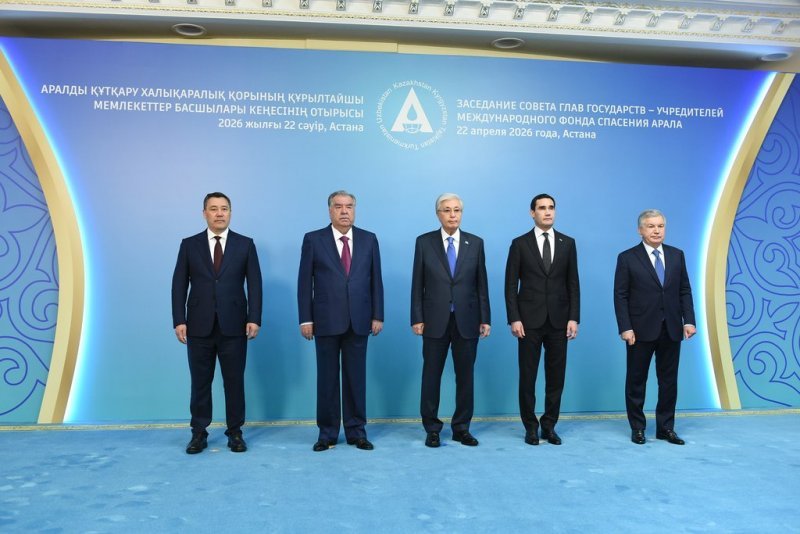
The President of Tajikistan, speaking on April 22 at a meeting of the Council of Heads of State-founders of the International Fund for Saving the Aral Sea in Astana, proposed the creation of an interstate energy commission of Central Asia.
During his speech, Emomali Rahmon emphasized that Tajikistan, since the creation of the Fund, has considered it as an important mechanism for multilateral cooperation on water and environmental issues, reports Presidential press service.
He noted that over the past time it has been possible to create a platform for open dialogue on the problems of the Aral Sea and attract the attention of the international community, as well as implement a number of joint projects in the field of water resources management and environmental protection.
At the same time, the President of the Republic of Tajikistan outlined serious environmental challenges, including accelerated melting of glaciers, ecosystem degradation, water disasters and increasing dust storms, which have a negative impact on fresh water sources, public health and agriculture.
The President noted that Tajikistan, where up to 60% of the region’s river flow is formed, especially acutely feels the consequences of these processes. Population growth, increasing water consumption and climate change are increasing pressure on water resources, which affects energy, food and environmental stability.
The head of state called in these conditions to give priority attention to the effective use of existing cooperation mechanisms on water resources in Central Asia. He also emphasized the importance of adapting the Fund to modern realities to strengthen and develop regional cooperation in the Aral Sea basin.
He took the initiative to create an Interstate Energy Commission of Central Asia within the framework of the International Fund for Saving the Aral Sea.
He noted that water resource issues around the world remain one of the highest priority and sensitive issues. According to him, Central Asia and the existing cooperation mechanisms in the region already demonstrate positive experience in joint management and use of water resources.
At the same time, the head of state emphasized that in the context of existing challenges and the development of new technologies, it is necessary to strengthen measures for the integrated, rational use and protection of water resources.
Earlier at the Regional Environmental Summit “Shared Vision for a Sustainable Future” Emomali Rahmon notel that Tajikistan forms up to 60% of the water resources of Central Asia, which emphasizes the important role of Tajikistan’s mountain ecosystems in ensuring water supply and sustainable development of the region.
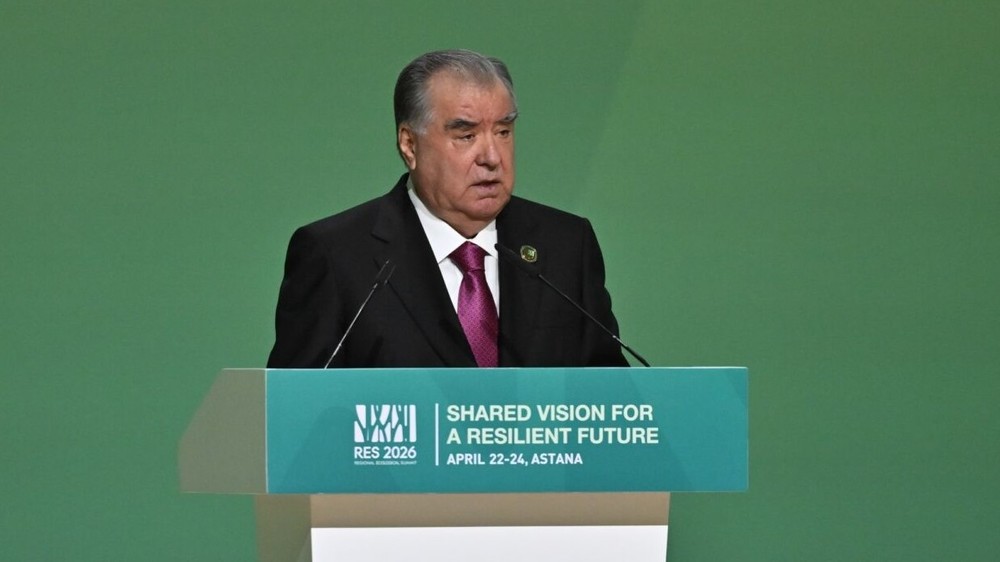
The President drew the attention of the summit participants to the need to promote climate transition as a priority area of development, expand the use of renewable energy sources, increase energy efficiency and create a low-carbon economy.
The development of hydropower and other clean energy sources, he said, is a strategic priority for Tajikistan.
In the current conditions, he noted, the mobilization of environmental investments and the introduction of market mechanisms to support “green” growth are of particular importance. In this regard, the country’s government is issuing green bonds, which is seen as an important step towards integration into the global system of sustainable climate finance.
The feasibility of considering the possibility of a phased formation of a regional carbon market to support efforts to reduce emissions and attract investment was also voiced.