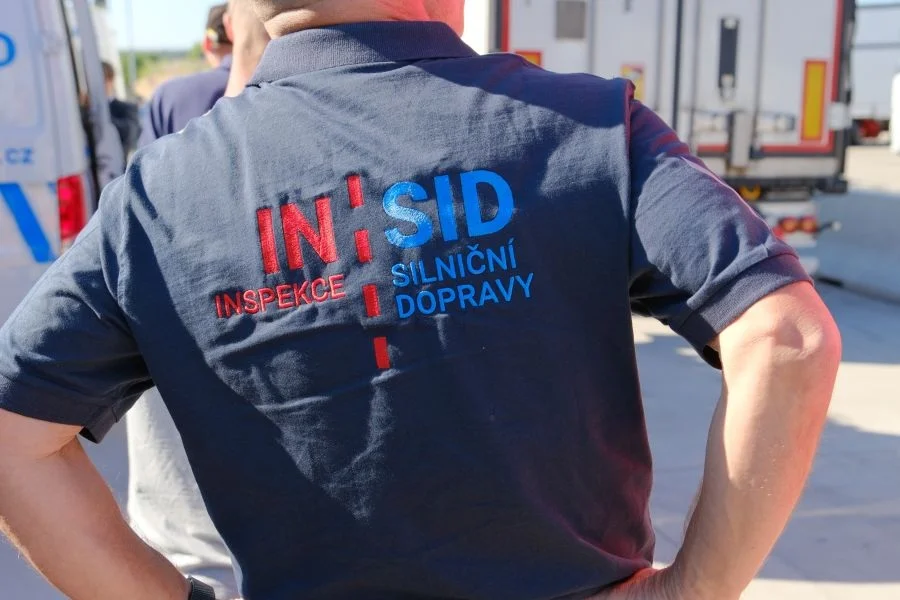
More than 16,000 inspections in just nine months: the Czech Road Transport Inspectorate has uncovered numerous violations. Particularly common are overtired drivers and overloaded lorries.
The Czech Road Transport Inspectorate INSID has presented a comprehensive report for the first nine months of its existence. Between July 2025 and March 2026, inspectors carried out a total of 16,222 checks, primarily on lorries and buses. Violations were identified in around every fifth vehicle.
Specifically, inspectors recorded violations in 3,663 cases, corresponding to a share of 22.58 per cent. The authority imposed fines amounting to 5.55 million koruna, while additional deposits of over 40.6 million koruna were collected. A further 2,018 cases were referred to administrative authorities, which will decide on the final level of sanctions.
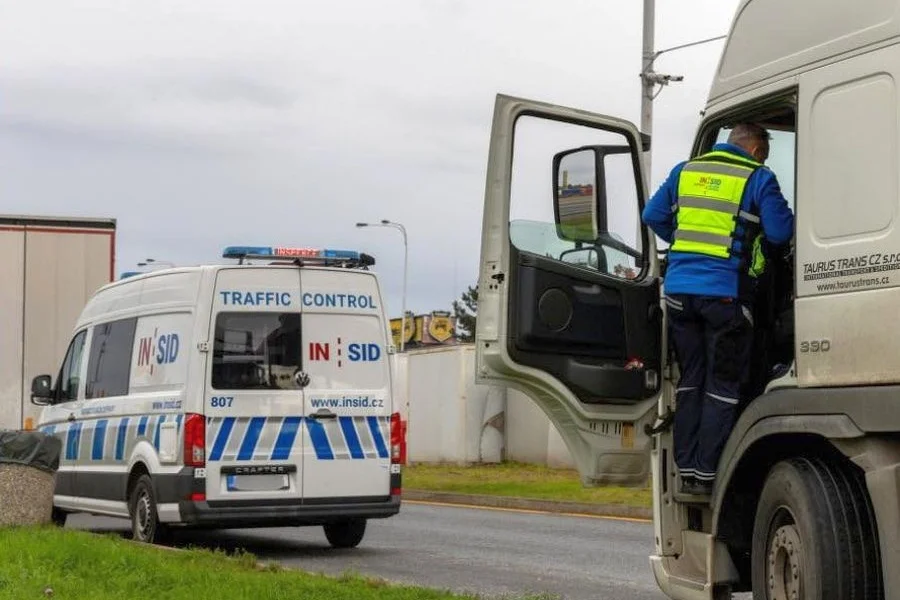
Foto: INSID – Inspekce silniční dopravy
In 888 cases, the inspectorate prohibited drivers from continuing their journey – mostly due to overloaded vehicles. “Our goal is not to hinder honest transport companies, but to sanction those who deliberately take risks, endanger safety and distort the market through unfair competition,” said INSID Director Lenka Ptáčková Melicharová.
Violations of driving time rules particularly common
A look at the data shows clear priorities: inspectors most frequently identified violations of social regulations, particularly regarding driving and rest periods. Drivers are required to take a break after no more than four and a half hours – a rule that is often exceeded in practice.
“Disregarding these rules leads to fatigue and inattention and therefore represents a significant safety risk,” emphasised INSID specialist adviser Josef Matěj.
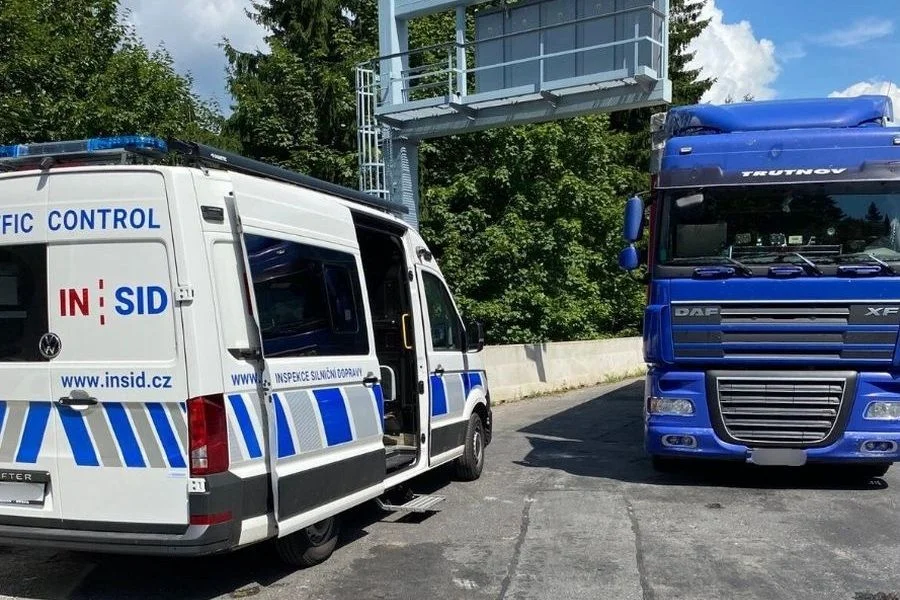
Foto: INSID – Inspekce silniční dopravy
Another focus lies on weight checks. In targeted inspections of vehicle combinations, deficiencies were identified in 67.81 per cent of cases. Modern high-speed weighing systems help to select suspicious vehicles in advance.
Violations of driving bans at weekends and on public holidays are also widespread: in more than 41 per cent of the cases inspected, corresponding breaches were identified. In addition, inspectors repeatedly uncovered manipulations of tachographs as well as interference with emission systems.
More targeted inspections planned
After a phase of broadly based standard inspections, INSID is increasingly shifting its focus towards targeted measures. Particular attention is being paid to conspicuous transport companies and specific problem areas.
Recent inspections, for example, focused on long-distance coaches from south-eastern Europe, with particular attention paid to their technical condition. The inspectorate also took part in a joint operation with the city of Prague to check so-called “pseudo-veterans”.
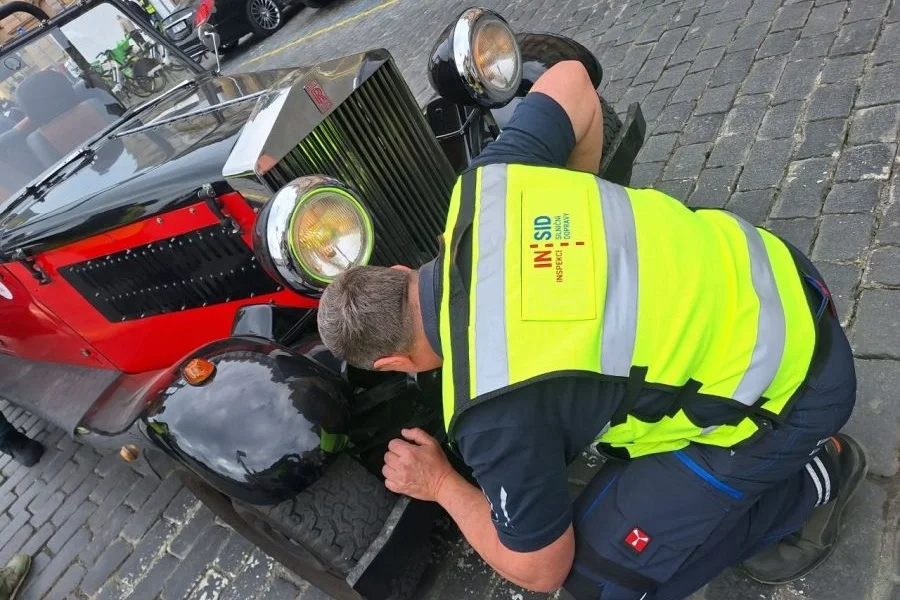
Foto: Portál hlavního města Prahy
Further targeted actions are already being prepared, including checks of records and the detection of tachograph fraud. This includes cases where drivers use another driver’s card while driving in order to conceal driving times.
Close cooperation with European partners
International cooperation is also a central element of the work. INSID regularly participates in joint inspection operations with authorities from other European countries and exchanges information on conspicuous companies.
Inspections of long-distance coaches, for example, were carried out simultaneously in the Czech Republic and Austria. In addition, Czech inspectors have also taken part in operations in Belgium and France. In May, experts from Germany and Poland will in turn participate in inspections on Czech roads.
“Transport knows no borders – that is why a coordinated approach by inspection authorities across Europe is essential,” added Ptáčková Melicharová.