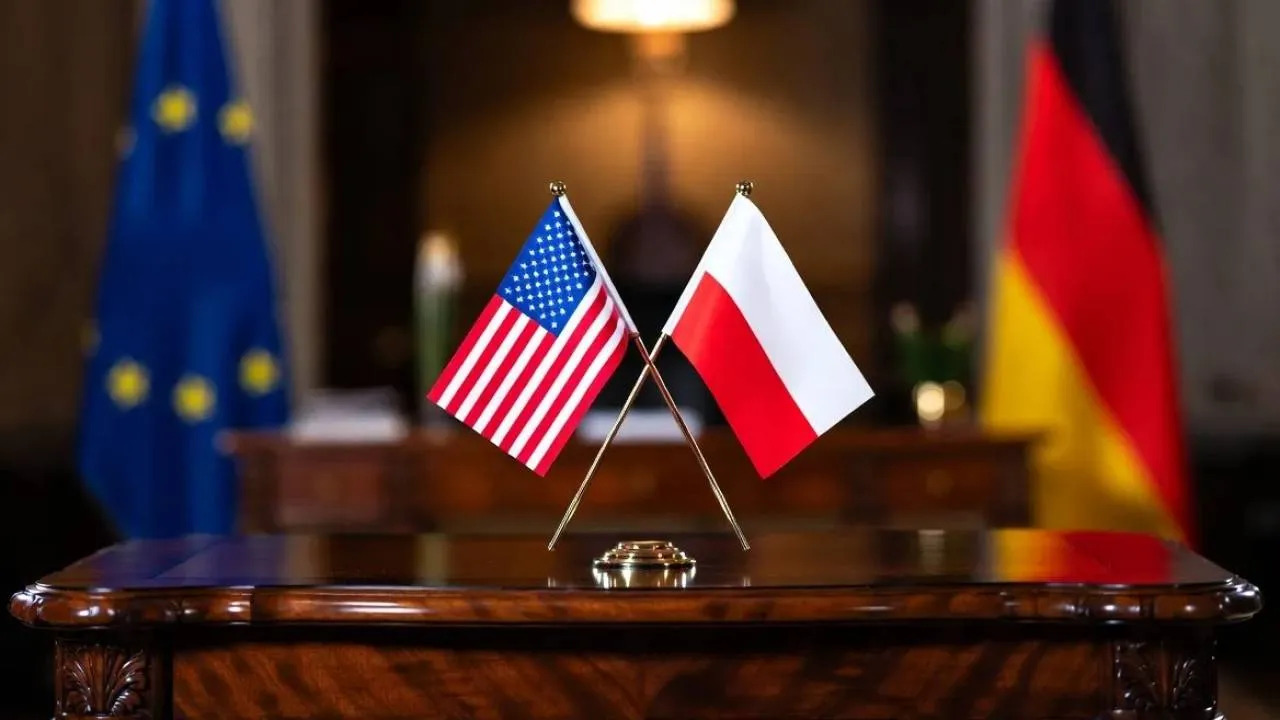
On April 30 in Warsaw, the 16th round of the U.S.–Poland Strategic Dialogue took place. The meeting focused on key areas of bilateral cooperation: security and defense, energy, economic development, and new technologies. A framework agreement on critical mineral resources was signed during the talks, according to a joint statement on the strategic dialogue between the United States and Poland published on the website of the United States Department of State. As noted, “the United States expressed support for Poland’s ambitions to become a regional LNG hub, replacing the historically vulnerable east–west dependency model with a diversified north–south system.”
The talks were led by U.S. Under Secretary of State for Political Affairs Allison Hooker and Polish Deputy Foreign Minister Robert Kupiecki.
One of the main topics was the regional security situation in connection with the ongoing war in Ukraine. According to the State Department, both sides exchanged views on efforts to support a lasting peace there and reaffirmed the importance of close transatlantic cooperation.
In the area of security and defense, Poland and the United States declared their intention to further strengthen military cooperation, including in deterrence and mutual self-defense. The importance of developing cooperation between defense industries was also emphasized, with the aim of increasing the interoperability of armed forces, strengthening Poland’s defense capabilities, and delivering economic benefits to both countries.
Agreement Signed
Energy was also a key element of the discussions. The parties explored opportunities for further development of partnership in energy security, including LNG supplies to the region and cooperation on civilian nuclear energy projects involving American companies. The U.S. expressed support for Poland’s plans to become a regional LNG hub and play a significant role in diversifying energy supplies in Europe.
A framework agreement on critical mineral resources was also signed during the meeting. The document предусматриes cooperation in securing supply chains and strengthening technological security, including by reducing dependence on high-risk suppliers and protecting critical infrastructure.
In the economic part of the talks, the importance of building a competitive and innovative economy was highlighted. Poland thanked the U.S. for the invitation to participate in G20 work during the American presidency, while the U.S. side expressed support for Poland’s membership in the G20 as a permanent member. Both delegations also pointed to the need to create a predictable regulatory environment conducive to investment, entrepreneurship, and technological development.
“The United States welcomed Poland’s leading role in these issues and committed to working closely with Poland to promote policies that strengthen bilateral trade and investment, create jobs, and drive prosperity in both countries,” the statement reads.
Statement from the Chancellery of the President of Poland
The meeting with the American delegation was also reported by the Chancellery of President Karol Nawrocki. “The discussion concerned bilateral cooperation — including cooperation in security and the economy — as well as multilateral cooperation, particularly within the G20 format. Among the topics discussed were the security situation in the region and globally, also in the context of the upcoming NATO Summit in Ankara,” the statement said.
“One of the Toughest Allies”
U.S. Ambassador to Poland Tom Rose also commented after the talks. “Under President Donald Trump, America operates from a position of strength — real strength — and Poland is one of our closest, toughest, and most reliable allies in Europe,” he wrote on platform X.
“Today’s Strategic Dialogue made it clear: this alliance is unbreakable. We are expanding our defense cooperation, strengthening our energy partnership, and creating new growth opportunities. We look forward to continued excellent cooperation. No weakness. No hesitation. Only results. Strong America. Strong Poland. An unbreakable alliance,” he emphasized.