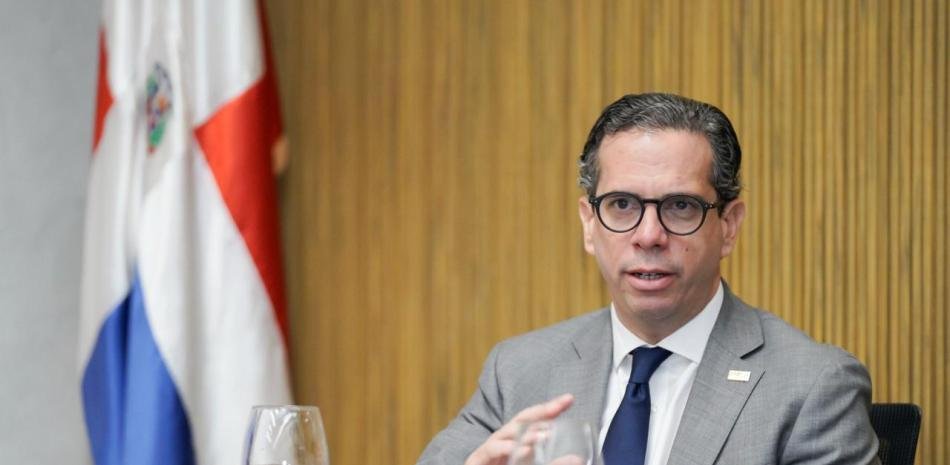
The National Council of Private Enterprise (CONEP) expressed its support for the efforts carried out by the Dominican Government in response to the accusation of the Office of the United States Trade Representative (USTR), as part of an international investigation into labor practices in supply chains.
The business union highlighted that the Dominican Republic has always demonstrated its commitment to respecting labor rights.
He estimated that the USTR announcement does not constitute an exclusive action against the Dominican Republic, but is part of a broader investigation that covers more than 60 countries.
In that sense, he specified that this is not a direct accusation against the country, but rather an extensive process that involves multiple commercial partners of the United States.
CONEP indicated that the Dominican Government, as the official interlocutor with the US authorities, has maintained an active and continuous dialogue on this issue, in coordination with the national productive sectors.
The entity valued these efforts and reiterated its willingness to collaborate with the authorities, providing information and providing support with initiatives that allow an adequate understanding of the Dominican reality.
The business union specified that the Dominican Republic has demonstrated for years its commitment to respecting labor rights and compliance with international trade standards.
In this context, he expressed in a press statement his confidence that the technical exchange and dialogue will allow the concerns raised by the United States to be adequately addressed.
CONEP’s reaction comes after the USTR included the Dominican Republic and several Latin American countries in an investigation conducted under Section 301 of the Trade Act of 1974.
The report points out alleged deficiencies in the prevention of forced labor within supply chains, which could lead to the imposition of additional tariffs of between 10% and 12.5% on imports from some 60 economies.
Although the measure does not imply immediate sanctions, it does place the country under greater commercial scrutiny, at a time when the United States is redefining its trade policy with an emphasis on economic security, labor rights and productive traceability.