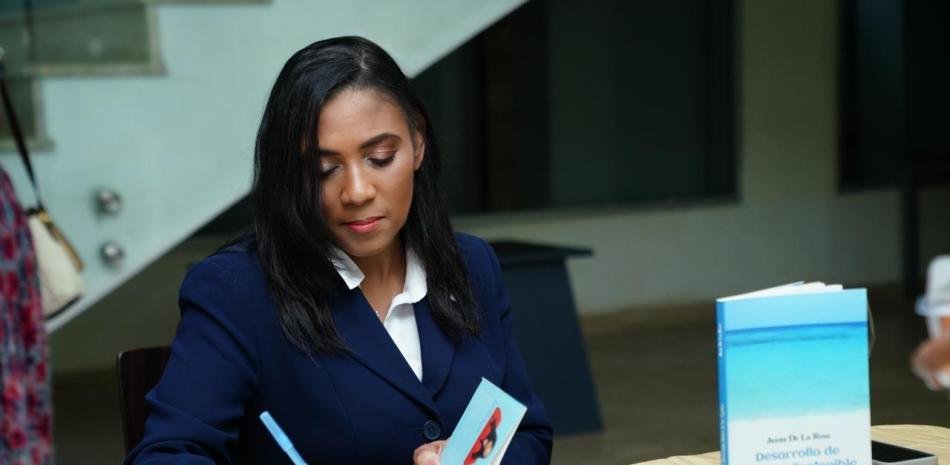
I believe in people’s dreams. I like to promote small stories that little by little end up becoming great joys. Juana de la Rosa Delgado, originally from San Cristóbal, belongs precisely to that lineage of people who silently persevere until they see their projects flourish.
His book: “Sustainable tourism development: Bahía de las Águilas, Pedernales province, Dominican Republic (2025)” is proof of this. More than research, it represents years of patience, study and love for Dominican nature.
The conversation for this article arose, curiously, in the middle of the catechism of the Santo Domingo parish where Juana collaborates. A friend would say that all roads end up leading to literature.
While we were talking, Juana confessed that for a long time she had been concerned about the way in which tourism, being one of the most important economic activities in the country, could be developed without destroying the environment. That concern led her to focus her sights on Bahía de las Águilas, one of the most beautiful and emblematic corners of the Dominican Republic.
His intention, he explains, was not only to talk about tourism, but to show how the arrival of visitors can also generate positive impacts for communities and foster an awareness of preservation.
The book covers part of the history of Bahía de las Águilas and shows how that landscape was transformed into a point of reference for those who visit us. Behind its pages there is a long creation process: five years of concrete work and nearly ten years of nurturing the dream of turning those ideas into a book with all the challenges that entails.
Talking to Juana is listening to someone deeply committed to environmental issues. For her, defending sustainable development is also a way of defending life. He talks about nature as a wonderful creation of God and understands that caring for it means leaving a worthy legacy for future generations.
Although he barely celebrates the publication of this work, he is already thinking about new literary projects. He says with a smile that he is currently working on another idea, although he has not yet fully defined the topic.
At the end of the conversation, Juana wanted to stop at the thank you. She especially mentioned her daughter Julissa de la Rosa, as well as several friends and professors who accompanied her during the production process. Before saying goodbye he left a simple reflection, but full of meaning: “The fundamental thing in life is the will, because each of us has a blank notebook in our minds that, with effort, we can fill.”