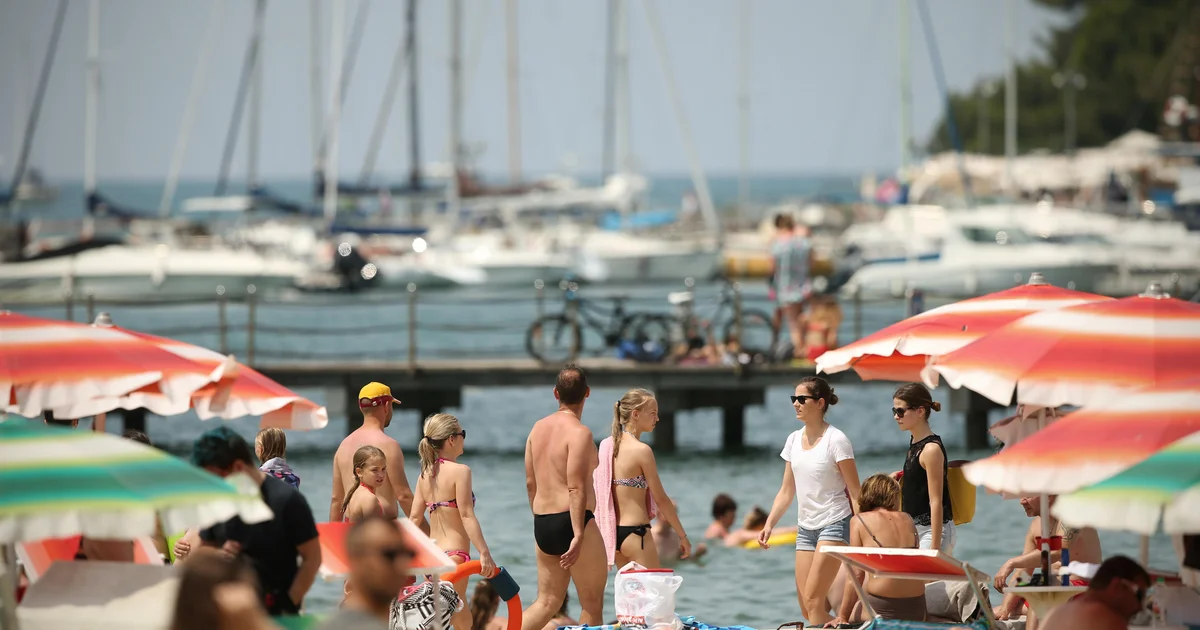
At the start summers experts again point to adequate protection. Skin cancer without malignant melanoma is the most common form of cancer in Slovenia. According to the Republic’s Cancer Registry, more than five thousand people fall ill every year, of which more than 800 are melanoma. As many as 135 of them die from this disease.
“The latest data clearly confirm that skin cancer is one of the fastest growing forms of cancer, with UV radiation playing a major role as an environmental and occupational risk factor,” the Clinical Institute for Occupational, Transport and Sports Medicine UKC Ljubljana points out.

The increase in the incidence of skin cancer is not the result of a single factor, but a combination of greater exposure to UV radiation, an aging population, and better recognition and earlier detection of the disease, dermatologists emphasized at the recent Safe in the Sun event Bor Hrvatin Stančič and Laura Đorđević Betetto from the Dermatovenerological Clinic of the UKC Ljubljana.
Those most at risk are people with a light skin type, those with a large number of signs or a family history of melanoma, individuals with high exposure to the sun due to work or movement outdoors, and immunocompromised patients, for example after transplants or on immunosuppressive therapy. Skin damage from exposure to UV radiation accumulates throughout life. “The main problem with this cancer is that it occurs with a delay and is the result of exposure to UV rays 30 years ago, not the current period,” said Laura Đorđević Betetto.
And just as at the beginning of the millennium tanned skin after sunbathing and visiting a solarium was very popular, in recent years the proportion of people with skin cancer has increased, she drew a parallel. The dermatologists debunked the myth that bronzed skin is a sign of health, as the tan is its defense response to DNA damage caused by UV radiation. There is no such thing as a healthy tan, they emphasized again, because any tan is damage to the skin.
The Consumers’ Association of Slovenia checked the protection against UVA and UVB rays of more than 20 sun creams, for the first time evaluating a product of popular Korean cosmetics. “This year’s results also show that we cannot always believe the statements about the protective factor,” they wrote in the press release.
The ability to protect the skin from UVB rays is indicated by the protection factor, which is indicated on the packaging as ZF or SPF (sun protection factor). A product with a protection factor of 30 must prevent 96.7 percent of UVB radiation from passing through, while a factor of 50 blocks 98 percent of UVB radiation. According to the recommendations of the European Commission, UVA protection should reach at least a third of the specified UVB protection factor. Information about UVA protection must be indicated on the packaging, but its exact value is not mandatory, they emphasized.
Most of the tested products contain chemical filters, and ZPS notes that the most effective are those creams that contain different mixtures of safe chemical filters. The test also checked the presence of UV filters octocrylene, homosalate and ethylhexyl methoxycinnamate and benzophenone-3, which consumer organizations advise to avoid. One of the products contains ethylhexyl methoxycinnamate, which is suspected of disrupting the functioning of the hormonal system.
A good half of the tested products contain one of the approximately 2,500 fragrances of natural or chemical origin that can be labeled with the single term “perfume”. Only two products in this test contain allergenic fragrances, which can increase the risk of reactions in more sensitive individuals.
We have also heard in the past that even the solarium is a kind of preparation for sunbathing; this is also a myth that needs to be disproved, solariums at best further increase the risk of skin damage, they warned at the mentioned event. The only thing that speaks in favor of adjusting to the rays is the positive influence of the sun on well-being and the formation of vitamin D, but moderation and consistent protection are key here.

For the best possible protection, sunscreen should be applied for two hours. PHOTO: Shutterstock
In the case of exposure to the sun, prevention is the only measure to protect health, and it can also be very effective. According to Katja Jarm from the Ljubljana Oncology Institute, most skin cancer is 90% preventable. The best way to protect the skin from UV rays is to avoid the strongest sun between 10 a.m. and 5 p.m., seek shade, wear protective clothing, a hat and sunglasses, and use a protective cream with a high protection factor (at least 30). Sufficient hydration is also very important.
European code with 14 recommendations
At the Ministry of Health, advice is also based on the European code against cancer, which contains 14 recommendations. In addition to smoking, a healthy diet and regular physical activity, limiting alcohol, and participating in screening programs, it mentions UV radiation twice. “Therefore, he warns about exposure and the importance of protection from the sun’s rays and advises against the use of solariums. It is important that protection from the sun becomes part of the daily habits of all generations – children, young people, adults and the elderly. Only by consistently observing protective measures, early recognition of changes in the skin and greater health literacy will we be able to reduce the burden of skin cancer and other harmful consequences of excessive exposure to the sun and heat in the long term,” she emphasized. Vesna Marinko from the Ministry of Health.
As noted by the Slovenian Consumers Association, the face requires special attention, so it is recommended to choose a higher protection, ZF 50 or 50+, especially for people with fair or sensitive skin. Even with factor 50+, for effective protection, the application must be renewed every two hours, or more often if we are in water or sweat during sports activities. In order for the cream to really protect in the factor indicated on the packaging, you should apply it in the amount of a teaspoon.
Among the most exposed to the negative effects of the sun are workers who work outdoors during the summer, especially in activities such as construction, agriculture, transport and utilities. The Ministry of Labor therefore prepared an expert guide for safe work in hot weather and supplemented the regulations on requirements for ensuring the safety and health of workers at workplaces. This determines the obligations of employers when working outdoors at temperatures above 30 degrees Celsius, and key measures include ensuring work breaks of at least 15 minutes for two to three hours, free non-alcoholic drinks and protection from adverse weather effects during work breaks. “The employer must also provide workers who work outdoors in clear and sunny weather with adequate protection against the effects of the sun,” she said. Matthew Gris from the aforementioned ministry.
Workers, athletes and young people
The Dodič Fikfak method from the Clinical Institute for Occupational, Transport and Sports Medicine UKC Ljubljana added that education and awareness of workers are also an important part of prevention. “There is still a widespread misconception, especially on construction sites, that in summer conditions it is best to work in short sleeves or even without,” she cited as an example. In Europe, there are about 20 percent of workers who work outside, and about 70 percent of them, according to her, are not familiar with the risks.
In addition to UV radiation, workers are exposed to heat stress, which is especially dangerous if they perform heavy physical work in the sun. Prolonged exposure to high temperatures with a lack of sufficient fluid intake due to excessive sweating leads to dehydration and overheating of the body, she stated. “Insufficient hydration can lead to various health problems, such as nausea, headache, dizziness and heat cramps, and in more severe cases, it can also lead to heat stroke, which is a medical emergency and requires immediate action.”

The sun has a positive effect on well-being and the formation of vitamin D, but moderation and consistent protection are key. PHOTO: Tomi Lombar
Of course, those who exercise in the sun for their own pleasure are also exposed to the same risks. “It is recommended to plan physical exercise in the morning, late afternoon or evening, when UV radiation is less intense. We choose shady paths or surfaces and take care of adequate protection – light, breathable clothing, headgear, sunglasses and cream with a high protection factor. Since we sweat during exercise and the exposure can be longer, regular renewal of protection and sufficient fluid intake are important. In this way, outdoor sports can remain safe, effective and healthy,” reminded Gregor Kavaš, also from the Clinical Institute for Medicine, Labour, Transport and Sports.
The eyes must also be protected. The UV index is generally considered to be highest in the middle of the day, but radiation to the eyes can be more harmful in the early morning or late afternoon, she noted Mojca Urbančič from the UKC Ljubljana Eye Clinic, as the dose of UV radiation received by the eyes is highly dependent on the altitude angle of the sun. “Looking directly at the sun causes permanent damage to vision, so we do not recommend it,” she said, highlighting the so-called solar yoga. For infants and preschool children, headgear is especially important for eye protection; suitable sunglasses are recommended only in more demanding light conditions, as they can adversely affect the development of vision if they are not suitable, she emphasized.
Even in general, it makes sense to start prevention early, with the youngest, which is the purpose of the Safe with the Sun program, which the National Institute of Public Health implements in cooperation with kindergartens and schools from all over Slovenia. By 2025, approximately 960,000 children and adolescents participated in it. In particular, the latter often have insufficient knowledge about the risk of UV radiation and protection recommendations, according to a survey conducted by the NIJZ in the spring of 2023 among third- and fourth-year high school students. Among them, they also detected a high proportion of risky behavior, including exposure to the sun and use of solariums before the age of 18.