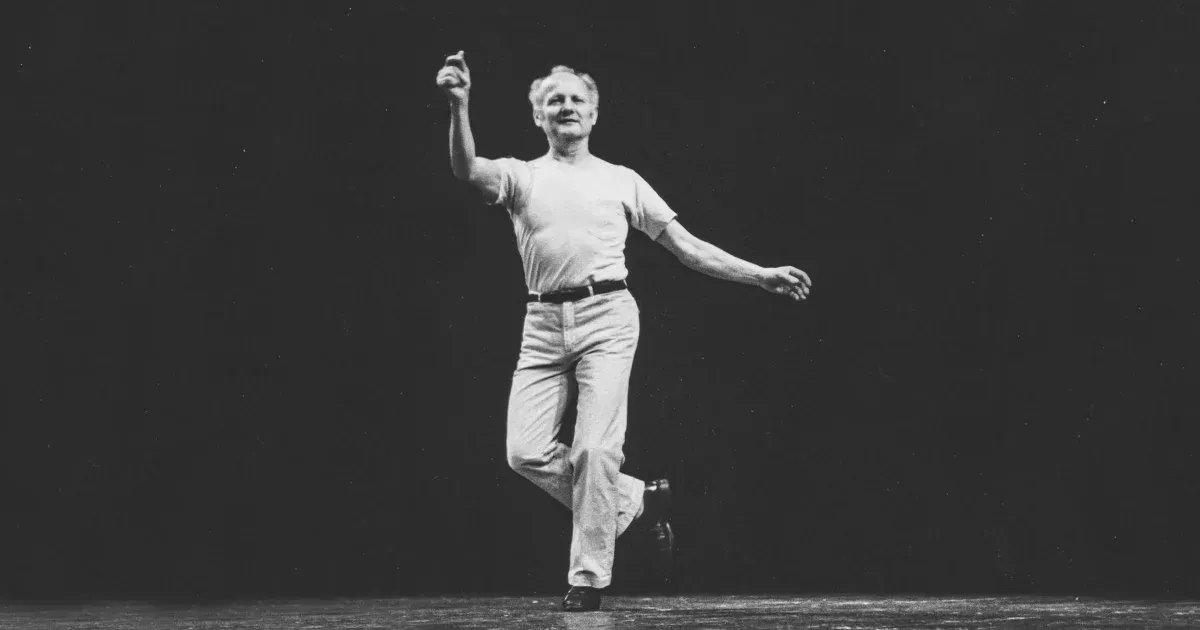
He died on Friday at the age of 96 Sándor Timár is a Kossuth Prize-winning choreographerartist of the nation, regular member of the Hungarian Academy of Arts (MMA). Sándor Timár – who died surrounded by his family – is considered by the Hungarian Academy of Arts to be its own dead, MMA told MTI on Friday.
Sándor Timár was born in the farm world of Szolnok in a peasant family, which was classified as kulaks in the 1950s. As a small child, he learned to dance from his grandfather, and from then on he was fond of folk dancing. He became the leader of the dance ensemble of the Ferenc Verseghy High School in Szolnok with a long tradition, but he wanted to be a research doctor. He was not admitted to the medical school because of his origin, so he also tried the folk dance major at the Academy of Performing Arts, but he was not successful there either.
The young man was invited by the head of the SZOT Artistic Ensemble, István Molnár, who was born in Cluj, to join his troupe, and this is how his life as a folk dancer began. Together with fellow dancer György Martin, they went to Szék at the invitation of the Transylvanian ethnographer and folk song collector Zoltán Kallós, and learned the dances filmed there by watching them back home.
Later he became a soloist of the Budapest Dance Ensemble, and in 1958 he founded the Béla Bartók Dance Ensemble. The company had an artistic director and choreographer for a quarter of a century, for the first ten years as a partner of László Vásárhelyi. In this group, he developed his new folk dance pedagogical method, which provided the basis for the start of the dance hall movement in the 1970s, and their accompanying band was the Sebő group.
Sándor Timár graduated from the College of Theater and Film in 1970 with a degree in choreography. He led the Hungarian State People’s Association for sixteen years from 1980, they appeared on many domestic and foreign tours, most of them in North America. He is credited with developing the renewed image of the company. He choreographed dances not only to folk music, but also to the music of, for example, Liszt, Erkel, Bartók and Kodály.
He and his wife Timár Böské created it in 1993 their own troupe, the Star-Eyed Children’s Dance Ensemblewith which our country was represented in various parts of the world outside of Europe.
He also achieved unique domestic and international successes as a teacher, hundreds of students can consider him as their master, many of them are leading dance artists, successful choreographers, ensemble leaders and teachers in the domestic folk dance life.
Sándor Timár was twice awarded the Order of Merit of the Republic of Hungary (1997, 2010), the Ferenc Erkel Award in 1977, and the Kossuth Award in 2014 in recognition of his activities for the development of the unique methodology of teaching Hungarian folk dance, the launch and maintenance of the Hungarian dance hall movement, and the international popularization of Hungarian folk dance, also in 2014 by the National He was also awarded an honorary title of artist.