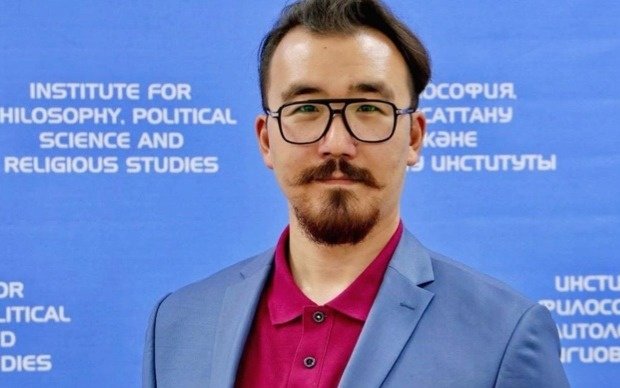
The visit of Czech Prime Minister Andrej Babis to Astana is part of Prague’s strategic pivot to new markets. At the same time, Astana’s negotiating position today is objectively stronger than three or four years ago, says political scientist, head of the Center for Digital Social Sciences at the Institute of Philosophy, Political Science and Religious Studies Rustem Mustafin, a Kazinform correspondent reports.
New level of political dialogue
According to the political scientist, Kazakhstan is important for the Czech Republic as a major oil supplier and a stable partner in an environment of instability in global supply chains. This mutual need is the foundation on which the next stage of cooperation will be built.
“Babiš’s current visit, together with a delegation of more than fifty Czech companies, has become the largest Czech business mission to Central Asia in the entire history of relations. If Petr Fiala’s trip on April 24, 2023 was a gesture of political support and exploration of opportunities, as a result of which the parties signed agreements worth 230 million euros, then the current visit is already arranged as a platform for concluding ready-made contracts, the expert explains.
There is a clear economic logic behind it, says Rustem Mustafin. The Czech Republic, after refusing Russian supplies, is dependent on Kazakh and Azerbaijani oil through the TAL pipeline, and Kazakhstan is now one of the top five oil suppliers to the Czech Republic with a volume of more than one million tons. According to the expert, added to this is the task of diversifying exports outside Germany, which accounts for 32 percent of all Czech exports.
— For Kazakhstan, the visit is included in the line of multi-vector policy. The Czech Republic opens access to mechanical engineering, defense industry and nuclear energy. Cooperation is seen as horizontal between relatively equal partners. In the coming years, the dialogue will shift from general political rhetoric to specific contracts in the energy, transport and defense sectors, and high-level visits will become regular, the interlocutor believes.
What areas can strengthen cooperation?
According to Rustem Mustafin, renewable energy and medical technology are two sectors where both sides have complementary competencies.
— For Kazakhstan, the development of renewable energy sources has a clear economic logic, because every megawatt-hour produced by the sun or wind releases hydrocarbons for export at a higher price. The Czech side can offer engineering of small hydroelectric power plants, biogas plants for the agricultural sector and equipment for modernizing heating networks, which is especially important for the northern regions of Kazakhstan, where the wear and tear of the thermal power infrastructure exceeds 70 percent, he believes.
The atomic direction is also added here. According to the agreement between ČEZ and Rolls-Royce dated April 24, 2026, the Czech Republic becomes one of the European sites for the development of small modular reactors, and Kazakhstan is just deciding on a small nuclear generation program in addition to a large nuclear power plant in the Almaty region, the expert noted.
Another promising area is medical technology, which opens up space for deep scientific integration. The Life Sciences Today 2025 conference in Astana under the auspices of National Laboratory Astana brought together leading experts from the USA, Germany and Japan. According to the speaker, it is logical to integrate Czech research centers in this vein.
“The Czech Academy of Sciences and Charles University are conducting advanced research in immunotherapy, cell biology and oncology, and a joint project with the biomedical cluster of Nazarbayev University can become the very symbolic scientific flagship that is still missing in our relations,” said Rustem Mustafin.
Kazakhstan can strengthen its position in transit
For the Czech Republic, a landlocked country with one of the most developed railway networks in Central Europe, the Middle Corridor is the shortest land route to the markets of Central Asia and China, bypassing northern Russian routes that have become politically and logistically costly after 2022.
— Czech experts, and primarily the Ministry of Industry and Trade, assess the transit potential of Kazakhstan as high, but requiring investment in infrastructure. Bottlenecks are concentrated in the port area, in the lack of ships in the Caspian Sea and in non-uniform tariffs between the participating countries. Here, Czech logistics and engineering companies can play a meaningful role through participation in the management of dry ports, in the construction of terminals and in the digitalization of customs procedures, the political scientist explained.
According to him, the Babiš government itself has already included the Middle Corridor among its priorities in a letter to EU leaders dated February 2, 2026, demanding increased European investment in trans-Caspian connectivity. This means that Czech interest in our transit potential is also supported by the Brussels agenda, and the Czech Republic becomes a natural ally in promoting our logistics strategy in the EU.
According to the expert, Kazakhstan strives to occupy a central place in the transportation system between Europe and Asia. The Trans-Caspian International Transport Route (TITR) or Middle Corridor is seen as a logical response to the need to diversify trade routes.
— The route goes from China through Kazakhstan, the Caspian Sea, Azerbaijan, Georgia and further to Turkey or directly to Europe through the Black Sea ports. The land section takes 12-15 days, the design throughput should reach 10 million tons per year by the end of the decade, and the key Kazakh ports of Aktau and Kuryk are already being modernized, said Rustem Mustafin.
Przewalski’s horses are a symbol of scientific cooperation
The most striking and meaningful scientific project of recent years remains the return of Przewalski’s horses to the Kazakh steppes. According to the political scientist, this project of the Prague Zoo together with Kazakh veterinarians, ecologists and the Forestry Committee has a rare combination of deep symbolism and real scientific value.
— A memorandum on this project was signed during Fiala’s visit in April 2023, and in June 2024, the first batch of seven horses was transported by Czech military aircraft to Arkalyk and further to the reintroduction center in the Turgai steppe. The second group arrived in 2025; in total, it is planned to transport about forty animals within the framework of the program over several years,” noted Rustem Mustafin.
The symbolism here works both ways, the expert continued. Kazakhstan is reintroducing a species that disappeared from the wild in our country at the end of the 19th century, and Prague, which has the world’s best stud book for Przewalski’s horses, is demonstrating its environmental and scientific responsibility.
As the speaker emphasized, in addition, several substantive areas are opening up for expanding cooperation, primarily zoological research in the field of ungulate genetics and population biology, veterinary protocols for the transportation and adaptation of large mammals, and the management of protected areas using the Czech experience of national parks.
— Each of these areas can become an independent program with the participation of the Institute of Zoology of the Ministry of Science of Kazakhstan and the Czech Academy of Sciences. If we add to this joint research on saxaul, steppe flora and the problem of the drying up of the Aral Sea, in which Czech geoecologists have a strong position, we will get a full-fledged scientific partnership that cannot be reduced to one-time projects,” the expert concluded.