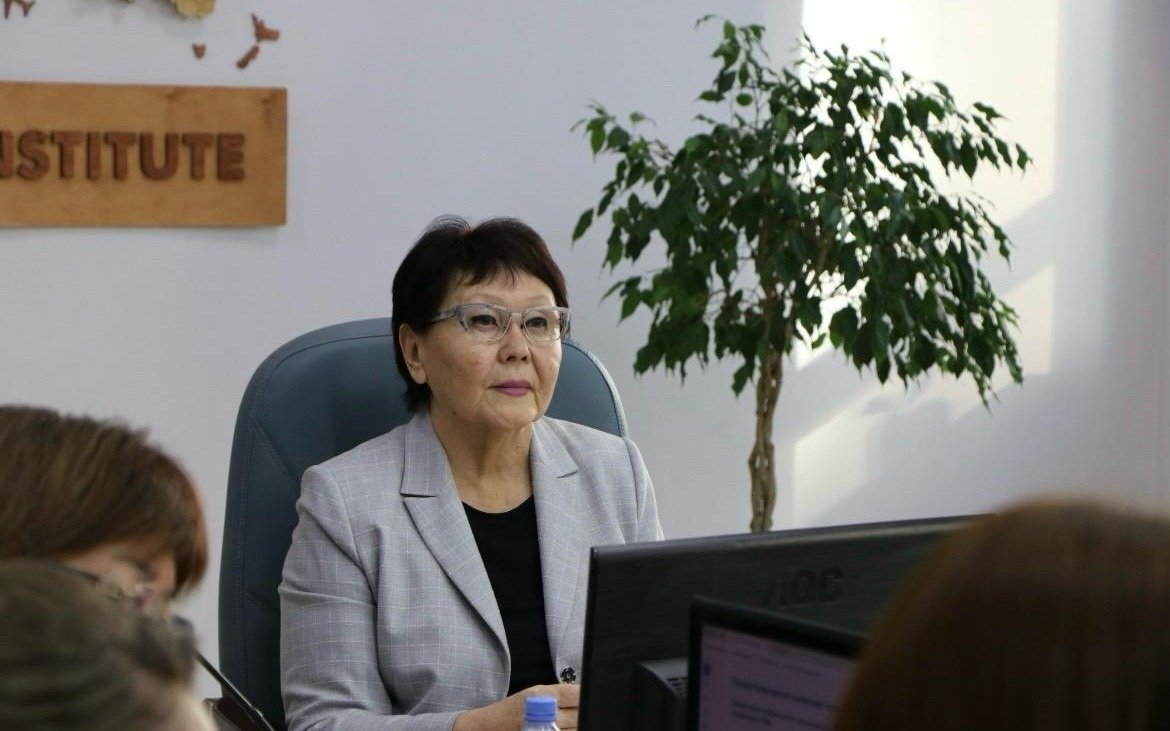
In Kazakhstan, there is a trend of declining employment in industries that require a high level of education and qualifications. This was announced by the chief researcher at the Institute of Economic Research, Sara Alpysbaeva, at an expert discussion dedicated to the 65th anniversary of the institute, a Kazinform correspondent reports.
According to her, the structure of the country’s economy has changed markedly in recent years: the share of the service sector has grown to almost 58% of GDP, and employment in it has reached about 69%. These data, as the speaker noted, reflect a stable trend observed since 2013.
— At the same time, the service sector is not distinguished by special innovative characteristics and productivity. A decreasing trend was identified from 6.8 percent to 5.2 percent of gross domestic product in the contribution of industries that require higher education, skill levels and technical skills, such as Information and Communication, Professional, Scientific and Technical Activities. Five percent of those employed in the economy work there,” Alpysbaeva said.
Against this background, she said, employment in simpler service segments, including trade and delivery, is growing.
“Against this background, there was a significant increase in the share of “Wholesale and retail trade…” from 15 to 19.9 percent of GDP, which employs 1.6 million people and 54 percent of all self-employed in the country,” she noted.
In response to a question from a Kazinform correspondent about the reasons for this trend, the expert explained that such changes require a more in-depth analysis of the employment structure. According to her, it is important to understand what attracts young people and why the share of people employed in simpler services is growing.
— We know that now, for example, a delivery worker can earn more than someone from the intellectual workforce. Maybe this is a global or temporary trend. But we need to decide: why do young specialists with good education go into simpler fields? This suggests that it is necessary to change the approach itself, that is, to increase the attractiveness of professions that require a higher intellectual level. And, of course, such problems are very difficult to solve in a short period of time,” the speaker noted on the sidelines of the event.
She believes that by setting appropriate goals from the government, the research community will be able to delve deeper into the changes taking place and propose solutions.
— We have very highly competent experts who deal with employment research issues and conduct sociological surveys. Therefore, I think that if the government sets such a task for them, then I think that they will cope,” Alpysbaeva emphasized.
Previously reportedthat based on the results of January–March 2026, real GDP growth in Kazakhstan amounted to 3%. At the same time, growth in the services sector was 3.7%, in the real sector – 2.1%.