The pilot project connected the university, schools and the local community in order to bring the topics of sustainability, renewable energy and biodiversity closer to the young generations.
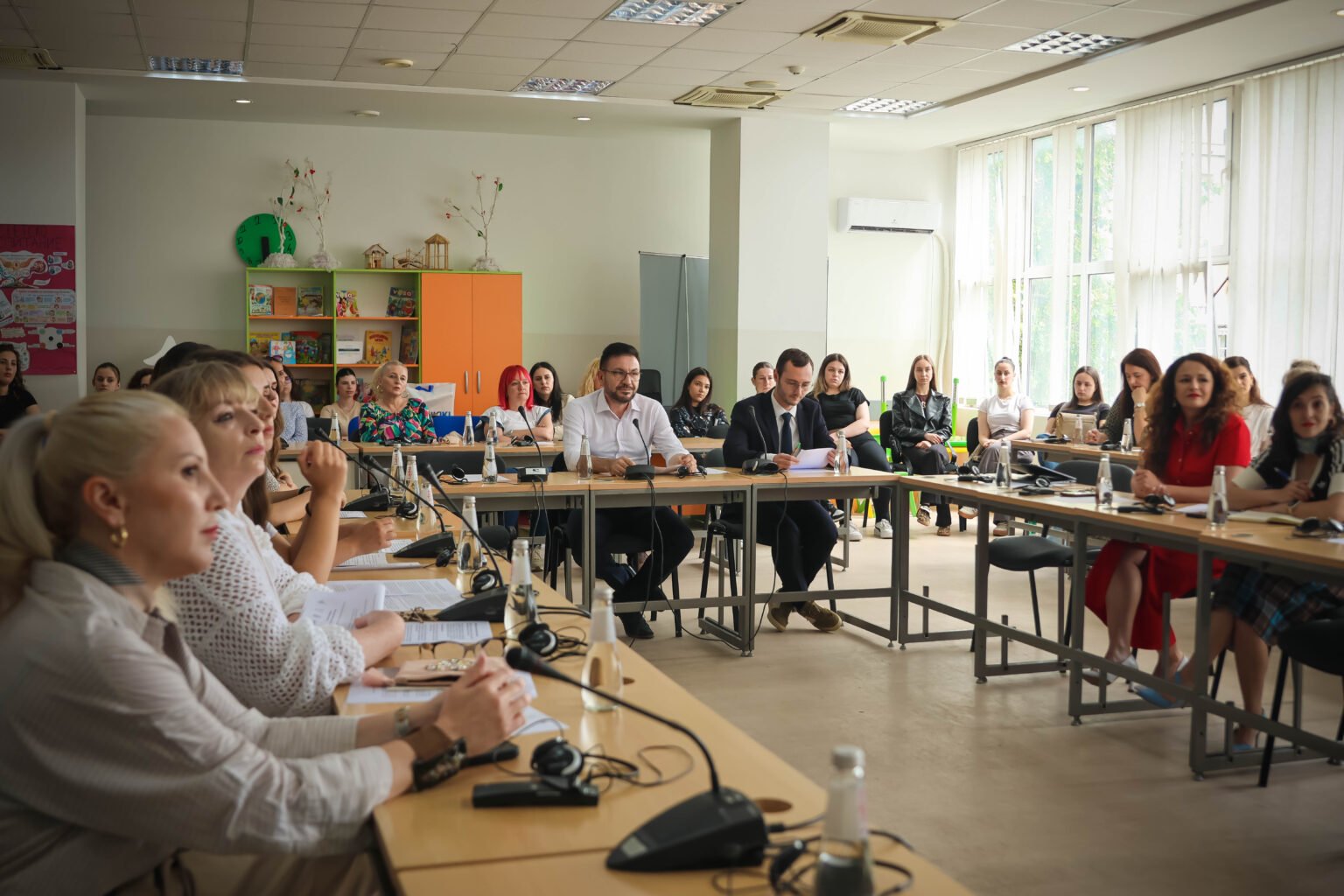
The results of Akuo EduLab, a pilot project in which more than 400 students, dozens of students and teachers were involved, were presented at a closing event held at the Faculty of Educational Sciences at Gotse Delchev University in Shtip.
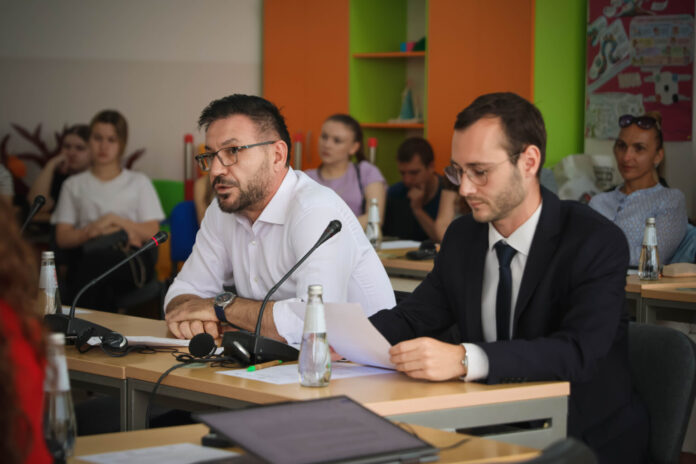
The project was implemented by Akuo, in partnership with Eco Logic and the Faculty of Educational Sciences at “Goce Delchev” University in Shtip, with the support of the Embassy of France in the Republic of North Macedonia.
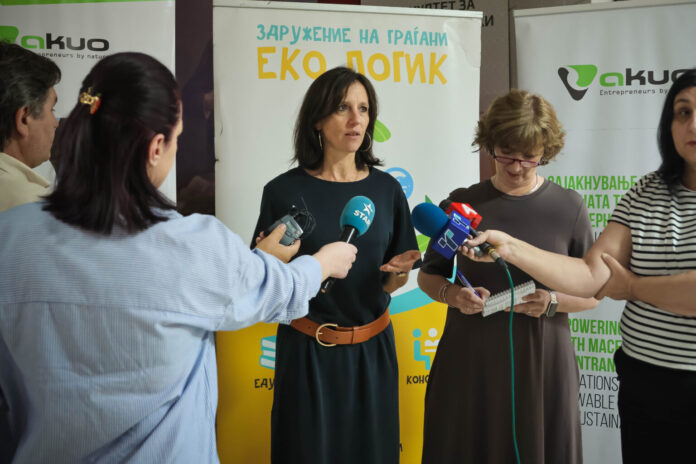
An event dedicated to connecting schools, students and institutions
The final event brought together representatives of educational institutions, local government, civil society organizations, schools, students and the private sector in a discussion on how topics related to sustainability can become a stronger part of educational practice. Through presentations, experience sharing and a moderated round table, the participants reflected on the results of the project and discussed the possibilities for further development of sustainability education.
The first working session, entitled “From vision to practice – education for sustainability through Akuo EduLab”, was dedicated to the methodology, implementation and results of the project. Representatives of Eco Logic, the Faculty of Educational Sciences, as well as students and teachers involved in the project, shared their experiences and presented examples of how topics related to sustainability were integrated into educational activities that connect schools, students and the local community.
In the framework of the second session, the round table on the topic “Sustainability in the classroom: How future teachers can inspire new generations?”, representatives of Akuo, Eco Logic, “Goce Delchev” University, Municipality of Shtip and other relevant stakeholders exchanged experiences and views on how sustainability education can move from a theoretical concept to practical application in classrooms. At the same time, the possibilities for further development and application of similar educational models in other parts of the country were considered.
The views of the partners
Referring to the significance of the project, Alexandra Sombstay, Executive Vice President for External Relations at Akuo, emphasized that the green transition is not only about building infrastructure.
– The green transition is not only about building infrastructure, but also about creating informed and engaged generations. Through Akuo EduLab we have contributed to connecting education, local communities and topics such as renewable energy, biodiversity and sustainable development, while providing teachers and students with practical tools to inspire the youngest – he said.
From an academic point of view, prof. Dr. Trajche Stojanov, dean of the Faculty of Educational Sciences at “Goce Delchev” University in Shtip, stated that the project represents a concrete opportunity for students to apply the acquired academic knowledge in a real educational environment.
– For our students, the project represented a concrete opportunity to apply the acquired academic knowledge in a real educational environment. At the same time, he confirmed the importance of cooperation between universities, schools and other stakeholders in creating education that meets the challenges of modern times –
Nikola Neshkoski, director of the association of citizens for environmental protection Eco Logic, emphasized that EduLab showed how substantial improvements can be achieved in environmental and sustainability education when students, teachers and future teachers are simultaneously involved in the learning process.
– With the support of Akuo, Eco Logic has developed five educational modules on environment, sustainability and renewable energy, based on practical learning. By connecting students, primary school teachers and students in Shtip, the project successfully combined theory and practice, providing teachers and students with useful methods and tools for work. We believe that this model can also be applied in other educational environments, in order for the young generations to think critically, act responsibly and contribute to a more sustainable future – he said.
A model for future initiatives
During the discussions, the participants emphasized the importance of cooperation between educational institutions, local communities, civil society organizations and the private sector in promoting sustainability education. They exchanged experiences and good practices, while special attention was paid to the possibilities of expanding such initiatives and bringing the topics related to sustainability to schools and educational institutions throughout the country.
About Akuo
Akuo is a global renewable energy company with activities in the wind and solar energy sectors as well as energy storage systems. The company is present along the entire value chain – from project development, through their financing and construction, to management and operation. As of March 2026, Akuo has an installed and under-construction capacity of 2.1 GW, as well as an energy storage capacity of more than 310 MW / 660 MWh. With more than 400 employees and headquarters in Paris, the company develops projects in more than ten countries around the world.