The Permanent Council of the Organization of American States (OAS) debated this Wednesday the situation of people deprived of liberty for political reasons in Venezuela, in a session requested by Argentina. During the event, the Inter-American Commission on Human Rights (IACHR) presented an updated report that denounces persistent human rights violations.
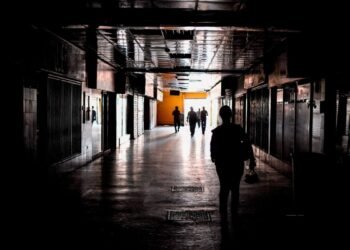
The executive secretary of the IACHR, Tania Reneaum, read the report prepared by the president of the Commission, Edgar Stuardo Ralón Orellana. The document highlights arbitrary detentions, forced disappearances, torture, prolonged incommunicado detention, denial of medical care and deaths in custody as continuing problems in the country.
Criticisms of the Amnesty Law
The IACHR criticized the Amnesty Law promoted by the Venezuelan government and describes it as a “facade” that does not represent true reparation or solve the cases of the majority of victims. In addition, he reiterated his request to visit crazy to detention centers and warned that it will not normalize systematic human rights violations.
For his part, the Secretary General of the OAS, Albert Ramdin, asked to accelerate the release of all political prisoners, whom he described as a setback to keep in detention. Ramdin supported the work of the IACHR and emphasized that “a democratic Venezuela benefits the Venezuelan people and the entire hemisphere.” He offered the mediation of the General Secretariat to facilitate dialogue and assist in electoral issues, promoting a lasting transition process.
The delegation of Argentina, which promoted the inclusion of the item on the agenda, called on the OAS to promote concrete initiatives to restore democracy in Venezuela and reaffirmed its commitment to the freedom of those detained for political reasons.
According to organizations such as Foro Penal, more than 400-450 people remain deprived of liberty for political reasons. The session focused on demanding transparency, prison visits and real progress on releases. The regular meeting of the Permanent Council was broadcast live from the Simón Bolívar Hall in Washington and did not include immediate binding resolutions, but it reinforces international pressure on the Venezuelan human rights case.