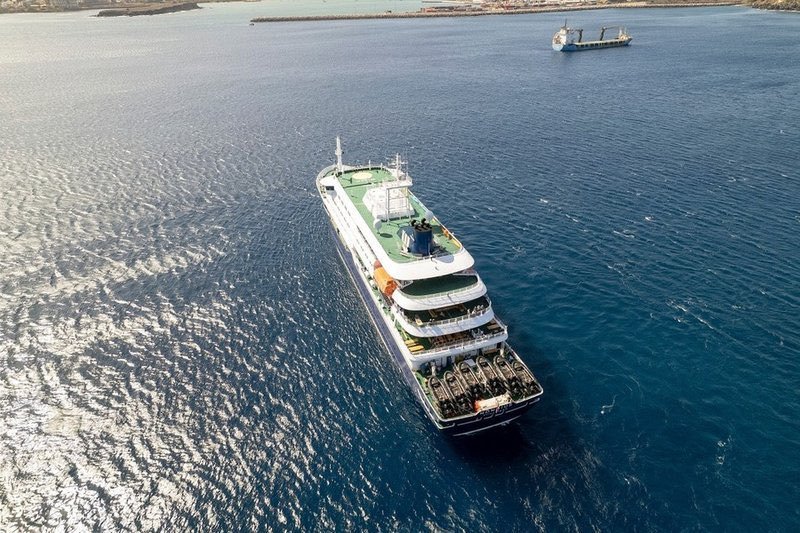
In recent days, news has appeared in the media about hantavirus, a virus that has generated international alarm after an unusual outbreak was detected aboard the polar cruise ship MV Hondius. Below is a clear and complete explanation of what it is, its origin, symptoms and the context of the current case:
Hantavirus is a family of zoonotic viruses (transmitted from animals to humans) belonging to the genus Orthohantavirus. It causes two main syndromes: hemorrhagic fever with renal syndrome (HFRS), more common in Europe and Asia, and hantavirus pulmonary syndrome (HPS), predominant in America, which is the most relevant in this case.
These viruses are found in rodents and have no specific cure; The treatment is supportive. The fatality rate can exceed 30-40% in severe forms.
Origin and transmission
Hantaviruses originated in wild rodents. In America, especially in southern Argentina and Chile, the Andes strain (Andes virus) predominates, whose main reservoir is the long-tailed mouse (Oligoryzomys longicaudatus). Humans become infected primarily by inhaling aerosolized particles of urine, feces, or saliva from infected rodents, often when cleaning indoor spaces, disturbing nests, or being in rural/endemic areas.
Most strains are not transmitted from person to person, but the Andes strain is a documented exception: it can be spread through close and prolonged contact with a patient’s body fluids, although this is rare. This is key in the current outbreak.
Do you have symptoms?
Symptoms appear 1 to 8 weeks after exposure. They start like a bad flu:
- High fever, chills, muscle pain, headache, fatigue.
- Nausea, vomiting, abdominal pain.
- It then quickly progresses to serious breathing problems: dry cough, difficulty breathing, fluid buildup in the lungs (pulmonary edema), and shock. In advanced stages it affects the heart and can be fatal without intensive care.
Context and recent cases in the region
Argentina reported dozens of cases annually, with seasonal outbreaks linked to rodents. In 2025, 86 cases and 28 deaths were recorded. The Andes strain is endemic in the south of the country.
The case that occupies the international media is an unusual outbreak aboard the Dutch polar cruise ship MV Hondius, operated by Oceanwide Expeditions. The ship set sail from Ushuaia (Argentina) around April 1, 2026 (some sources mention March 20) with about 147 people on board (passengers and crew of various nationalities, including 14 Spaniards). He took a cruise through Antarctica and the South Atlantic bound for Cape Verde.
As of May 6, 2026, the WHO reports eight linked cases (confirmed and suspected), with three deaths. There are evacuated patients (including South Africa and the Netherlands), one in critical condition and others with mild symptoms. At least two or three cases have been confirmed by laboratory, identifying the Andes strain, capable of interhuman transmission. The ship was anchored off Cape Verde and its transfer to the Canary Islands (Spain) is planned, with evacuations underway and strict health protocols.
Probably one or more passengers became infected before boarding or during excursions in endemic areas (possible contact with rodents in Ushuaia or surrounding areas). Then there could be secondary transmission on board. Authorities are investigating whether there were rodents on the ship or initial contamination. No new recent serious symptomatic cases have been reported, but previously disembarked passengers are being traced.
The WHO rates the risk to the general population as low. The outbreak is contained in a controlled space. There is no vaccine or specific antiviral; managed with respiratory support and intensive care; Measures include isolation, rigorous hygiene, disinfection and contact surveillance.
Although rare, hantaviruses represent a risk in areas with rodents and in closed environments when the Andes strain is introduced. The health authorities of Argentina, South Africa, Spain and the WHO continue to monitor the situation.
Sources: Reports from WHO, health authorities and international media