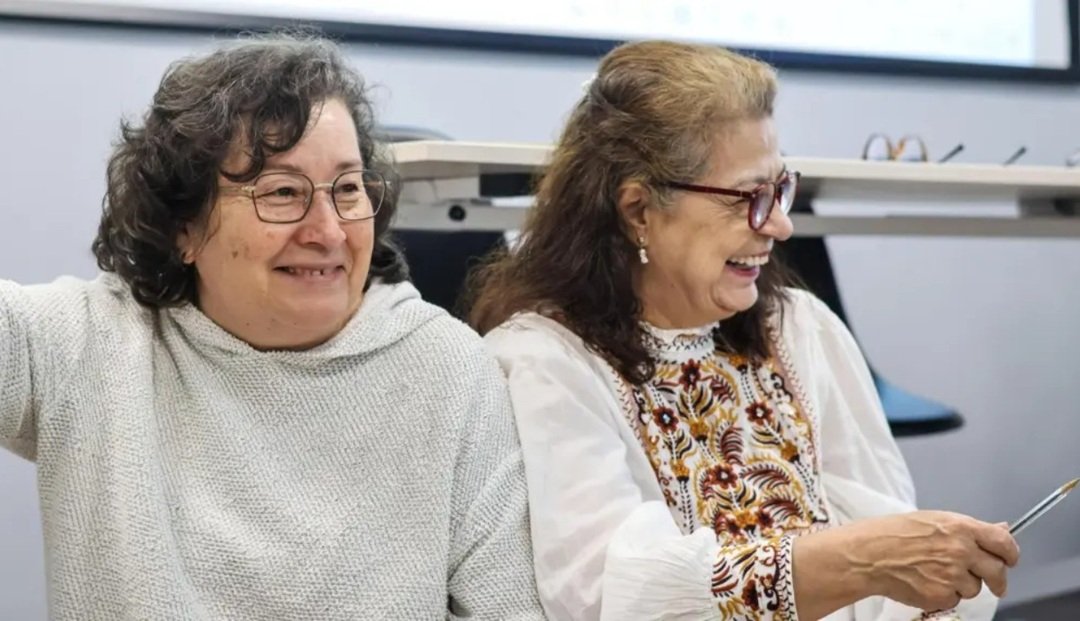
The Nicaraguan Yamileth Chavarría and the Colombian Mercedes Rodríguez are the co-founders of “La Comala”, a cooperative of Latin American migrant women in Madrid, which pursues three objectives: fair wages, collective decisions and dignity in working hours.
Founded in 2017, the cooperative is managed by the workers themselves, who directly negotiate their working conditions with employers.
“We made a cooperative because we believe that we are all part of this work; the need to exist with rights moved us to organize,” summarizes Chavarría.
When the idea was born, about ten years ago, domestic workers in Spain did not have the right to strike, ILO Convention 189 (Convention on Decent Work for Domestic Workers) had not been ratified and precariousness in the sector was even greater than today.
A comala that turns reality around
The name “La Comala” comes from the word “comal”, the kitchen utensil on which tortillas are prepared throughout Central America. But in the cooperative it also works as a pedagogical metaphor.
“It’s a play on pedagogy words, it’s like turning this precarious reality of care work around, because care is essential like any profession,” says the Nicaraguan.
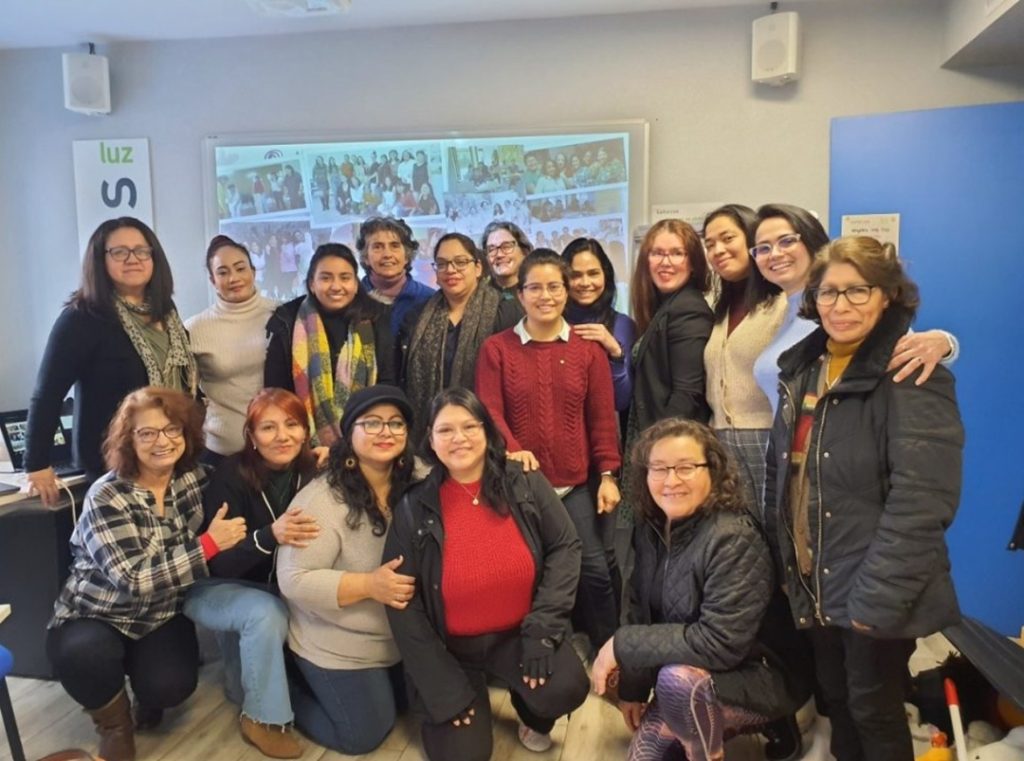
The cooperative offers elderly care and home cleaning services. Today it has 27 workers and 18 members, from nine countries: Nicaragua, El Salvador, Honduras, Guatemala, Cuba, Colombia, Ecuador, Peru and Bolivia. This diversity is part of their identity.
“We are women from nine countries. When we meet, each one brings something to snack on, and you can see a diversity even in the ways of speaking, because there are Quechua women too,” she says.
By organizing as a cooperative, the members went from the special regime for domestic workers to the general Social Security regime. Such a change, Chavarría says, makes a real difference.
“The goal is for the worker to become a working member. If she enters with the intention of only seeing us as a work company, she will be able to work the first months, but she cannot stay with us, because the purpose of the cooperative is for your workers to be associated, and work for something in common,” details the Nicaraguan activist.
Professional women and leaders
Jamileth Chavarría arrived in Spain 15 years ago with a history of organization behind her: more than two decades in the Nicaraguan feminist movement in the Bocana de Paiwás Women’s House and on a radio station that became known for its series on sexist violence: “The Messenger Witch.” His mother was a cooperative member during the Sandinista revolution. Collective work is not an ideological novelty for her; It is an inheritance.
She also created the collective “Brujas Migrantes”, a group of migrant women that fights against violence and racism, and promotes mutual support between women in the face of the migratory experience.
Likewise, many of the cooperative’s members came to Spain for similar reasons: due to their activism in their countries of origin, due to death threats, due to political repression and in search of improving their economic situation and that of their families.
The majority are women leaders who participate in feminist organizations and human rights defenders.
“I came with other classmates to put into practice what I knew how to do; I learned at that school,” she says, referring to her career.
The “caregiver chip”
In Spain, the majority of migrant women end up concentrated in this sector. It is not a natural vocation or a coincidence, it is the system that always offers these jobs to Latina immigrants.
“Here they give women jobs because they believe we have some kind of caregiver chip. Migration is feminine, and here they accept us for the same reason because they believe we are caregivers. We are a brutal workforce,” she reflects.
“We say, if we are the workforce, why are we going to work for someone? We want to be protagonists of our own employment,” she says.
Among the members of the cooperative there are educators, lawyers, journalists, philologists, primary and secondary school teachers and laboratory assistants. Women with university education who, in many cases, cannot have their degrees homologated in Spain.
Partners and workers
Within “La Comala” not everyone has the same status. The 18 members have contributed social capital, participate in the assemblies and vote on decisions. Workers who have not yet taken that step can do so; That is, in fact, the central objective of the cooperative.
“Here we don’t talk about clients, because we are a cooperative. So it gives you extra empowerment, decision-making, self-esteem, things that you can’t do when you go alone to a house to ask for a job,” explains Chavarría.
There are no salary hierarchies: everyone earns the same. “Here there is no one who earns more or who earns less, here we all earn the same,” he emphasizes.
What each employer pays for a service is used for salary, Social Security, holidays, vacations and substitutions. “Taxes are so incredibly expensive that they cost us nothing,” he acknowledges, but insists: the well-being of each worker is guaranteed.
The grief of migrating and the “comalero flash”
Leaving behind a profession, an identity and one’s ties is a grief that does not always have a name. In “La Comala”, this process is not ignored; in the organization, in addition to talking about work and rights, there is also an important space for mental health.
To accompany it, there is the “comalero flash”: a brief one-hour meeting in which the members remember, support each other and update their knowledge. This meeting is held every fifteen days.
There is also a WhatsApp group called “All for one”, like the musketeers and “that helps us,” emphasizes the Nicaraguan.
“La Comala” is not defined only by what it does, but by what it rejects: the intermediation that makes the service more expensive for the employer and impoverishes the worker, and the logic that care is negotiable.
“First, dismantle the bad practice of negotiating with care. Care is a vital need of human beings, which is why human beings are recognized that we are interdependent. At some point in life, sooner or later, we need care,” says Chavarría.
There is also a long-term dream that the migrant mentions without hesitation: that the members can live together, with a real balance between work, family and life.
“Our next step is to live together. That’s a dream,” she concludes.