Latin America is going through a sustained political shift to the right. What until recently – 2022 and early 2023 – was a region dominated by center-left or left-wing governments – including its six main economies – has been reconfigured in just three years by an intense sequence of electoral processes. Fourteen presidential elections later, the regional map looks substantially different.
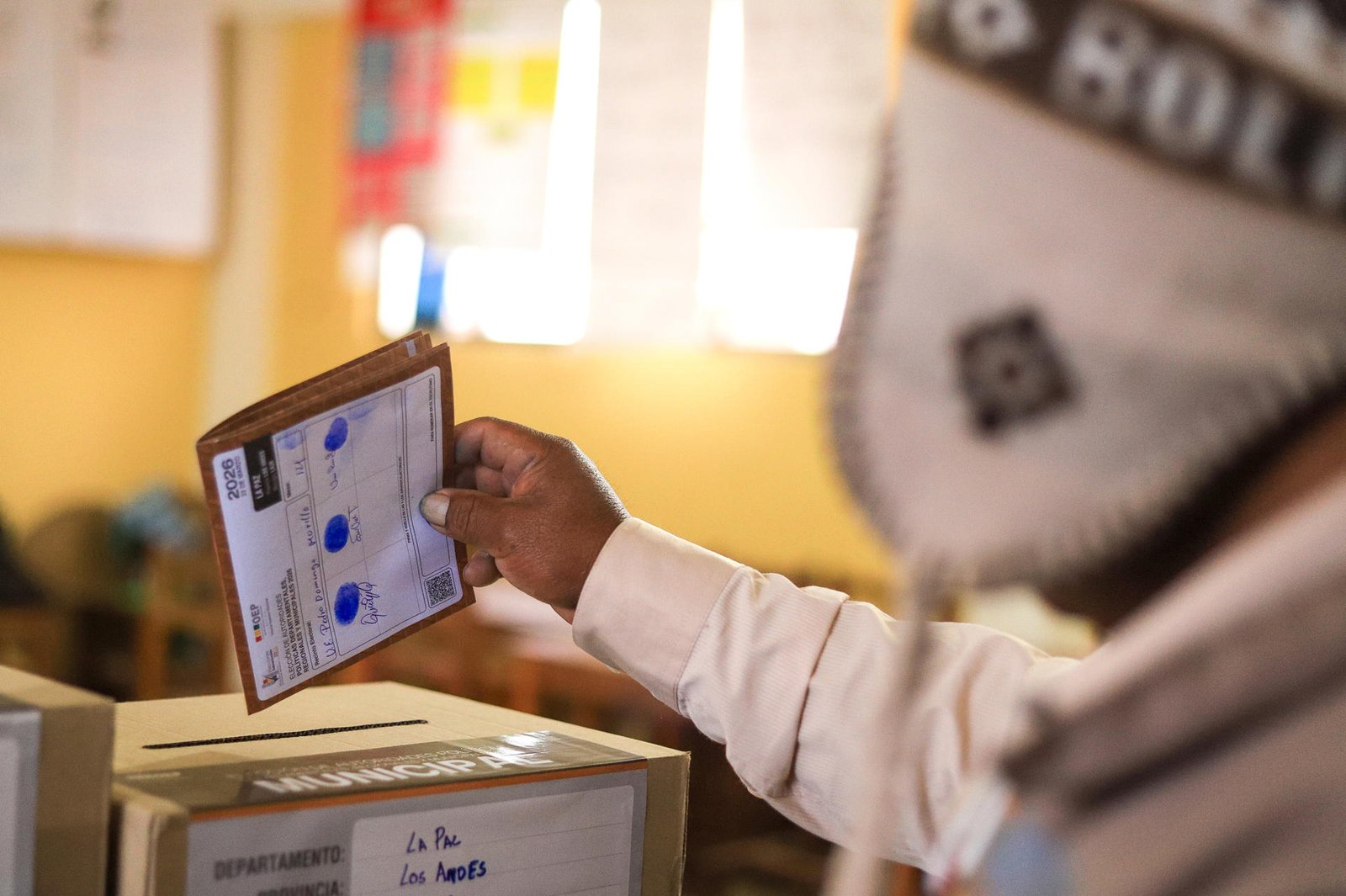
The turning point occurred in 2023, with the triumphs of Santiago Peña in Paraguay, Daniel Noboa in Ecuador and the emergence of Javier Milei in Argentina. In 2024, the trend was consolidated with the victories of José Raúl Mulino in Panama, Nayib Bukele in El Salvador and Luis Abinader in the Dominican Republic. The cycle intensified in 2025 with four elections and four victories for right-wing forces—including José Antonio Kast in Chile and the reelection of Noboa in Ecuador, as well as Rodrigo Paz in Bolivia and Nasry Asfura in Honduras. Laura Fernández’s victory in Costa Rica, in February 2026, confirmed the direction of the pendulum to the right.
The quantitative balance is clear: eleven of the fourteen elections were won by right-wing forces of different currents, compared to only three victories for the left—Bernardo Arévalo in Guatemala in 2023, and Claudia Sheinbaum in Mexico and Yamandú Orsi in Uruguay in 2024—. However, a more careful reading forces this diagnosis to be qualified. The right has racked up numerous victories, but it still does not control the major economies. Brazil, Mexico and Colombia—which concentrate nearly 70% of the regional GDP and 60% of the population—remain under left-wing governments. More than a homogeneous turn, what currently exists is a heterogeneous regional scenario, with a dual political geography between electoral weight—quantitatively in favor of the right—and economic-population weight—in favor of the left.
Punishment vote and ideological realignment
This change does not respond solely to an ideological realignment. It also reflects a new cycle of voting to punish incumbent governments, many of them associated with the so-called “second pink tide.” In this context, the right. — heterogeneous among themselves have known how to capitalize on social unrest due to the lack of results by offering themselves as an available alternative.
Added to this is a transformation in the political offer. The right has demonstrated a greater capacity to connect with the electorate, especially through social networks and simple, direct and emotionally effective messages. They have been able to channel the rejection of traditional politics, the fear of insecurity against criminal groups – in some cases under a logic of “bukelization” – and the tensions associated with migration.
In this scenario, the external factor has also gained relevance. The hemispheric policy of Donald Trump, in his second term, has reinforced the convergence between sectors of the Latin American right and Washington. Initiatives such as the “Donroe Doctrine” or the “Shield of the Americas” reflect a more geopolitical and transactional approach, aimed at containing China’s influence and reordering alliances in the region. However, the electoral impact of this factor is ambivalent: in some cases—Argentine midterm elections and Honduran presidential elections, both in 2025—Trump’s interference and support was decisive for the success of Milei and Asfura. In others, however, as the Brazilian case showed and could eventually also occur in Colombia, external pressure can generate counterproductive effects by activating sovereign defense reflexes.
Three key choices
The next six months will be decisive. Three elections will focus regional attention. In Peru, the June 7 runoff will take place in a context of high polarization, weakened institutions and narrow and questioned first round results. It is still not clear who will compete with Keiko Fujimori in the second round: Roberto Sánchez (left) or Rafael López Aliaga (right). In Colombia, the May 31 election pits a competitive left, led by Iván Cepeda, against a fragmented right between Abelardo De la Espriela and Paloma Valencia, which anticipates the need to go to a runoff on June 21, with open results. In Brazil, the race on October 4 – with an eventual second round on the 25th – pits Lula, who is seeking re-election, against Flávio Bolsonaro, in a scenario – for the moment – of technical tie and extreme polarization. Given Brazil’s systemic weight, its result will be decisive for the region as a whole.
The three electoral processes share common features, among them: high fragmentation and polarization, volatile preferences and narrow results that almost inevitably lead to decisions in the second round, with margins tight enough to allow changes between the first and the runoff. Added to this picture is the questioning of the integrity of the elections and the advance of electoral denialism among sectors that are unaware of the results, which intensifies the pressure on the electoral bodies and opens the door to growing judicialization.
The scenario becomes even more complex due to the massive use of social networks as a channel of disinformation, now amplified by artificial intelligence tools. In parallel, none of the three countries will elect a president with their own majority in Congress, which anticipates governments with limited room for maneuver, the need to build coalitions and major governance challenges in democracies already subject to strong social, economic and political tensions.
An additional variable is added to this complex picture: the midterm elections in the United States on November 3. An eventual loss of Republican control of Congress would limit Trump’s room for maneuver in the second half of his term, with direct implications on his foreign policy and, by extension, on Latin America.
Six decisive months
The next six months will be decisive. Peru, Colombia and Brazil will not only elect presidents: they will define the new balance of the Latin American political map and the way in which the region is inserted into an international order in transition, fragmented and crossed by the intensification of geopolitical competition between the United States and China in our hemisphere.
A double question emerges from the previous analysis. In the short term, the central question is whether the political-electoral map will tend towards greater homogeneity – with a clear predominance of right-wing governments – or if, on the contrary, it will evolve towards a more heterogeneous configuration, in which right-wing governments coexist with others from the left. And, in a medium-term horizon, the unknown is determining the duration of this new political cycle: will it be a prolonged one, comparable to that of the “first pink tide” at the beginning of the 21st century or, on the contrary, will it be a short cycle, similar to the last two that the region had, a reflection of increasingly fluctuating, pragmatic and less ideologically aligned electorates.
In a Latin America where majorities are volatile and social patience runs out quickly, the central question, more than ideological, is about performance: whether the new governments will have the capacity to deliver timely and effective results in response to citizen demands. Indeed, if the right fails to improve security, reactivate growth, generate jobs and create opportunities, then the pendulum will most likely swing again, as it has done on three previous occasions since the beginning of this century. Both scenarios are
open.