After the announced austerity program, Volkswagen could cut significantly more jobs.

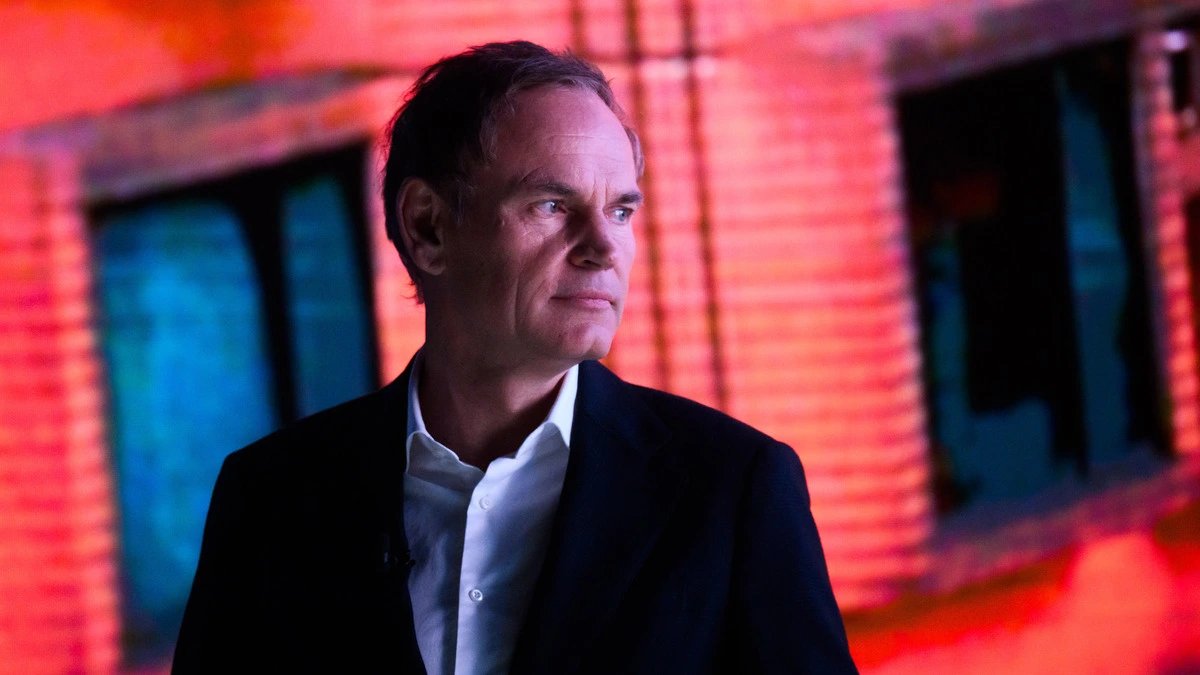
Symbolic image: Volkswagen boss Oliver Blume at the group’s annual press conference in Wolfsburg. Julian Stratenschulte/dpa
Add the Press on Google as your preferred news source.
Two years after a bitter collective bargaining dispute, the German car giant is at a standstill Volkswagen (VW) is apparently facing another dispute over savings. CEO Oliver Blume wants to significantly tighten the austerity measures again, it said in a media report on Friday. The supervisory board is scheduled to discuss this at the beginning of July. The union and the works council immediately announced resistance to the plans. Up to 100,000 jobs could be lost worldwide.
That would be twice as many jobs lost as previously planned. Four plants in Germany could even close completely, wrote “Manager Magazin”. The plans are part of the new 2030 target, which the board discussed on Wednesday. The supervisory board, which is scheduled to discuss the matter on July 9th, now has the final say.
IG Metall and the VW works council were horrified and immediately announced resistance to it. “If such plans go forward, we would do everything in our power to prevent them,” said a joint statement IG metal-Boss Christiane Benner, district manager Thorsten Gröger and works council leader Daniela Cavallo.
“The renewed media reports are rightly unsettling our workforce and our locations,” the statement says. “Attacks on the VW law, co-determination and our locations are irresponsible threats.”
There is a risk of a heated exchange at the supervisory board meeting in July: employee representatives make up half of the members, and IG Metall boss Benner is even deputy chairwoman of the committee. Together with the two representatives from the state of Lower Saxony, they are in the majority. The country holds 20 percent of the voting rights in VW and has the right to veto important decisions.
The state of Lower Saxony has also already spoken out against site closures. “The state of Lower Saxony will not agree to any development that relies on factory closures as a supposedly simple solution or that calls into question the tried and tested codetermination,” said Prime Minister Olaf Lies (SPD) and his deputy Julia Willie Hamburg (Greens).
“Volkswagen’s future will not be won by constantly focusing on new plant closures or ever larger job reduction programs,” they said in their joint statement. “The supervisory board will discuss and decide on specific measures,” said the two politicians who represent the country in the VW control body. “The state of Lower Saxony will assume its responsibility there with due care.”
The four plants that, according to the report, could close in the “medium term” are the VW plants in Hanover, Zwickau and Emden as well as the Audi site in Neckarsulm. The works council there also immediately announced resistance to this: “Closing the Neckarsulm plant is not an issue for us as employee representatives,” it said in an initial statement.
“Manager Magazin” did not give a specific date for the measures. Employment security, which was agreed with IG Metall, will apply at the German group locations until at least 2030.
Saxony’s Prime Minister Michael Kretschmer was concerned. “It shouldn’t happen like this,” said the CDU politician. His Economics Minister Dirk Panter (SPD) does not want to accept a possible closure of the Zwickau location. “We will fight for the plant, for the jobs. That is beyond question,” he said. Criticism also came from politicians in Berlin. “The planned job cuts at VW are a bottomless mess,” said Left Party leader Ines Schwerdtner.
The group’s board of directors had “worked intensively over the past few months on a future plan for the reorganization of the company,” a spokesman confirmed upon request. “It’s about making the company more efficient and leaner overall and consistently using technological synergy potential.”
The goal is a “comprehensive transformation,” the spokesman continued. “The entire group – including brands and companies – must change profoundly.” In the next step, this should be implemented after the Supervisory Board has been consulted. The spokesman did not provide any details about specific measures.
CEO Oliver Blume has repeatedly stated in recent months that VW’s previous business model no longer works, that the group needs to reposition itself and that costs need to continue to fall. “We will turn over every stone,” Blume announced in the spring. So far, however, he has avoided giving details about possible savings.
According to “Manager Magazin”, the group also wants to save on the model range: the number of vehicle models in the group should fall from the previous 150 to less than 100. A possible US factory from Audi would also fall victim to the red pencil. Instead, Audi should be housed under the new US brand Scout.
Volkswagen has already announced that it will cut 50,000 jobs across the group in Germany by 2030, including 35,000 at the core VW brand. Vehicle production recently ended in Dresden, and the group is currently looking for a solution for Osnabrück when convertible production ends there next year.
The last time there was a violent wage dispute at VW was in 2024. IG Metall brought production to a standstill several times with warning strikes. It was only shortly before Christmas that a compromise was reached after a week-long marathon of negotiations. Redundancies for operational reasons have been ruled out; job cuts will be carried out primarily through partial retirement and severance pay programs. A company spokesman confirmed that more than 37,000 employees across the group have already signed. (APA/Reuters/dpa)