A scream. Somewhere up there, above the treetops. Jameel Peerally opens his eyes, narrows them, turns his head. “A hawk chasing a small bird,” he then says, as if it were the most normal thing in the world. The bird that tears through the blue sky, that swoops down after its victim, should actually no longer exist.
It is a Mauritius falcon. A predator that only exists on this island in the Indian Ocean, which is about the size of Vorarlberg. In the 1970s there were only four Mauritius falcons left in the wild. There were two others in captivity. Once a species has dwindled to so few animals, it is considered almost impossible to save it.
Jameel Peerally turns around and continues to trudge through the forest in rubber boots. Today, 50 breeding pairs of Mauritius falcons live here at his workplace, where the air is unusually cool even on hot days. “My office comes with air conditioning,” jokes the biologist. The Mauritian leads a group from Europe through a 200-hectare area of the island to which he would like to dedicate years of his life. “La Vallée de Ferney” is the name of the protected area that was set up in 2008 in the Bambous mountain range in the east of Mauritius. The highest point is almost 630 meters above sea level.
If you want to get there, you have to travel along a stony road in an old school bus, past green meadows in which dragonflies the size of your hands are buzzing. Small birds flew away from the thicket. A flock of flying foxes are circling above the treetops, woken from their sleep by a noise further down on the ground. Behind a wooden fence, the shells of giant tortoises shine in the sun. They were found on the island for many centuries, but were hunted down to the last animal.
In the “Vallée de Ferney” a world that was almost thought lost is about to be resurrected. The protection zone begins deep in the forest, behind the third fence gate. The mighty ebony trees that the Dutch colonialists once invaded the island are supposed to grow here again. They cut down almost everything. The Europeans brought rats and other foreign animals with them that harmed the native ones.
The most famous example is a bird that is the heraldic animal of Mauritius, although no living specimen has been seen for centuries: the dodo. It was related to the pigeons, a large bird that could no longer fly and apparently had little instinct to run away from danger. It has been extinct for a long time.

Sugar cane plantations characterize the island’s landscape. Christoph Zotter
The Europeans also drastically changed the nature they found in the Vallée de Ferney. After the French took over the maltreated island from the Dutch, they set up plantations. At the entrance to the protected area, old stone buildings and a chimney remind us that sugar cane used to grow and be processed here. Slaves were brought here for the work, and later Indian workers and their families. There was no indigenous population in Mauritius.
“The real Mauritians are the trees and the birds,” says Jameel Peerally. The biologist wants to enable them to live on the island again. Some of the animals need people’s help. There is a dovecote in front of the Ferney forest, a few birds sit on perches in spacious aviaries. Rose doves, a rare species of pigeon native to Mauritius. Only ten animals are said to have still lived on the island in the early 1990s.
She is also called “stupid pigeon”. Like the dodo, rose pigeons are said to have forgotten how to fear predators over the centuries in the paradisiacal isolation of Mauritius because there were none. “Actually, they should already be living in the forest, but we still have to feed them,” says Peerally, shaking his head somewhat dismissively.

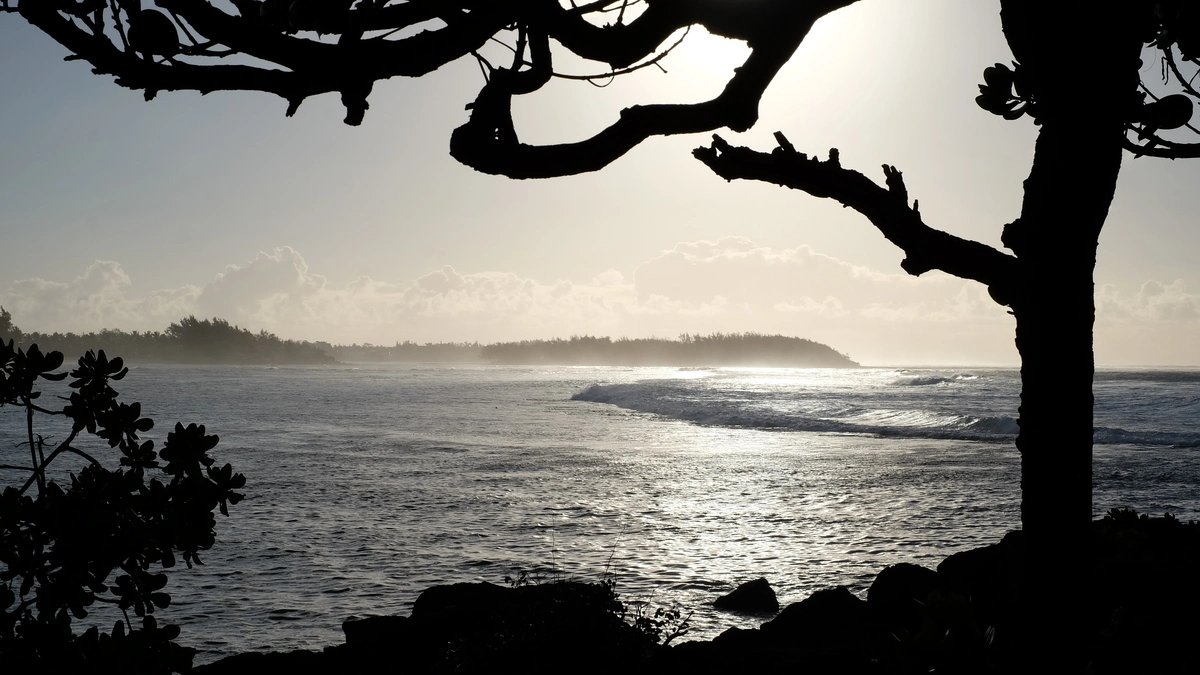
Island life in Mahebourg on the east coast of Mauritius. Christoph Zotter
Another measure to help the island’s extremely rare birds is mounted on a thin tree trunk deeper in the protected area: a box in which the bright green Mauritius parakeets are supposed to breed. They are already extinct on the neighboring island of Réunion, and a few hundred animals still live on Mauritius. They nest in cavities found in thick Mauritian trees. But because most of the trunks are still too thin, biologists like Peerally help and hang replacement quarters for them in the forest.
The Bambous Mountains are not the only place where it becomes clear that the island can be given a new face. Mauritius is marketed in Europe as a paradise with white beaches where luxury resorts await fine dining and good weather. But hotels have long since realized that they have more to offer than just a beach and golf courses. The high-priced chains in particular are trying to create projects that support the nature that still exists.
The five-star Hotel Constance Le Chaland, for example, is located directly on a marine protection zone, which has a side effect that cannot be experienced everywhere: peace. No jet skis or motorboats are allowed to thunder across the sea on the fine sandy beach. A luxury that is sometimes disrupted by the location near the airport.
Other hotel complexes want to give guests an understanding of what authentic island flair with comfort means. In the north of Mauritius, the Zilwa Attitude emphasizes home: According to the operators, it is the first hotel to have a name in “Créole”, the island language that emerged from French and English. Zilwa means islander. The rooms have a look that is intended to look a bit unfinished and rough, like Mauritians’ homes. You cook over an open fire and sit next to brightly painted metal barrels.
But the heritage that dominates the island like no other is sugar. For more than 200 years, the plantations shaped the landscape, life and culture. Than that EU When the sugar industry abolished its price guarantees for Mauritian sugar at the turn of the millennium, cultivation finally became too expensive for many. Of the formerly more than 200 sugar factories, three remained. The island’s sugar museum was also once a work. “When I was young, we could still visit sugar factories,” says Glenda, who leads through the halls, where in some corners you can still smell of sugar and caramel. “But the young no longer have this opportunity, so they learn about their ancestors here.”

Laurent D’Unienville is from the ninth generation of his family to live in Mauritius. Christoph Zotter
Laurent D’Unienville stands in front of the old sugar factory and works on the saddle of an electric bicycle. He comes from one of the almost 15 French families who arrived in Mauritius more than 200 years ago and whose descendants still own large parts of the island. “I am the ninth generation,” says the 45-year-old. In Mauritius he is known as a windsurfer and previously worked as an engineer. After surviving cancer, he turned his life around: he and his wife offer e-bike tours. He is currently getting ready for a drive through the seemingly endless sugar fields.
It has rained, the paths are muddy, the stones between the puddles are slippery. D’Unienville turns on the boost. He drives over private property that belongs to a family friend, which is why he is allowed to show visitors around. At the entrance to the old sugar factory there is a colorful temple with three Hindu gods watching over the gate: Ganesh, Shiva and Hanuman. In the village on the other side of the access road, a muezzin calls Muslims to prayer. Sugar has brought countless families to the island, bringing their customs, food and religion with them. “We are all Mauritians,” says D’Unienville.
He stops in front of a white house with a porch where the French owners of the plantation lived. Inside you can go on a journey through time: the furniture is still in the colonial style, and black and white photos on the walls bear witness to a rich family life.

The old home of the plantation owners in Pampelmousses. Christoph Zotter
Pictures with scenes from “Paul et Virginie” hang in the living room. The book is something like the national novel of Mauritius, written by Jacques-Henri Bernardin de Saint-Pierre and published in 1788 in the hustle and bustle of the French Revolution. The Frenchman himself had spent some time in Mauritius and observed a shipwreck there, which inspired him to write the finale of his famous work.
The book is about two children of French mothers stranded on the island who grow up side by side in Mauritius. Saint-Pierre not only describes their love story, which is tragically destroyed by classism from distant Europe. His Mauritius is one of the romantics where nature is celebrated.
Nature that was later pushed to the edge by the sugar plantations and could now have more room to breathe again. She would be a good fit for an island where luxury doesn’t just mean white sand, but the privilege of affording space for priceless wilderness. Even if “stupid pigeons” live there.
Explore Mauritius
Arrival: E.g. via Paris with Air France or Air Mauritius.
Hotel: Constance Le Chaland, resort with peace, luxury and spa, www.constancehotels.com
National parks: Mauritius has several natural parks, the most famous being the Black River Gorges National Park in the west. Of the 49 islands, eight have been declared nature reserves. The “Vallée de Ferney” is located on the east coast.
Info: www.mauritiusnow.com
Compliance notice: This trip was at the invitation of the Mauritius Tourism Promotion Authority.