Thursday, June 25, 2026
    The GeoStrategic Consensus
    No Result
    View All Result
    • Login
    • HOME
    • AMERICAS
      • Argentina
      • Brazil
      • Canada
      • Chile
      • Colombia
      • Costa Rica
      • Cuba
      • Dominican Republic
      • Ecuador
      • El Salvador
      • Greenland
      • Guatemala
      • Honduras
      • Mexico
      • Nicaragua
      • Panama
      • Paraguay
      • Peru
      • United States
      • Uruguay
      • Venezuela
    • ASIA-PACIFIC
      • Australia
      • Brunei Darussalam
      • Cambodia
      • China
      • Federated States of Micronesia
      • Fiji
      • Indonesia
      • Japan
      • Kiribati
      • Laos
      • Malaysia
      • Marshall Islands
      • Mongolia
      • Myanmar
      • Nauru
      • New Zealand
      • North Korea
      • Palau
      • Papua New Guinea
      • Philippines
      • Samoa
      • Singapore
      • Solomon Islands
      • South Korea
      • Taiwan
      • Thailand
      • Timor-Leste
      • Tonga
      • Tuvalu
      • Vanuatu
      • Vietnam
    • CARICOM
      • CARICOM – Non-English
        • Haiti
        • Suriname
      • CARICOM Associates
        • Anguilla
        • Bermuda
        • British-Virgin-Islands
        • Cayman-Islands
        • Curacao
        • Turks-and-Caicos
      • CARICOM English
        • Antigua and Barbuda
        • Barbados
        • Belize
        • Dominica
        • Grenada
        • Guyana
        • Jamaica
        • Montserrat
        • Saint Kitts and Nevis
        • Saint Lucia
        • Saint Vincent and the Grenadines
        • The Bahamas
        • Trinidad and Tobago
    • EURASIA
      • Armenia
      • Azerbaijan
      • Balarus
      • Georgia
      • Kazakhstan
      • Kyrgyzstan
      • Moldova
      • Russia
      • Tajikistan
      • Turkmenistan
      • Ukraine
      • Uzbekistan
    • EUROPE
      • Albania
      • Andorra
      • Austria
      • Bosnia and Herzegovina
      • Bulgaria
      • Croatia
      • Cyprus
      • Czech Republic
      • Denmark
      • Estonia
      • Finland
      • France
      • Germany
      • Greece
      • Holy See
      • Hungary
      • Iceland
      • Ireland
      • Italy
      • Kosovo
      • Latvia
      • Liechtenstein
      • Lithuania
      • Luxembourg
      • Malta
      • Monaco
      • Montenegro
      • Netherlands
      • North Macedonia
      • Norway
      • Poland
      • Portugal
      • Romania
      • San Marino
      • Serbia
      • Slovakia
      • Slovenia
      • Spain
      • Sweden
      • Switzerland
      • United Kingdom
    • MIDDLE EAST AND NORTH AFRICA
      • Algeria
      • Bahrain
      • Egypt
      • Iran
      • Iraq
      • Israel
      • Jordan
      • Kuwait
      • Lebanon
      • Lybia
      • Morocco
      • Oman
      • Palestinian Territories
      • Qatar
      • Saudi Arabia
      • Syria
      • Tunisia
      • Turkey
      • United Arab Emirates
      • Western Sahara
      • Yemen
    • SOUTH ASIA
      • Afghanistan
      • Bangladesh
      • Bhutan
      • India
      • Maldives
      • Nepal
      • Pakistan
      • Sri Lanka
    • SUB-SAHARAN AFRICA
      • Angola
      • Benin
      • Botswana
      • Burkina Faso
      • Burundi
      • Cabo Verde
      • Cameroon
      • Central African Republic
      • Chad
      • Comoros
      • Cote d’Ivoire
      • Democratic Republic of the Congo
      • Djibouti
      • Equatorial Guinea
      • Eritrea
      • Eswatini
      • Ethiopia
      • Gabon
      • Gambia
      • Ghana
      • Guinea
      • Guinea Bissau
      • Kenya
      • Lesotho
      • Liberia
      • Madagascar
      • Malawi
      • Mali
      • Mauritania
      • Mauritius
      • Mozambique
      • Namibia
      • Niger
      • Nigeria
      • Republic of the Congo
      • Rwanda
      • Sao Tome and Principe
      • Senegal
      • Seychelles
      • Sierra Leone
      • Somalia
      • South Africa
      • South Sudan
      • Sudan
      • Tanzania
      • Togo
      • Uganda
      • Zambia
      • Zimbabwe
    • HOME
    • AMERICAS
      • Argentina
      • Brazil
      • Canada
      • Chile
      • Colombia
      • Costa Rica
      • Cuba
      • Dominican Republic
      • Ecuador
      • El Salvador
      • Greenland
      • Guatemala
      • Honduras
      • Mexico
      • Nicaragua
      • Panama
      • Paraguay
      • Peru
      • United States
      • Uruguay
      • Venezuela
    • ASIA-PACIFIC
      • Australia
      • Brunei Darussalam
      • Cambodia
      • China
      • Federated States of Micronesia
      • Fiji
      • Indonesia
      • Japan
      • Kiribati
      • Laos
      • Malaysia
      • Marshall Islands
      • Mongolia
      • Myanmar
      • Nauru
      • New Zealand
      • North Korea
      • Palau
      • Papua New Guinea
      • Philippines
      • Samoa
      • Singapore
      • Solomon Islands
      • South Korea
      • Taiwan
      • Thailand
      • Timor-Leste
      • Tonga
      • Tuvalu
      • Vanuatu
      • Vietnam
    • CARICOM
      • CARICOM – Non-English
        • Haiti
        • Suriname
      • CARICOM Associates
        • Anguilla
        • Bermuda
        • British-Virgin-Islands
        • Cayman-Islands
        • Curacao
        • Turks-and-Caicos
      • CARICOM English
        • Antigua and Barbuda
        • Barbados
        • Belize
        • Dominica
        • Grenada
        • Guyana
        • Jamaica
        • Montserrat
        • Saint Kitts and Nevis
        • Saint Lucia
        • Saint Vincent and the Grenadines
        • The Bahamas
        • Trinidad and Tobago
    • EURASIA
      • Armenia
      • Azerbaijan
      • Balarus
      • Georgia
      • Kazakhstan
      • Kyrgyzstan
      • Moldova
      • Russia
      • Tajikistan
      • Turkmenistan
      • Ukraine
      • Uzbekistan
    • EUROPE
      • Albania
      • Andorra
      • Austria
      • Bosnia and Herzegovina
      • Bulgaria
      • Croatia
      • Cyprus
      • Czech Republic
      • Denmark
      • Estonia
      • Finland
      • France
      • Germany
      • Greece
      • Holy See
      • Hungary
      • Iceland
      • Ireland
      • Italy
      • Kosovo
      • Latvia
      • Liechtenstein
      • Lithuania
      • Luxembourg
      • Malta
      • Monaco
      • Montenegro
      • Netherlands
      • North Macedonia
      • Norway
      • Poland
      • Portugal
      • Romania
      • San Marino
      • Serbia
      • Slovakia
      • Slovenia
      • Spain
      • Sweden
      • Switzerland
      • United Kingdom
    • MIDDLE EAST AND NORTH AFRICA
      • Algeria
      • Bahrain
      • Egypt
      • Iran
      • Iraq
      • Israel
      • Jordan
      • Kuwait
      • Lebanon
      • Lybia
      • Morocco
      • Oman
      • Palestinian Territories
      • Qatar
      • Saudi Arabia
      • Syria
      • Tunisia
      • Turkey
      • United Arab Emirates
      • Western Sahara
      • Yemen
    • SOUTH ASIA
      • Afghanistan
      • Bangladesh
      • Bhutan
      • India
      • Maldives
      • Nepal
      • Pakistan
      • Sri Lanka
    • SUB-SAHARAN AFRICA
      • Angola
      • Benin
      • Botswana
      • Burkina Faso
      • Burundi
      • Cabo Verde
      • Cameroon
      • Central African Republic
      • Chad
      • Comoros
      • Cote d’Ivoire
      • Democratic Republic of the Congo
      • Djibouti
      • Equatorial Guinea
      • Eritrea
      • Eswatini
      • Ethiopia
      • Gabon
      • Gambia
      • Ghana
      • Guinea
      • Guinea Bissau
      • Kenya
      • Lesotho
      • Liberia
      • Madagascar
      • Malawi
      • Mali
      • Mauritania
      • Mauritius
      • Mozambique
      • Namibia
      • Niger
      • Nigeria
      • Republic of the Congo
      • Rwanda
      • Sao Tome and Principe
      • Senegal
      • Seychelles
      • Sierra Leone
      • Somalia
      • South Africa
      • South Sudan
      • Sudan
      • Tanzania
      • Togo
      • Uganda
      • Zambia
      • Zimbabwe
    No Result
    View All Result
    Agentially
    No Result
    View All Result
    Home EUROPE Austria

    Wanderlust, Nazis, Córdoba: Austria’s intensive relationship with World Cup opponent Argentina – DiePresse.com

    The Analyst by The Analyst
    June 25, 2026
    in Austria
    Wanderlust, Nazis, Córdoba: Austria’s intensive relationship with World Cup opponent Argentina – DiePresse.com


    Austria and Argentina have more in common than just a duel at the World Cup. About the Habsburgs in Latin America, escape routes and cultural traces that still have an impact today.

    READ ALSO

    This striker is Germany’s luxury problem – DiePresse.com

    Konzerthaus: What was to be expected – Buchbinder – DiePresse.com

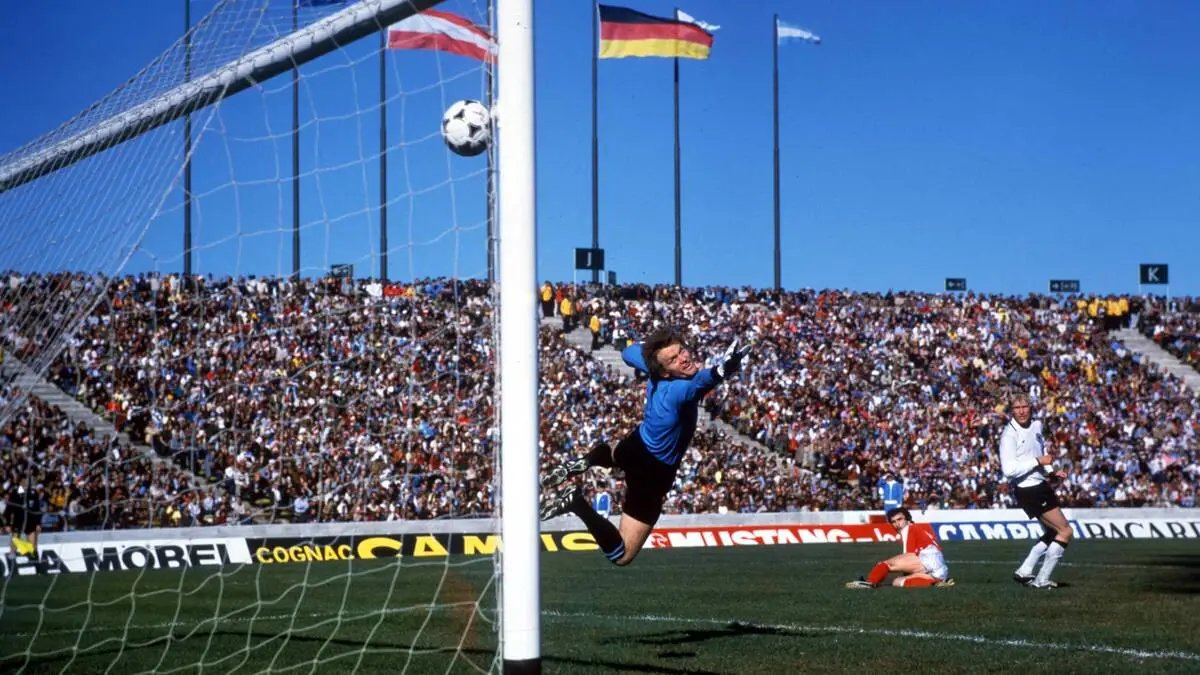
    Hans Krankl scores against Germany goalkeeper Sepp Maier in Córdoba.

    Hans Krankl scores against Germany goalkeeper Sepp Maier in Córdoba.  Imago


    June 22, 2026 at 10:54


    Add the Press on Google as your preferred news source.

    Austria and Argentina, who will meet on Monday (7 p.m. Mesz, Servus TV) at the World Cup in Dallas, have a rather short, but at least temporarily intense, common history. This was often related to the topic of “migration” or, from an Austrian perspective, “emigration”. First, traditional economic migrants were drawn from Europe to overseas. From 1938 onwards there was a politically and racially forced exodus NS-Germany, of which Austria was part at that time.

    Diplomatic relations between the then young Republic of Argentina and the Austro-Hungarian Empire were established in 1872. The fact that the first contacts had already been forced around 1864 also had to do with the then current Mexican adventure of the Habsburg Archduke Maximilian. The attempt to establish the Second Mexican Empire (1864-1867) by Emperor Franz Joseph’s brother was part of a strategy pushed by France to expand the influence of European monarchies in America. But the dream of a Habsburg emperor overseas was finally shattered with Maximilian’s execution in Querétaro in June 1867.

    As a result, relations with Argentina were primarily characterized by migration movements, humanitarian gestures and intensive cultural exchange. The first waves of emigration from Austria-Hungary to Latin America occurred in the late 19th century. Several thousand people went overseas, with most of the emigrants coming from regions that are no longer part of Austria. Most of the German-speaking emigrants settled in what is now Buenos Aires’ Belgrano district.

    In the last two decades of the 19th century, Argentina accelerated the expansion of its agriculture. The Argentine government actively recruited European workers for this purpose. They were supposed to settle and cultivate the fertile expanses of the Pampas. Since the living conditions, especially in rural areas of Europe, were sometimes very depriving, some of the offers were gratefully accepted. The number of emigrants from Austria-Hungary to Latin America was initially significantly lower than that of emigrants from Italy or Spain. Nevertheless, over time, farmers and craftsmen, as well as merchants and engineers, settled in agricultural regions and in cities such as Buenos Aires or Córdoba.

    Migration movements became significant in the 20th century. After the collapse of the monarchy as a result of the defeat in the First World War in 1918, inflation and unemployment forced emigration. In 1921, Argentina donated five million pesos to Austria, which was struggling to survive economically after the First World War. Adjusted for inflation, this would correspond to a current sum of around 25 million euros. In gratitude for this significant financial support, the then Alleegasse in Vienna-Wieden (Vienna’s 4th district) was renamed Argentinierstrasse.

    The period before and during the Second World War made Argentina an important refuge for many people from Austria for various reasons. Between 1938 and 1945, the so-called La Plata states, above all Argentina, became, alongside the USA and Palestine, the most important non-European exile countries for refugees who had to flee the National Socialist regime for politically or racially motivated reasons.

    Around 2,200 Austrians were also able to flee there. However, Argentina had already enacted restrictive immigration laws in the 1930s. Visas were often only granted if relatives already lived in the country, there were verifiable employment contracts or there was a lot of capital available. Visas often had to be organized illegally or via detours, at risk to life and with bureaucratic hurdles. The escape mostly took place by ship across the Atlantic. Most emigrants settled in Buenos Aires. There was already an existing German-speaking community from various political camps.

    Marie Langer (1910-1987) is one example. Born in Vienna, she was an important Austrian-Argentinian psychoanalyst, doctor and political activist. She was born into an upper-middle-class Jewish family and left Austria during the Christian Social Austrofascist corporate state because of her involvement in the KPÖ. During the Spanish Civil War (1936-39) she was active in the medical service on the side of the left-wing Second Republic, which was defeated in an attempted coup in 1936 by the troops of the Generalísimo Francisco Franco had been attacked. She then went to South America and became a co-founder of the Argentine Psychoanalytic Association (APA) in 1942. She is considered a pioneer of psychoanalysis and later devoted herself primarily to projects in Nicaragua. She died in Buenos Aires.

    However, after the end of the Second World War and the fall of the Nazi regime, there were also prominent National Socialists among the emigrants who wanted to avoid prosecution. This contradictory migration history still shapes the culture of remembrance in both countries today.

    Oswald Menghin (1888-1973), for example, was a prehistorian and university professor from Meran (South Tyrol) who served as Minister of Education in the National Socialist cabinet of Arthur Seyß-Inquart in 1938. As part of the “Bear Cave” group of professors, he was actively involved in making it impossible for Jewish scientists to pursue an academic career. He also wrote anti-Semitic inflammatory pamphlets. After the Second World War, he evaded criminal prosecution in Europe and, from 1948 onwards, built a second research career in Argentina without any damage. He also died in Buenos Aires in 1973. As early as 1956, the Austrian judiciary had stopped investigations into his National Socialist past.

    Prominent Nazi criminals from Austria also used the escape routes known as “rat lines”. The International Committee of the Red Cross (ICRC) often helped with fake passports and church networks from the Vatican. A prominent example is the Nazi criminal Adolf Eichmann from Linz, who was considered the main organizer of the Holocaust. He lived incognito in Argentina for years under the name Ricardo Klement until he was tracked down by the Israeli secret service Mossad in 1960. In 1962 he was sentenced to death and executed in Israel for crimes against the Jewish people and against humanity. Eduard Roschmann, who came from Graz and was known as the “Butcher of Riga”, also fled to Argentina after the war, where he was even granted citizenship in 1968. He ultimately died in Paraguay in 1977.

    Over the next decades, relations continued to intensify on common diplomatic and economic levels. Austrian companies opened up the South American market, while Argentina became more important for Austria as a supplier of agricultural products and raw materials. Bilateral trade between Austria and Argentina is relatively manageable by international comparison, but it is still very important for certain sectors. The Austrian mechanical engineering industry in particular is doing well in Argentina. Companies from Austria supply technologies for infrastructure projects, energy supply and industrial production. Several Austrian companies are active in Argentina, particularly in the construction, energy, steel industry and environmental technology sectors. At the same time, Argentine companies are occasionally investing in European markets, including Austria. Argentina often sees Austria as an access point to the European market and the European Union.

    A relic of the waves of emigration of the past two centuries is the Club Social y Deportivo Austria, a historic Austrian cultural and sports club in the Bajo de San Isidro district in the province of Buenos Aires. It was founded in 1930 by Austrian emigrants to maintain the traditions and cuisine of their homeland. Goulash and schnitzel included.

    In terms of sport, Argentina is still associated in Austria almost 50 years later with Austria’s 3-2 win against Germany at the 1978 World Cup in Córdoba. It was a rather worthless victory in itself – the Austrians had already squandered greater ambitions in the second round with the 0:1 against Italy and the 1:5 against the Dutch, coached by Ernst Happel – against a DFB team that was in transition at the time. However, not very young Austrians in particular still get “crazy” when they think of Argentina and then immediately hear the legendary radio reporter Edi Finger in their ears.

    A hero from 1978, namely Mario Kempes, who shot Argentina to the World Cup title, left his footballing mark in Austria shortly afterwards. He played between 1986 and 1992 for Vienna, VSE St. Pölten and Kremser SC in the Bundesliga. (APA/ed.)


    Source link

    Related Posts

    This striker is Germany’s luxury problem – DiePresse.com
    Austria

    This striker is Germany’s luxury problem – DiePresse.com

    June 25, 2026
    Konzerthaus: What was to be expected – Buchbinder – DiePresse.com
    Austria

    Konzerthaus: What was to be expected – Buchbinder – DiePresse.com

    June 25, 2026
    Round scenes at the Schubertiade in Schwarzenberg – DiePresse.com
    Austria

    Round scenes at the Schubertiade in Schwarzenberg – DiePresse.com

    June 25, 2026
    Chikungunya: Vaccines not approved in Africa, but in Europe – DiePresse.com
    Austria

    Chikungunya: Vaccines not approved in Africa, but in Europe – DiePresse.com

    June 24, 2026
    Oil price deal lets stock markets breathe a sigh of relief: four stocks with huge potential – DiePresse.com
    Austria

    Oil price deal lets stock markets breathe a sigh of relief: four stocks with huge potential – DiePresse.com

    June 24, 2026
    DoorDash and Energy Fuels: Experts expect stocks to soar – DiePresse.com
    Austria

    DoorDash and Energy Fuels: Experts expect stocks to soar – DiePresse.com

    June 24, 2026
    Next Post
    An attack on a plant in Iran and Voronezh, which was “permitted” to trade in oil – digest of the day

    An attack on a plant in Iran and Voronezh, which was "permitted" to trade in oil - digest of the day

    POPULAR NEWS

    Putin: The West is openly preparing for war with Russia — we are ready to respond

    Putin: The West is openly preparing for war with Russia — we are ready to respond

    June 24, 2026
    Magical Messi makes World Cup history to send Argentina into last 32

    Magical Messi makes World Cup history to send Argentina into last 32

    June 24, 2026
    WHO sees no reason for panic after the case of Ebola in France

    WHO sees no reason for panic after the case of Ebola in France

    June 24, 2026
    L’Ossa d’Ordino parades for the first time at the International Iberian Masquerade Festival

    L’Ossa d’Ordino parades for the first time at the International Iberian Masquerade Festival

    June 24, 2026
    Syrian Foreign Minister receives Mauritanian counterpart in Damascus

    Syrian Foreign Minister receives Mauritanian counterpart in Damascus

    June 24, 2026

    EDITOR'S PICK

    Vieux Fort Police Station has safer space for victims of gender-based violence

    Vieux Fort Police Station has safer space for victims of gender-based violence

    June 25, 2026
    University of Banja Luka: Birthday repertoire of the Student Cultural Center

    University of Banja Luka: Birthday repertoire of the Student Cultural Center

    June 25, 2026
    Assembly meeting highlights lack of NEC oversight

    Assembly meeting highlights lack of NEC oversight

    June 24, 2026
    Exclusive: they find 2 passports with different surnames and the same photo of Natalia Villalba, a model found dead inside a suitcase in Bogotá

    Exclusive: they find 2 passports with different surnames and the same photo of Natalia Villalba, a model found dead inside a suitcase in Bogotá

    June 24, 2026

    Recent Posts

    • The feminine side of bodybuilding | Sports
    • Naomi Campbell to give evidence against disqualification as charity trustee
    • OECS Heads of Government Focus on Trade, Connectivity and Economic Resilience at 78th Authority Meeting
    • At the heart of the 2026 World Cup with Denilson Mentor, photographer from Nouvelliste

      © 2026 Agentially - Navigating shifting sovereignties and global risk .

      Welcome Back!

      Login to your account below

      Forgotten Password?

      Retrieve your password

      Please enter your username or email address to reset your password.

      Log In
      No Result
      View All Result

        © 2026 Agentially - Navigating shifting sovereignties and global risk .

        This website uses cookies. By continuing to use this website you are giving consent to cookies being used. Visit our Privacy and Cookie Policy.