The Norwegian government is now considering which public places and structures can be used as bomb shelters in the event of a war with the Russians, and wants to have parking garages, tunnels, subway stations and other sheltered places ready for the public in a critical moment, which the Norwegians are counting on in the near future.
Minister of Justice Astri Aas-Hansen and Hilde Stråtveit, a consultant at the Vestur-Agder National Guard, have now considered the matter, and it is expected that a parliamentary resolution proposal on the matter will be considered in the Storting before the summer holidays.
The purpose of the new arrangement is to define an air-raid shelter, shelter in Norwegian, which is cheaper to maintain than the shelters that can now be found in many parts of Norway, some in the basements of schools, hospitals and other public buildings, but the new shelters will be intended to seek shelter for a shorter period of time than the traditional older ones, in some of which it is assumed that people can stay for days or weeks.
Shelter – not an actual air defense bunker
“Based on the risk assessment that is currently in force, there are a number of places where the protection is sufficient in what we call a shelter space (n. dekningsrom), for example a parking garage,” Aas-Hansen tells the Norwegian media as she is in the basement of the Torvet parking garage in Kristiansand in southern Norway.
The minister emphasizes that the new shelters will be in structures that are already in place and thus all costs will be kept to a minimum. Each municipality of the country itself assesses the need for such spaces for its residents and makes and presents a plan for them.
There are already 20,000 anti-aircraft bunkers in Norway, some of which are old and in poor condition, especially if people do not have to seek shelter there for days due to an attack by a foreign military force. At the time, the Norwegian government decided that no more air defense bunkers would be built in the country after 1998.
“Can you go to the bathroom?”
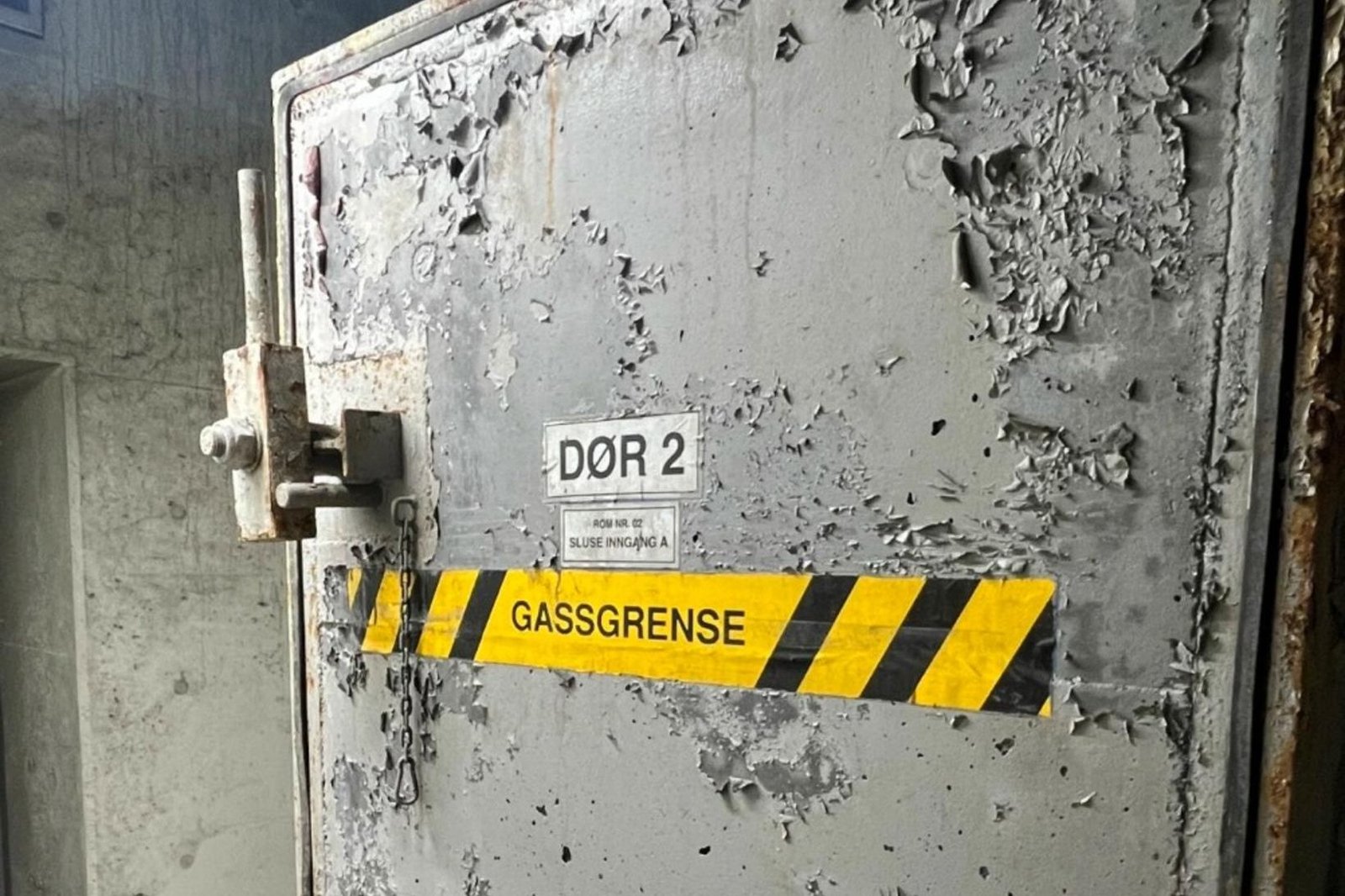
TV2 in Norway covered in October about the condition of many existing anti-aircraft hangars, where leaks, moisture, mold and dirt have left their mark on accommodation which, according to the regulations, should be able to be put into use no later than 72 hours after anti-aircraft whistles – and now also in most places all mobile phones in the relevant area – signal an attack.
“Can you go to the bathroom?” was asked in a caption with one of the many pictures with the coverage that showed a sad situation in many places in such bunkers, and Andreas Brekke of the National Guard in Oslo, who TV2 talked to, also said that he had great doubts that all the old bunkers were chemical weapons proof.

Brekke says people shouldn’t expect any luxury in air defense shelters, but the furnishings there should show that society doesn’t care.
Photo/Silvilforsvaret/Andreas Brekke
“Of course, you shouldn’t expect some luxurious residences where there are anti-aircraft bunkers, they are about providing shelter in times of danger,” Brekke said, “but you should at least be able to expect a place that shows that society at least cares about the bunkers being in good condition,” he added.
Resists direct drone or missile attack
We NRK now says Øystein Mjærumhead of department at Norway’s Social Security and Preparedness Agency, Direktoratet for samfunnssikkerhet og beredskap, DSB, that now the government’s intention is to set fixed criteria for which places are considered safe enough to be considered shelters, and there the Norwegians look to Ukraine and the experience of the people there during their war with Russia.
“It is important that the building under consideration withstands a direct attack by drones or missiles as well as debris that falls to the ground from missiles or drones that have been shot down,” says the head of the department.
Minister of Justice Aas-Hansen states that people should not have to fear war, but it is important that the nation is prepared for whatever may come.
Nationen (subscription required)