Wednesday, June 24, 2026
    The GeoStrategic Consensus
    No Result
    View All Result
    • Login
    • HOME
    • AMERICAS
      • Argentina
      • Brazil
      • Canada
      • Chile
      • Colombia
      • Costa Rica
      • Cuba
      • Dominican Republic
      • Ecuador
      • El Salvador
      • Greenland
      • Guatemala
      • Honduras
      • Mexico
      • Nicaragua
      • Panama
      • Paraguay
      • Peru
      • United States
      • Uruguay
      • Venezuela
    • ASIA-PACIFIC
      • Australia
      • Brunei Darussalam
      • Cambodia
      • China
      • Federated States of Micronesia
      • Fiji
      • Indonesia
      • Japan
      • Kiribati
      • Laos
      • Malaysia
      • Marshall Islands
      • Mongolia
      • Myanmar
      • Nauru
      • New Zealand
      • North Korea
      • Palau
      • Papua New Guinea
      • Philippines
      • Samoa
      • Singapore
      • Solomon Islands
      • South Korea
      • Taiwan
      • Thailand
      • Timor-Leste
      • Tonga
      • Tuvalu
      • Vanuatu
      • Vietnam
    • CARICOM
      • CARICOM – Non-English
        • Haiti
        • Suriname
      • CARICOM Associates
        • Anguilla
        • Bermuda
        • British-Virgin-Islands
        • Cayman-Islands
        • Curacao
        • Turks-and-Caicos
      • CARICOM English
        • Antigua and Barbuda
        • Barbados
        • Belize
        • Dominica
        • Grenada
        • Guyana
        • Jamaica
        • Montserrat
        • Saint Kitts and Nevis
        • Saint Lucia
        • Saint Vincent and the Grenadines
        • The Bahamas
        • Trinidad and Tobago
    • EURASIA
      • Armenia
      • Azerbaijan
      • Balarus
      • Georgia
      • Kazakhstan
      • Kyrgyzstan
      • Moldova
      • Russia
      • Tajikistan
      • Turkmenistan
      • Ukraine
      • Uzbekistan
    • EUROPE
      • Albania
      • Andorra
      • Austria
      • Bosnia and Herzegovina
      • Bulgaria
      • Croatia
      • Cyprus
      • Czech Republic
      • Denmark
      • Estonia
      • Finland
      • France
      • Germany
      • Greece
      • Holy See
      • Hungary
      • Iceland
      • Ireland
      • Italy
      • Kosovo
      • Latvia
      • Liechtenstein
      • Lithuania
      • Luxembourg
      • Malta
      • Monaco
      • Montenegro
      • Netherlands
      • North Macedonia
      • Norway
      • Poland
      • Portugal
      • Romania
      • San Marino
      • Serbia
      • Slovakia
      • Slovenia
      • Spain
      • Sweden
      • Switzerland
      • United Kingdom
    • MIDDLE EAST AND NORTH AFRICA
      • Algeria
      • Bahrain
      • Egypt
      • Iran
      • Iraq
      • Israel
      • Jordan
      • Kuwait
      • Lebanon
      • Lybia
      • Morocco
      • Oman
      • Palestinian Territories
      • Qatar
      • Saudi Arabia
      • Syria
      • Tunisia
      • Turkey
      • United Arab Emirates
      • Western Sahara
      • Yemen
    • SOUTH ASIA
      • Afghanistan
      • Bangladesh
      • Bhutan
      • India
      • Maldives
      • Nepal
      • Pakistan
      • Sri Lanka
    • SUB-SAHARAN AFRICA
      • Angola
      • Benin
      • Botswana
      • Burkina Faso
      • Burundi
      • Cabo Verde
      • Cameroon
      • Central African Republic
      • Chad
      • Comoros
      • Cote d’Ivoire
      • Democratic Republic of the Congo
      • Djibouti
      • Equatorial Guinea
      • Eritrea
      • Eswatini
      • Ethiopia
      • Gabon
      • Gambia
      • Ghana
      • Guinea
      • Guinea Bissau
      • Kenya
      • Lesotho
      • Liberia
      • Madagascar
      • Malawi
      • Mali
      • Mauritania
      • Mauritius
      • Mozambique
      • Namibia
      • Niger
      • Nigeria
      • Republic of the Congo
      • Rwanda
      • Sao Tome and Principe
      • Senegal
      • Seychelles
      • Sierra Leone
      • Somalia
      • South Africa
      • South Sudan
      • Sudan
      • Tanzania
      • Togo
      • Uganda
      • Zambia
      • Zimbabwe
    • HOME
    • AMERICAS
      • Argentina
      • Brazil
      • Canada
      • Chile
      • Colombia
      • Costa Rica
      • Cuba
      • Dominican Republic
      • Ecuador
      • El Salvador
      • Greenland
      • Guatemala
      • Honduras
      • Mexico
      • Nicaragua
      • Panama
      • Paraguay
      • Peru
      • United States
      • Uruguay
      • Venezuela
    • ASIA-PACIFIC
      • Australia
      • Brunei Darussalam
      • Cambodia
      • China
      • Federated States of Micronesia
      • Fiji
      • Indonesia
      • Japan
      • Kiribati
      • Laos
      • Malaysia
      • Marshall Islands
      • Mongolia
      • Myanmar
      • Nauru
      • New Zealand
      • North Korea
      • Palau
      • Papua New Guinea
      • Philippines
      • Samoa
      • Singapore
      • Solomon Islands
      • South Korea
      • Taiwan
      • Thailand
      • Timor-Leste
      • Tonga
      • Tuvalu
      • Vanuatu
      • Vietnam
    • CARICOM
      • CARICOM – Non-English
        • Haiti
        • Suriname
      • CARICOM Associates
        • Anguilla
        • Bermuda
        • British-Virgin-Islands
        • Cayman-Islands
        • Curacao
        • Turks-and-Caicos
      • CARICOM English
        • Antigua and Barbuda
        • Barbados
        • Belize
        • Dominica
        • Grenada
        • Guyana
        • Jamaica
        • Montserrat
        • Saint Kitts and Nevis
        • Saint Lucia
        • Saint Vincent and the Grenadines
        • The Bahamas
        • Trinidad and Tobago
    • EURASIA
      • Armenia
      • Azerbaijan
      • Balarus
      • Georgia
      • Kazakhstan
      • Kyrgyzstan
      • Moldova
      • Russia
      • Tajikistan
      • Turkmenistan
      • Ukraine
      • Uzbekistan
    • EUROPE
      • Albania
      • Andorra
      • Austria
      • Bosnia and Herzegovina
      • Bulgaria
      • Croatia
      • Cyprus
      • Czech Republic
      • Denmark
      • Estonia
      • Finland
      • France
      • Germany
      • Greece
      • Holy See
      • Hungary
      • Iceland
      • Ireland
      • Italy
      • Kosovo
      • Latvia
      • Liechtenstein
      • Lithuania
      • Luxembourg
      • Malta
      • Monaco
      • Montenegro
      • Netherlands
      • North Macedonia
      • Norway
      • Poland
      • Portugal
      • Romania
      • San Marino
      • Serbia
      • Slovakia
      • Slovenia
      • Spain
      • Sweden
      • Switzerland
      • United Kingdom
    • MIDDLE EAST AND NORTH AFRICA
      • Algeria
      • Bahrain
      • Egypt
      • Iran
      • Iraq
      • Israel
      • Jordan
      • Kuwait
      • Lebanon
      • Lybia
      • Morocco
      • Oman
      • Palestinian Territories
      • Qatar
      • Saudi Arabia
      • Syria
      • Tunisia
      • Turkey
      • United Arab Emirates
      • Western Sahara
      • Yemen
    • SOUTH ASIA
      • Afghanistan
      • Bangladesh
      • Bhutan
      • India
      • Maldives
      • Nepal
      • Pakistan
      • Sri Lanka
    • SUB-SAHARAN AFRICA
      • Angola
      • Benin
      • Botswana
      • Burkina Faso
      • Burundi
      • Cabo Verde
      • Cameroon
      • Central African Republic
      • Chad
      • Comoros
      • Cote d’Ivoire
      • Democratic Republic of the Congo
      • Djibouti
      • Equatorial Guinea
      • Eritrea
      • Eswatini
      • Ethiopia
      • Gabon
      • Gambia
      • Ghana
      • Guinea
      • Guinea Bissau
      • Kenya
      • Lesotho
      • Liberia
      • Madagascar
      • Malawi
      • Mali
      • Mauritania
      • Mauritius
      • Mozambique
      • Namibia
      • Niger
      • Nigeria
      • Republic of the Congo
      • Rwanda
      • Sao Tome and Principe
      • Senegal
      • Seychelles
      • Sierra Leone
      • Somalia
      • South Africa
      • South Sudan
      • Sudan
      • Tanzania
      • Togo
      • Uganda
      • Zambia
      • Zimbabwe
    No Result
    View All Result
    Agentially
    No Result
    View All Result
    Home MIDDLE EAST and NORTH AFRICA Iran

    The war of narratives in the first step of negotiations

    The Analyst by The Analyst
    June 24, 2026
    in Iran
    The war of narratives in the first step of negotiations


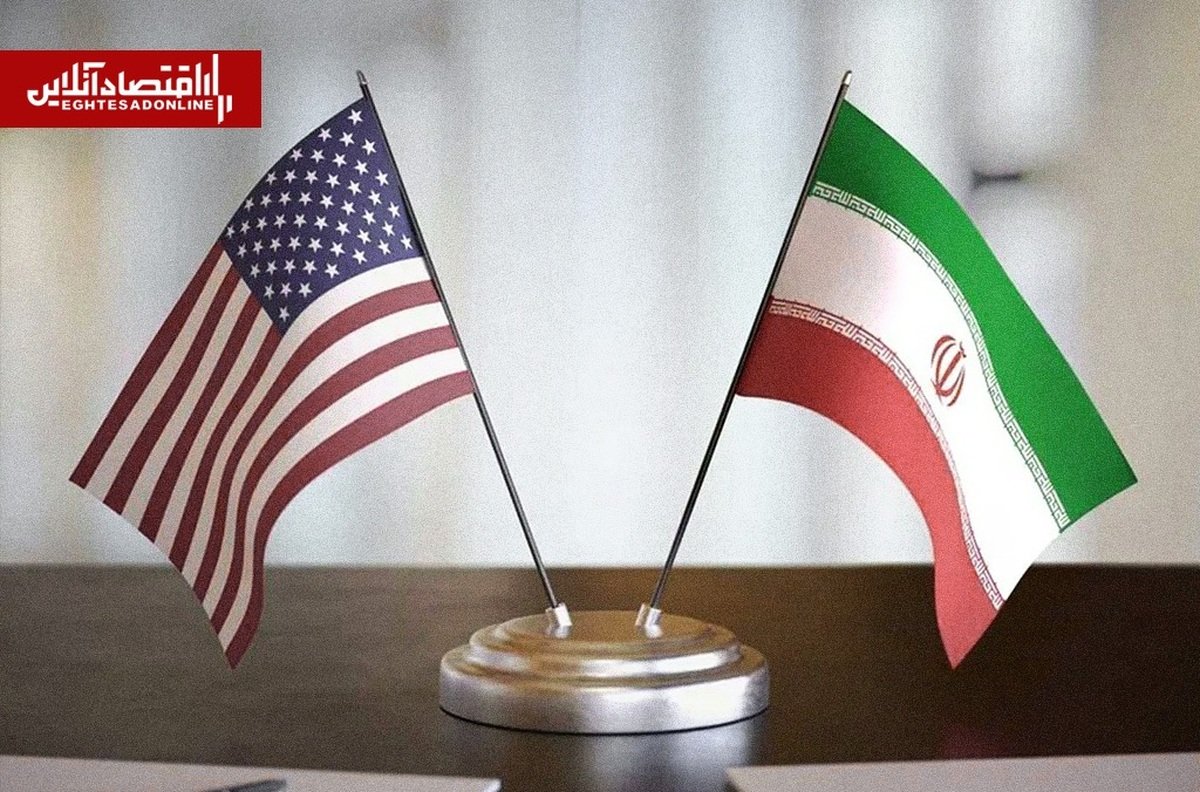
    Economy Online, Amir Mohammad Hosseini: The fever of the positive news released from the first round of Iran-US negotiations was still hot, when Tehran and Washington presented a different picture than what happened behind the closed doors of the negotiations.

    READ ALSO

    Ashura in the frame of Sima productions

    All the economic clauses of the Iran-US Memorandum of Understanding/ Hemmati: There is no question of forced purchase from the US

    While White House officials talk about monitoring Iran’s nuclear program and limited access to blocked assets in Qatar, Iranian officials are trying to show that no new commitments beyond the previous frameworks have been accepted.

    As a result, not only the possible text of the understandings, but also the narrative of the negotiations itself has become a new field of political conflict. It is as if the war of narratives is going on parallel to the negotiations. The war that these days has manifested itself in at least three main areas, i.e. the issue of agency inspectors, the way to release blocked assets and the issue of the Strait of Hormuz.

    first node; Has Iran agreed to the return of IAEA inspectors?

    The most important and controversial difference of narratives goes back to the nuclear case. JD Vance, the vice president of the United States, announced after the negotiations that the Islamic Republic of Iran has agreed to invite inspectors from the International Atomic Energy Agency, and it is even possible that this process will start this week. He described this issue as a “very important step” and announced the beginning of technical talks with the agency.

    Vance’s statements, however, were almost immediately met with cautious reactions and then indirect denials in Tehran. Esmail Beqaei, the spokesman of the Ministry of Foreign Affairs, emphasized that no negotiations regarding the nuclear issue were carried out during the 18-hour talks in Switzerland and no new commitments were accepted by Iran. Of course, he did not deny the principle of interaction with the agency and said that the cooperation will continue according to the current procedure and legal approvals.

    At the same time, Fars news agency reported, quoting a well-informed source, that basically nothing was discussed about the presence of inspectors in Iran in the Swiss negotiations. Tasnim news agency also went further and while criticizing the idea of ​​the return of the inspectors, emphasized that the issuance of permission for their entry was not approved by the Iranian authorities.

    However, it is noteworthy that the Iranian authorities have not explicitly denied the main claim of the United States. The subtle difference between “accepting a new commitment” and “continuing cooperation within existing frameworks” is precisely the ambiguity on which both sides are trying to build their narrative.

    On the American side, after Vance, Donald Trump also fueled this issue and announced that Iran will agree to extensive inspections in the coming years to ensure “nuclear integrity”. Trump then published another post and again claimed that Iran has agreed to inspect its nuclear sites “infinitely” and if this was not the case, the US would not have conducted any other negotiations.

    These statements show that the US government is trying to present the negotiations as a success in the field of monitoring Iran’s nuclear program. While Iran’s negotiators are not interested in forming such an impression that Tehran has given a new concession in this area in the first round of talks.

    Argument over the drawn assets; Full freedom or parole?

    The second axis of dispute is related to the fate of Iran’s frozen assets. An issue that has been one of the most important motivations for Tehran to enter the negotiations from the beginning. It seems that in the first stage, the discussion is about how to release 6 billion dollars of Iranian assets in Qatar.

    Explaining the results of the negotiations, Vance said that if a part of Iran’s blocked assets is released, its use will be under a specific mechanism, and both the United States and Qatar will have the right to monitor and approve how it is spent. He even stated, with rare literature, that the agreement was designed in such a way that the freed up resources would actually be used to purchase products such as American soybeans, corn and wheat. According to him, this action will benefit American farmers and provide food for the people of Iran. Trump also repeated this issue and said that these assets will remain in a trust account for buying medicine and food exclusively from America.

    This narrative, however, has a clear distance from Tehran’s official position. In response to these statements, Baqaei said that it is strange for Iran that the goals that were previously discussed with the literature of Iran’s collapse and changing its behavior have now been reduced to “making American farmers richer”.

    More importantly, the spokesperson of the Ministry of Foreign Affairs emphasized that the freed property of Iran is available to the country to be spent “freely” and based on the recognition of the responsible institutions. He clarified that there are no restrictions on the choice of goods or the seller’s country, and decisions about purchases will be made based on price and quality.

    In fact, if the American narrative is based on foreign supervision over the use of liberated assets, the Iranian authorities’ narrative emphasizes the principle of Tehran’s sovereignty and complete authority in using these assets.

    In such a situation, it is still not clear whether the removal of Iran’s financial restrictions will be conditional and controlled or will be done without the intervention of foreign parties.

    Strait of Hormuz; Security understanding or return to normal situation?

    The third difference is less noticed, but it is perhaps the most important from a strategic point of view. G. D. Vance, explaining the results of the negotiations, announced that one of the goals of the United States was to create a mechanism to keep the Strait of Hormuz open, and now this goal has been achieved.

    If we take the American narrative as a basis, it seems that one of the main points of the negotiations was to ensure the security of the passage of energy in one of the most vital sea crossings in the world. Such a perception can create the impression that Tehran has provided some kind of commitment or guarantee about the situation of the Strait of Hormuz.

    But in the Iranian narrative, there is almost no mention of such an agreement. On the other hand, it has been said that in the first round of negotiations, a direct contact line has been considered for the Strait of Hormuz, which somehow recognizes Iran’s supervision.

    From this point of view, what Vance presents as the achievement of the negotiations, from Iran’s point of view, is considered merely a return to normal conditions after the reduction of tensions, not the result of a specific political or security commitment.

    Another point is that after Switzerland, Mohammad Bagher Qalibaf, the head of the negotiating team, also went to Oman. The said trip is to coordinate the arrangements for monitoring the passage of the Strait of Hormuz. But the Omani government has emphasized after this trip that it does not intend to charge tolls for ships to pass through this international crossing.

    The war of narratives before the final agreement

    It seems that the two sides have different opinions even about the definition of the success of the negotiations. The United States tries to present the results of the talks in the form of concrete security and nuclear gains to its public opinion, while Iran prefers to paint the picture of the talks based on the removal of economic restrictions and without granting new concessions.

    This difference in narrations can be caused by several factors. First, trying to manage domestic public opinion, disagreement over the interpretation of initial understandings, or even deliberate ambiguity at a stage where the negotiations have not yet reached a final agreement.

    However, the experience of past negotiations shows that the greater the distance between the narratives, the more difficult the path to a lasting agreement will be.

    However, these ambiguities will probably be clarified in the next rounds of talks, and if the negotiations progress, both sides will have to choose between narrative creation and practical commitment.


    Source link

    Related Posts

    Iran

    Ashura in the frame of Sima productions

    June 24, 2026
    All the economic clauses of the Iran-US Memorandum of Understanding/ Hemmati: There is no question of forced purchase from the US
    Iran

    All the economic clauses of the Iran-US Memorandum of Understanding/ Hemmati: There is no question of forced purchase from the US

    June 24, 2026
    The British Prime Minister resigned + video
    Iran

    The British Prime Minister resigned + video

    June 24, 2026
    The new competitor of the dollar and gold
    Iran

    The new competitor of the dollar and gold

    June 24, 2026
    Beqaei: Iran pursues the implementation of the obligations of the other side with all its levers
    Iran

    Beqaei: Iran pursues the implementation of the obligations of the other side with all its levers

    June 24, 2026
    The price of gold and coins today, Wednesday, July 3, 1405 + table
    Iran

    The price of gold and coins today, Wednesday, July 3, 1405 + table

    June 24, 2026
    Next Post
    President of Republic receives credentials of new ambassador of Cuba to SADR

    President of Republic receives credentials of new ambassador of Cuba to SADR

    POPULAR NEWS

    Bhutan Football Steps onto a Bigger Stage with Hummel Partnership

    Bhutan Football Steps onto a Bigger Stage with Hummel Partnership

    June 23, 2026
    Trump’s threats have angered the Iranians — tense talks in Switzerland

    Trump’s threats have angered the Iranians — tense talks in Switzerland

    June 23, 2026
    Nicuşor Dan on Ceban’s meetings with Romanian mayors: “He was received out of politeness”

    Nicuşor Dan on Ceban’s meetings with Romanian mayors: “He was received out of politeness”

    June 23, 2026
    What the Iran war cost the Pentagon, the economy — and Trump

    What the Iran war cost the Pentagon, the economy — and Trump

    June 23, 2026
    Magical Messi makes World Cup history to send Argentina into last 32

    Magical Messi makes World Cup history to send Argentina into last 32

    June 24, 2026

    EDITOR'S PICK

    Australia responsible for offshore detainees: UN report

    Australia responsible for offshore detainees: UN report

    June 24, 2026
    Oil price deal lets stock markets breathe a sigh of relief: four stocks with huge potential – DiePresse.com

    Oil price deal lets stock markets breathe a sigh of relief: four stocks with huge potential – DiePresse.com

    June 24, 2026
    Myth from Radhoště. What was Radegast’s real name and what does it tell us about the old Premium Slavs

    Myth from Radhoště. What was Radegast’s real name and what does it tell us about the old Premium Slavs

    June 24, 2026
    The well-known Israeli strategist, David Zaikin against Edi Rama: Drug money has flowed during your government! Albania needs new leadership

    The well-known Israeli strategist, David Zaikin against Edi Rama: Drug money has flowed during your government! Albania needs new leadership

    June 24, 2026

    Recent Posts

    • Ebola virus outbreak – TASS
    • The Constitutional Court clarified the deadline for decisions to increase recycling collection
    • Forests are being cut down in the Kulyab region. And the authorities can’t do anything about it
    • Central Asian countries discussed the implementation of climate commitments under the Paris Agreement in Bishkek

      © 2026 Agentially - Navigating shifting sovereignties and global risk .

      Welcome Back!

      Login to your account below

      Forgotten Password?

      Retrieve your password

      Please enter your username or email address to reset your password.

      Log In
      No Result
      View All Result

        © 2026 Agentially - Navigating shifting sovereignties and global risk .

        This website uses cookies. By continuing to use this website you are giving consent to cookies being used. Visit our Privacy and Cookie Policy.