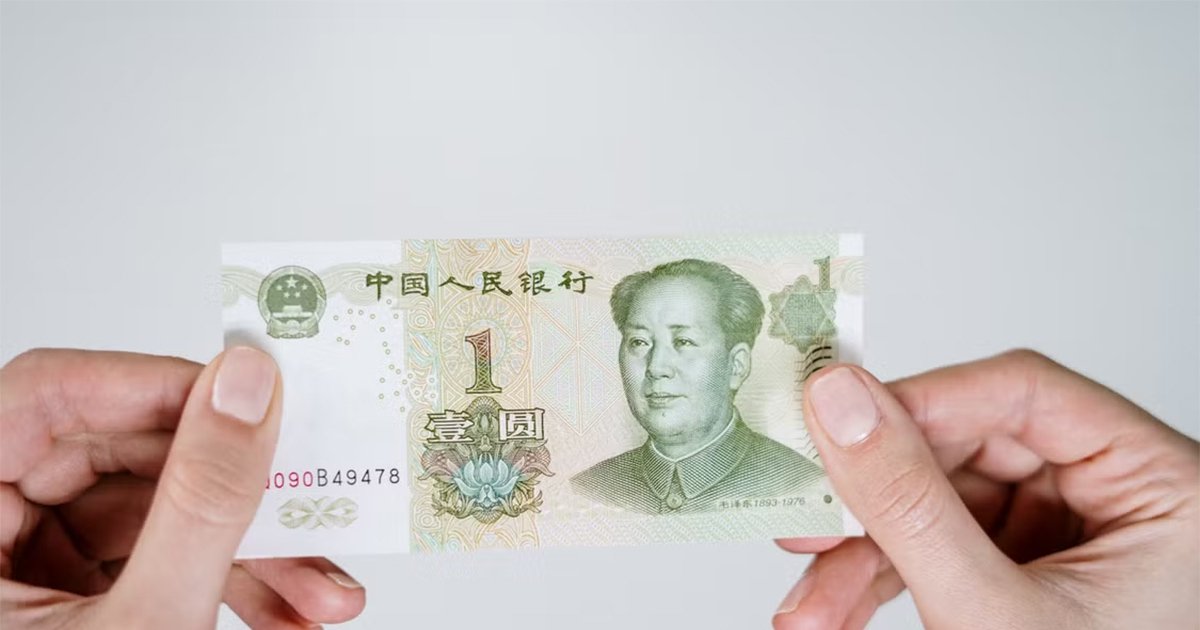
China’s currency, kept artificially low by Beijing, is costing the German economy billions of dollars in lost growth every year, according to a new estimate by Cologne economists.
A study by the German Economic Institute (IW), commissioned by Germany’s Federal Ministry of Foreign Affairs, showed that Germany’s price-adjusted gross domestic product (GDP) could be up to 0.3 percent higher in 2028 if the yuan were fairly valued.
The authors of the study stated in a statement published on Saturday that this would represent around 43 billion euros in the period from 2026 to 2028.
For the purposes of the simulation, the yuan was revalued by 40 percent, which, according to experts, roughly corresponds to its real value.
The institute concluded that Beijing does not allow free formation of the exchange rate, but manages the currency system under state control, which by deliberately undervaluing the yuan makes Chinese exports cheaper and imports more expensive.
This is one of the reasons why the value of German exports to China has fallen significantly, while imports of Chinese goods have risen sharply, according to IW. Germany’s trade deficit with China has grown to around 90 billion euros in 2025.
According to the study, China itself would also benefit, because a fairer valuation of the yuan would help better balance its economy, which is heavily dependent on exports.
Although China’s GDP would initially decline due to a drop in exports, the simulation predicts a rapid recovery thanks to growth in domestic demand. As exports become less attractive, more goods remain on the domestic market, which contributes to lower prices, he reports B92.
IW experts point out that the growth of domestic demand could largely offset the reduction of the export surplus within a few years. By 2028, the Chinese economy would thus almost reach the level from the initial scenario with an undervalued currency.