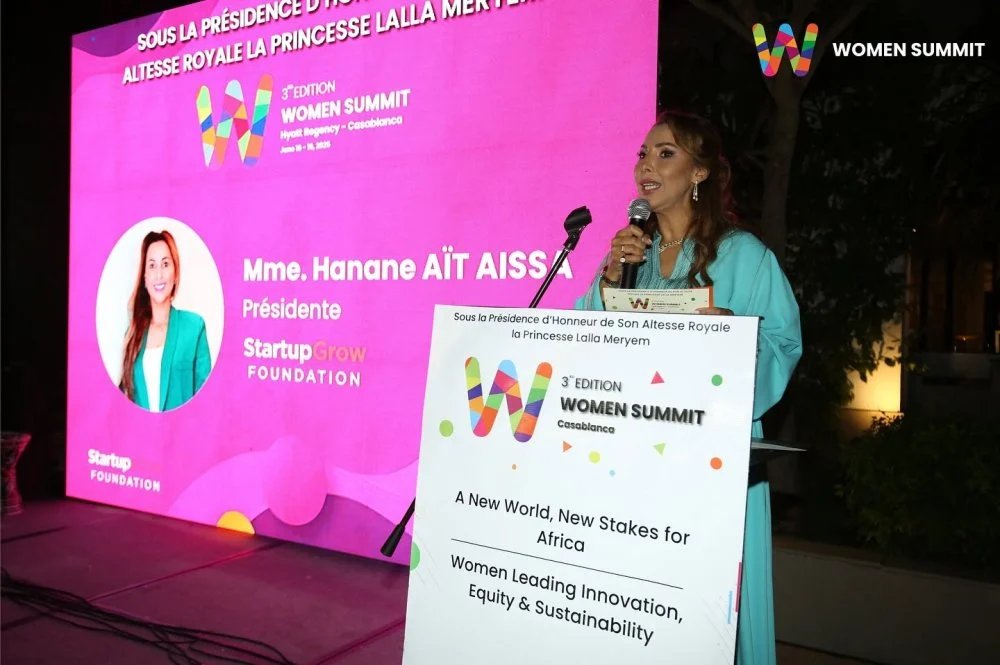
After three editions held under the Honorary Presidency of Her Royal Highness Princess Lalla Meryem, the Women Summit returns to Casablanca with a stated ambition: to place African female leadership at the heart of a geopolitical and economic project of continental scope. This fourth edition does not simply renew a proven formula. It anchors it in a new dynamic, that of the African Atlantic space, thought of by the organizers as a strategic lever for inclusive and sustainable growth.
A summit at the crossroads of leadership and geopolitics
The choice of theme is not trivial. By directly articulating the role of women with the Royal Atlantic Initiative, which aims to strengthen cooperation, connectivity and shared development between African countries on the Atlantic coast, the organizers position the Women Summit as a political and economic action, and not as a simple forum for testimonies. The exchanges will cover a deliberately broad spectrum: female leadership in governance and public policies, artificial intelligence and digital transformation, blue economy and Atlantic opportunities, South-South cooperation, access to financing, economic inclusion of women and young people, and skills development. A thematic architecture which reflects, according to the organizers, the conviction that “women constitute one of the main engines of growth, innovation and sustainable transformation of the continent”.
A line-up of speakers with strong institutional representation
Confirmed speakers include Zita Oligui Nguema, First Lady of Gabon, Haja Mamaka Bility, Minister of State in the President’s Office, Ryad Mezzour, Moroccan Minister of Industry and Trade, as well as HE Sheikha Bint Bishr, global expert in digital transformation and founder of BinBishr Global Advisory. On the Moroccan side, Anouar Alaoui Ismaïli, general director of Maroc PME, and Saïd Jabrani, general director of Tamwilcom, will represent the entrepreneurship support ecosystem, alongside Samira Khamlichi, president of the Club of Women Business Administrators in Morocco…
This platform reflects a desire to cross the institutional, economic, technological and medical spheres (Pr. Raja Aghzadi, cancer surgeon and member of the Commission for the New Development Model), is also among the speakers, to produce a 360-degree dialogue on the real conditions of female emergence in Africa.
The Ubuntu Awards, second act
The opening ceremony will be marked by the presentation of the Ubuntu Awards 2026, of which this is the second edition. Inspired by the African philosophy Ubuntu: “I am because we are”, these Awards reward excellence, innovation, civic engagement and lasting impact. The selection process is based on a multidisciplinary jury made up of personalities from the institutional, academic, economic, media and associative worlds. The criteria selected are demanding: social, economic or environmental impact, capacity to generate lasting change, sustainability of actions, potential for replication on an African scale, and contribution to the inclusion and empowerment of women and young people.
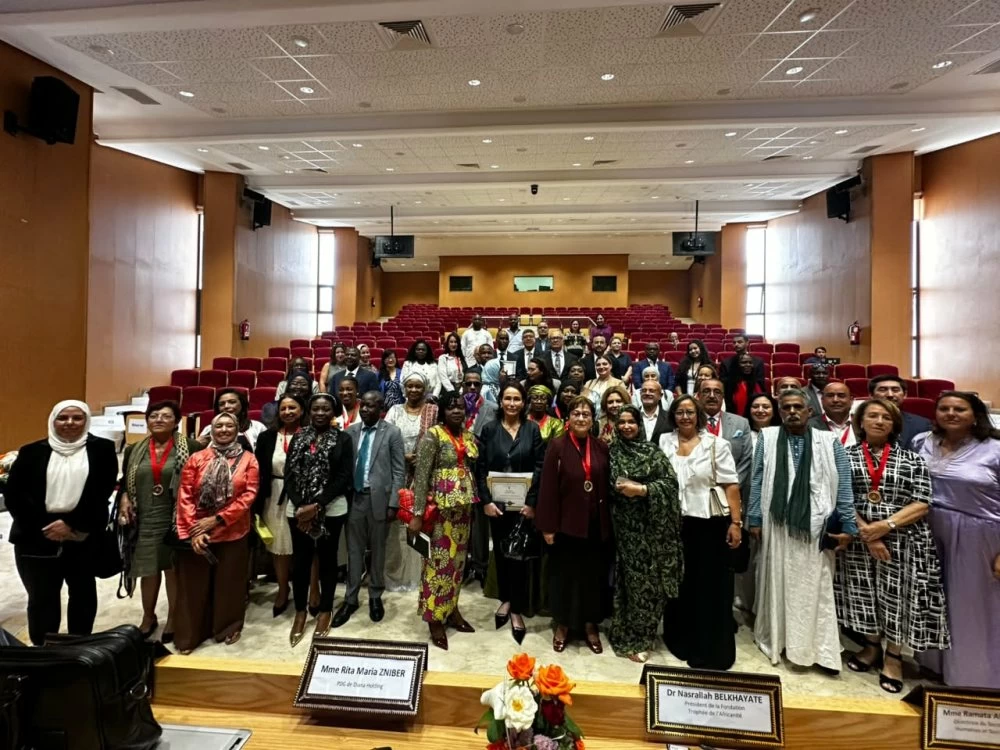
The first edition, held in 2025, notably distinguished APEFE’s “Min Ajliki” program in the “Empowering the Next Generation” category, Ms. Snyleseh Stephenie Dahn Koung, Second Lady of Liberia, for the “Women’s Innovation & Leadership” Prize, and Melissa Allen, winner of the King Charles III Medal in Canada, for the “Economic Resilience & Female Entrepreneurship” category. The Club of Women Administrators of Morocco received the Institutional Commitment to Equality Trophy, while a Jury’s Favorite Trophy was awarded posthumously to the late Zoulikha Nasri.
A pan-African community under construction
Beyond the Awards and the panels, the organizers have a long-term ambition: to create, edition after edition, a pan-African community of change leaders, structured around the sharing of experiences, cooperation and the emergence of high-impact initiatives. The hackathon, mobilizing young talents around the challenges of the continent, and the exhibition space dedicated to the most innovative cooperatives and entrepreneurial initiatives are part of this logic of anchoring in African youth.